

The Things We Do When No One Is Watching
Parshas Ki Seitzei is filled with mitzvos that govern the moments few people ever see: returning lost property, paying workers on time, maintaining honest measures, preventing danger, protecting dignity, and leaving something behind for another person. As Elul approaches, the parsha asks a quieter question than whether we have performed great mitzvos or committed great sins: Who are we becoming in the hundreds of ordinary moments nobody else records?
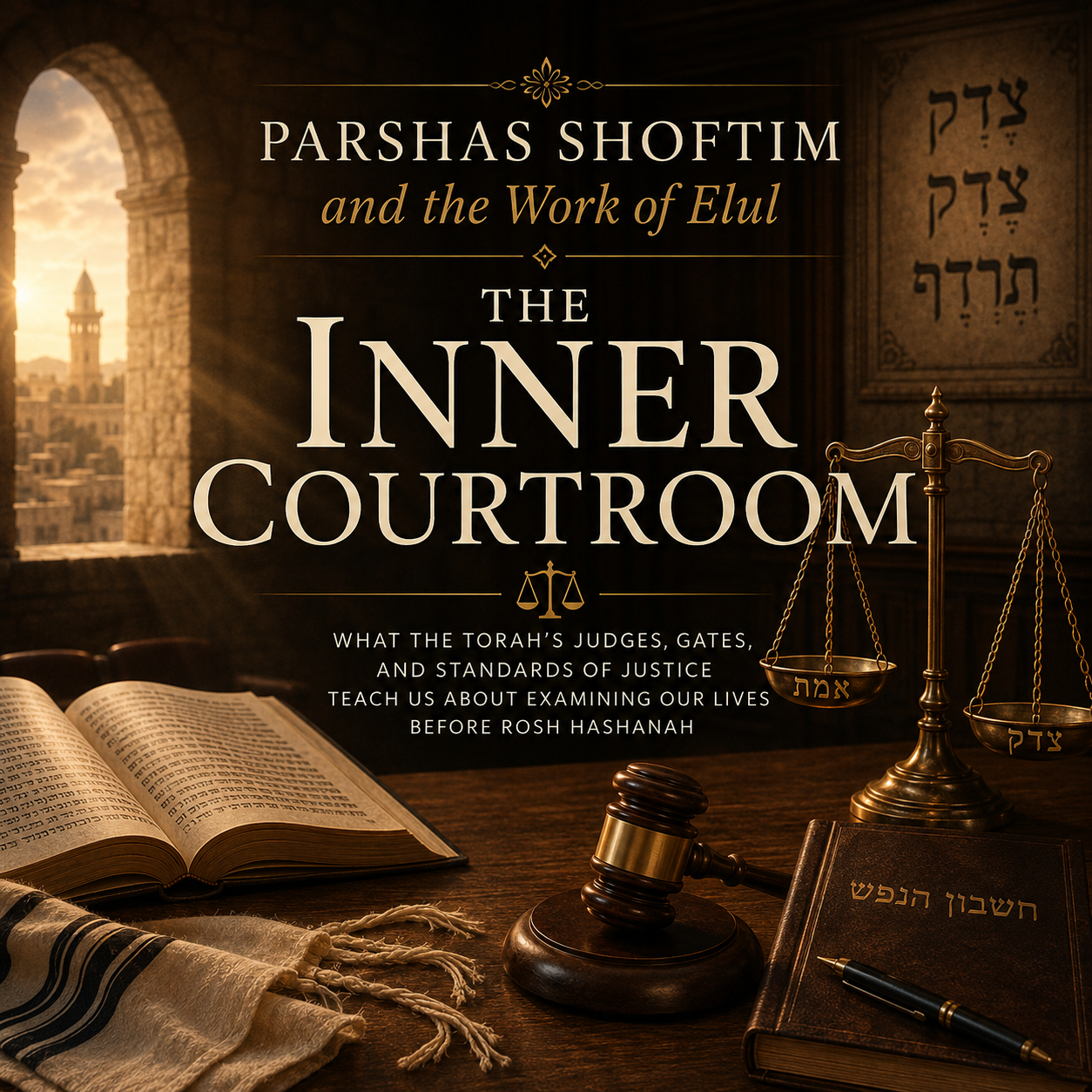
The Inner Courtroom: Parshat Shoftim and the Work of Elul
Parshas Shoftim opens with a command to appoint judges and officers at every gate. As Elul begins, those words take on a deeply personal meaning. What happens when the courtroom moves inward? Through Gemara, Midrash, and classical Torah sources, we explore how honest judgment, guarded gates, careful self-examination, and teshuvah can prepare us to stand before Hashem on Rosh Hashanah.
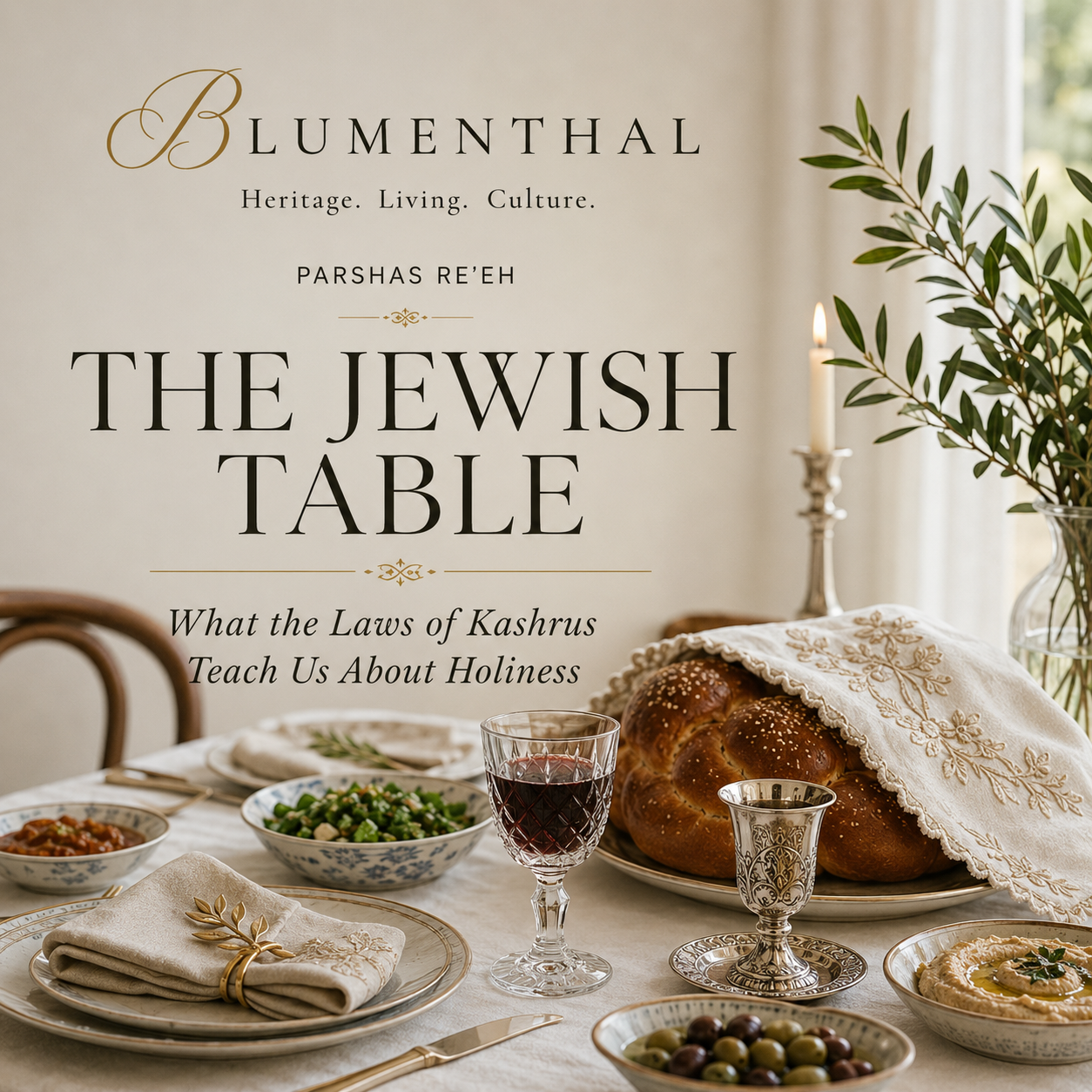
Parshas Re’eh - The Jewish Table: What the Laws of Kashrus Teach Us About Holiness
In Parshas Re’eh, the Torah introduces the laws of kashrus by reminding us that we are a holy people. These laws are not merely a list of foods we may and may not eat. They teach us to pause before satisfying desire, distinguish between what is permitted and forbidden, receive the physical world with gratitude, and bring our relationship with Hashem into the most ordinary parts of daily life.
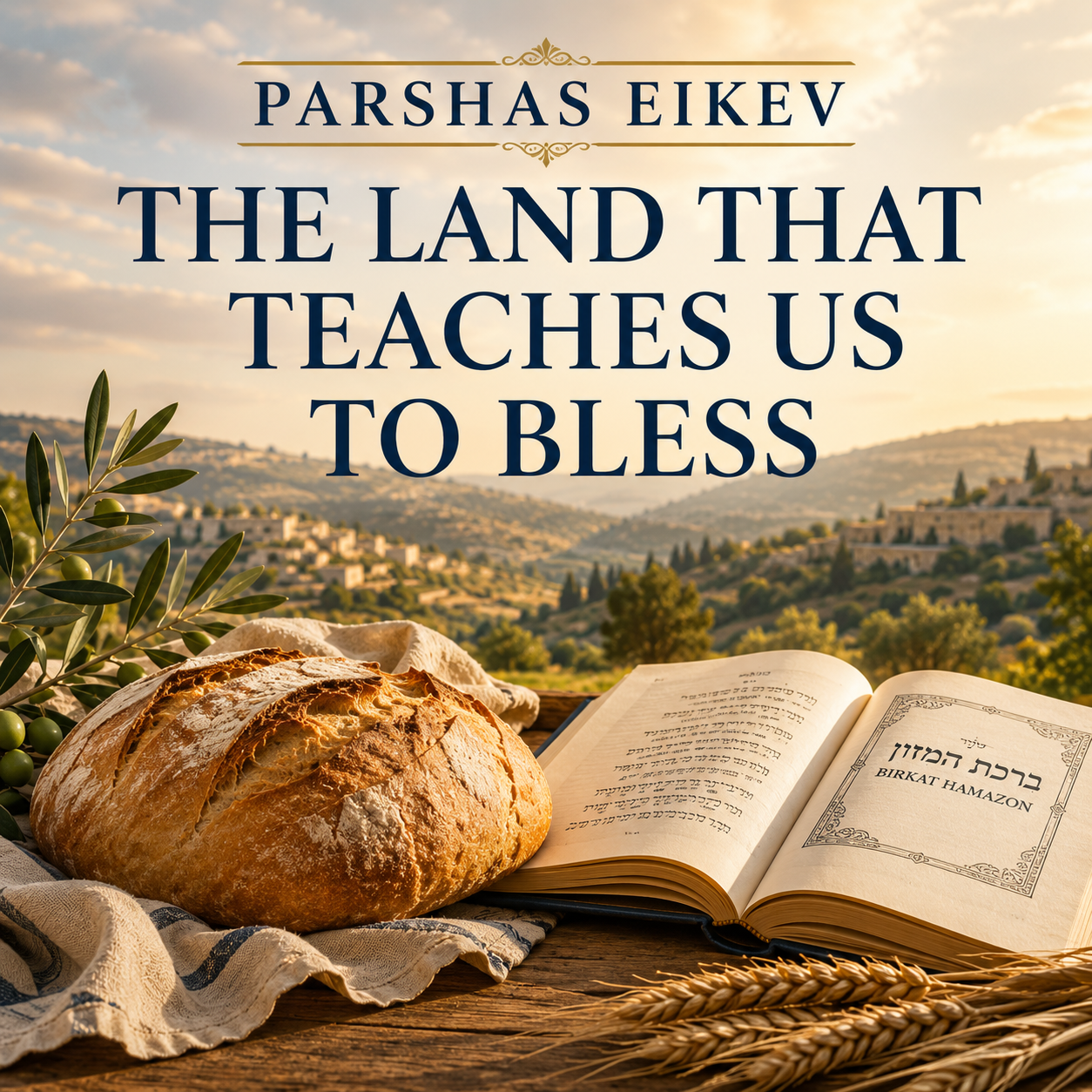
The Land That Teaches Us to Bless
Parshas Eikev teaches that gratitude is not reserved for moments of abundance. Through the seven species, the mitzvah of Birkat Hamazon, and the unique dependence built into life in Eretz Yisrael, the Torah reveals how food, land, and blessing deepen the Jewish people’s relationship with Hashem—even when the portion before us is small.
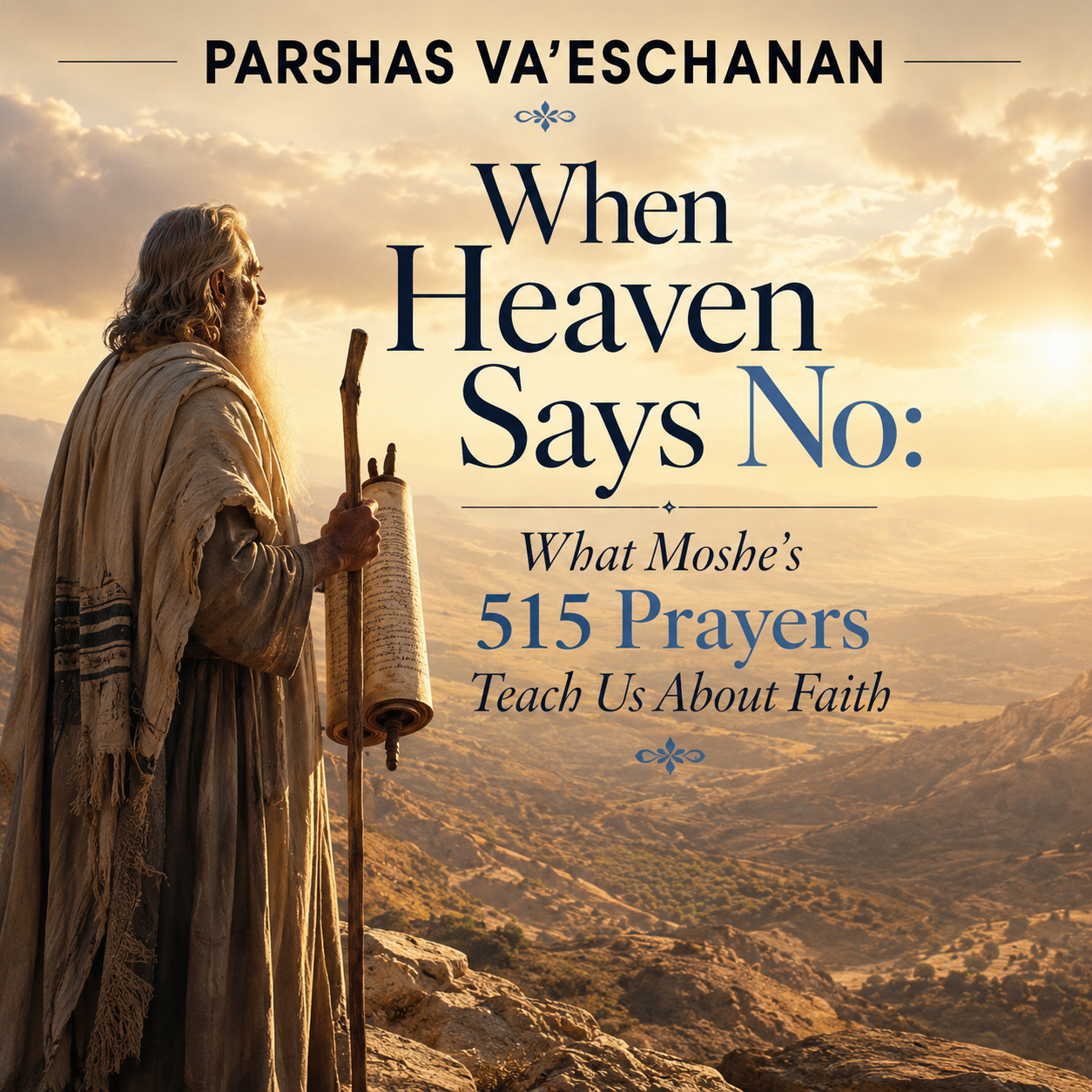
When Heaven Says No: What Moshe's 515 Prayers Teach Us About Faith
What happens when the greatest prophet who ever lived receives the answer he never wanted to hear?
Moshe Rabbeinu prayed 515 times to enter Eretz Yisrael — yet Hashem's answer remained "No."
Parshas Va'eschanan reveals one of Judaism's deepest lessons about faith: unanswered prayer does not mean unanswered love. Sometimes the greatest act of trust is believing that Hashem sees what we cannot.
Through Moshe's final plea, we discover that prayer is not only about changing our circumstances — it is about transforming our relationship with the Creator.
Read: "When Heaven Says No: What Moshe's 515 Prayers Teach Us About Faith"
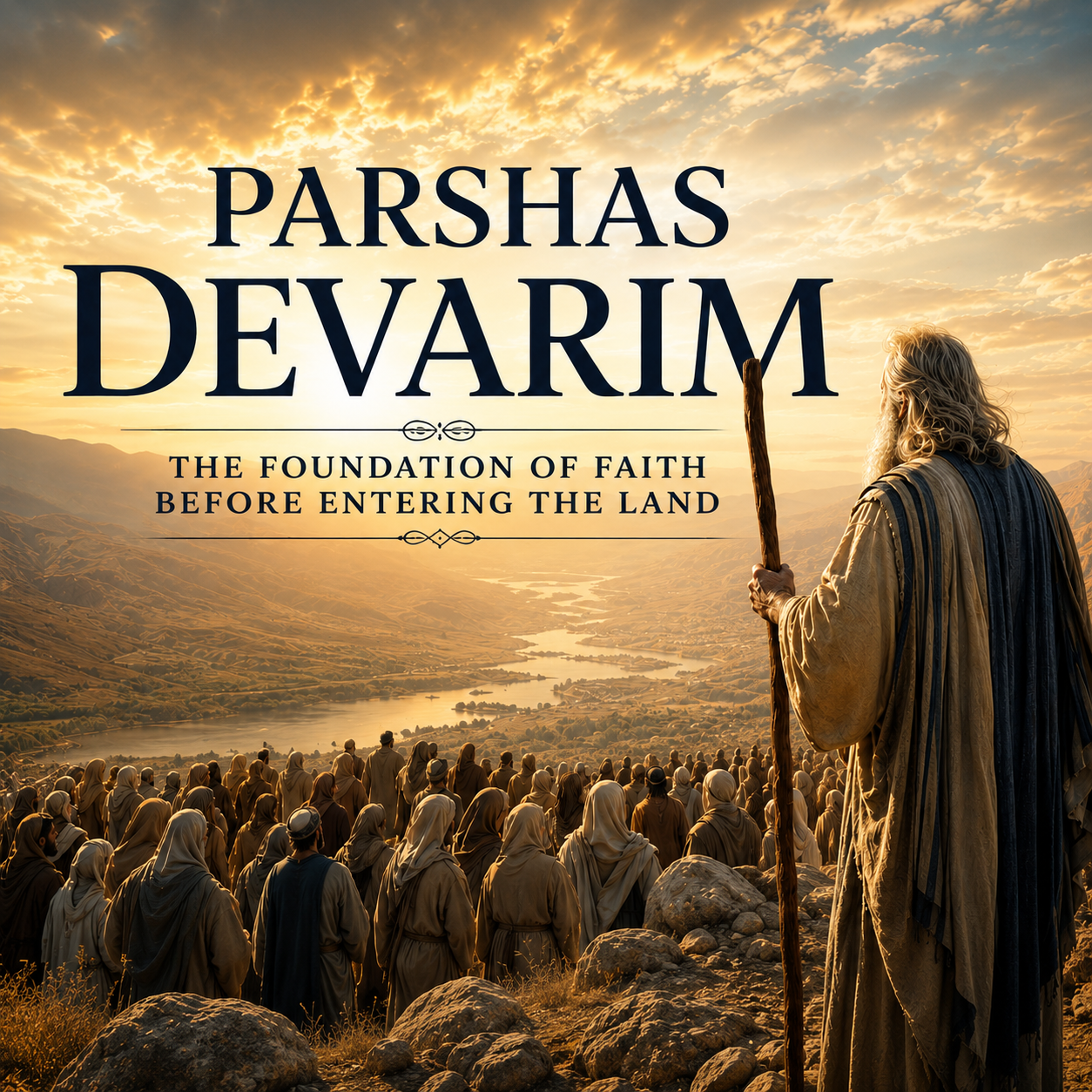
Parshas Devarim: The Foundation of Faith Before Entering the Land
Parshas Devarim teaches the timeless power of emunah, trust in HaShem, and overcoming fear before entering a new chapter. Through Moshe Rabbeinu’s final words, the story of the spies, teachings from Chazal, the Ben Ish Chai, and Rav Yisrael Salanter, we discover how faith, resilience, and hope can transform challenges into opportunities for blessing and success.
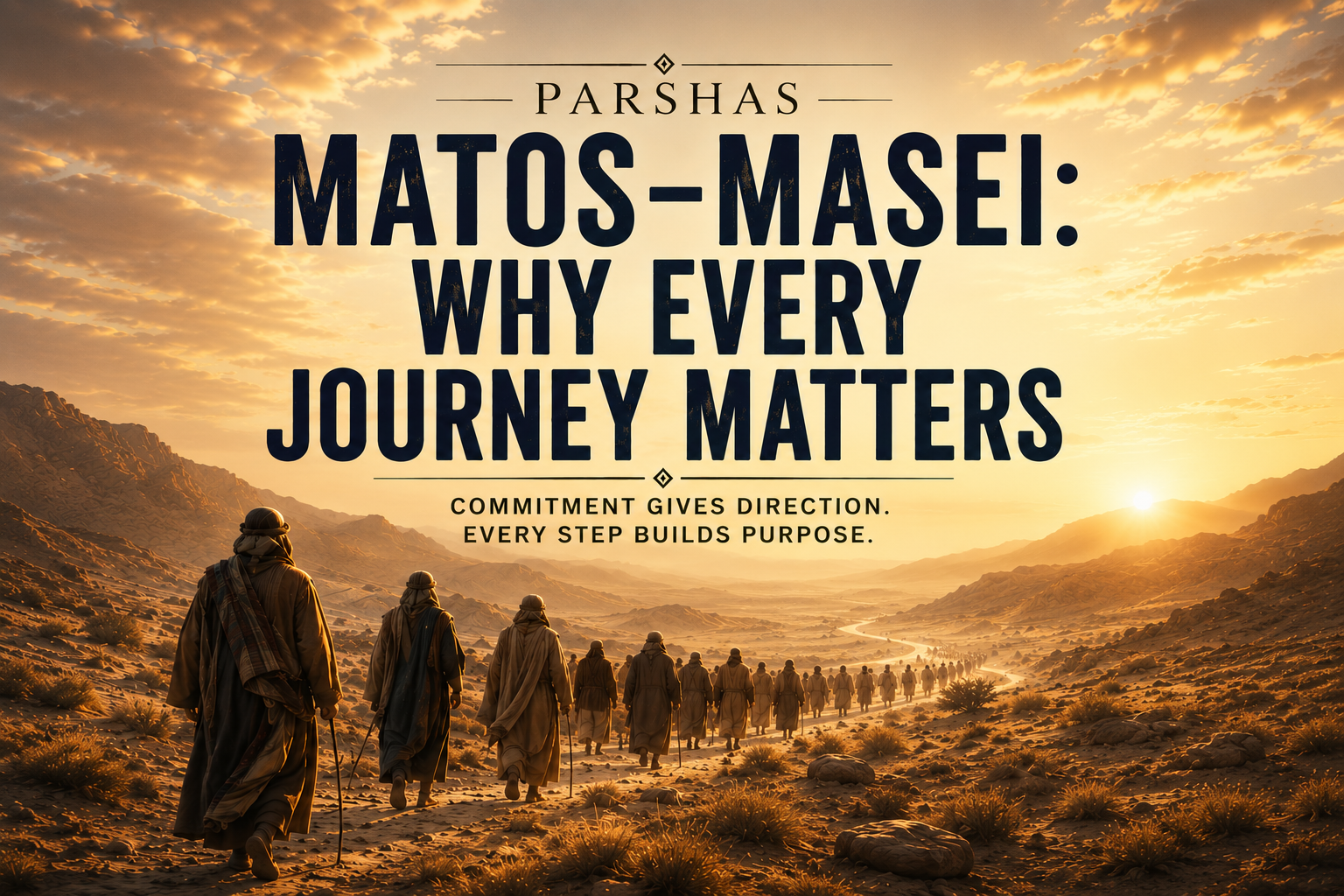
Parshas Matos-Masei: Why are They Read Together, and Why does Every Journey Matter?
Why are Parshas Matos and Masei often read together—and what does that pairing reveal about Jewish life? While the union is rooted in the structure of the Jewish calendar, the deeper message lies in how commitment and journey intertwine. Matos emphasizes the power of speech, vows, and responsibility, while Masei maps the 40-year wilderness journey of the Jewish people in striking detail. Together, they form a unified spiritual framework: what we commit to defines how we travel through life, and every stage of that journey—whether smooth or difficult—carries purpose, meaning, and divine guidance.

The Question Left Unasked: A Timeless Lesson from the Haftarah of Parshas Chukas
The story of Yiftach is far more than a biblical tragedy. It is a timeless lesson about leadership, humility, and the dangers of acting without proper guidance. Through the lens of one of Tanach's most heartbreaking narratives, Parshas Chukas teaches that the difference between wisdom and regret may be a single question asked at the right time.

Parshas Korach: The Hidden Danger of Self-Deception and the Power of Pure Motives
Korach was wise, accomplished, and deeply spiritual. So how did he fall into one of the Torah's most devastating rebellions? This week's parashah explores the hidden power of jealousy, the danger of self-deception, and the importance of seeking truth over personal ambition.
Parshas Shelach: The Danger of Seeing What We Want to See
Why did the spies in Parshas Shelach see obstacles while Yehoshua and Kalev saw opportunity? Through the teachings of Rashi, Ibn Ezra, the Gemara, Rambam, and Pirkei Avos, discover how preconceived notions can shape our perception, why faith must guide our decision-making, and what this timeless Torah lesson teaches modern Jews about Aliyah, trust in Hashem, and overcoming life's challenges with clarity and conviction.
5 Life Lessons From Parshas Beha’aloscha
Parshas Beha’aloscha is filled with deeply human moments: leadership struggles, emotional burnout, gratitude, spiritual growth, and the challenge of maintaining faith during uncertainty. These five powerful lessons reveal how the Torah continues to guide modern Jewish life with wisdom, honesty, and hope.
Parshas Nasso: The Torah Secret to Wealth & Blessings
Discover the Torah’s powerful perspective on wealth, maaser, and blessing through Parshas Nasso, the Gemara, Rashi, Tosfos, and Midrash Tanchuma. Learn why generosity creates abundance and why withholding tithes can diminish blessing.
Counted in Love: What Parshas Bamidbar and Shavuos Teach us about Hashem’s Love and the Jewish People
Parshas Bamidbar always shows up near the holiday of Shavuos, and it’s no wonder. In Parshas Bamidbar, Hashem counts the tribes of Israel and shows us the true meaning of love. Shauos is th holiday in which we choose our relationship with Hashem.
The Spiritual Mindset Behind Sustainable Prosperity: Ancient Torah Wisdom on Wealth, Trust, and Lasting Bracha
In a world driven by ambition, productivity, and financial anxiety, the Torah offers a radically different understanding of prosperity. This thoughtful essay explores bitachon, wealth, shemittah, and sustainable abundance through the lens of Jewish wisdom, revealing why true security comes not only from effort, but from trust in HaShem.