
Parshas Re’eh - The Jewish Table: What the Laws of Kashrus Teach Us About Holiness
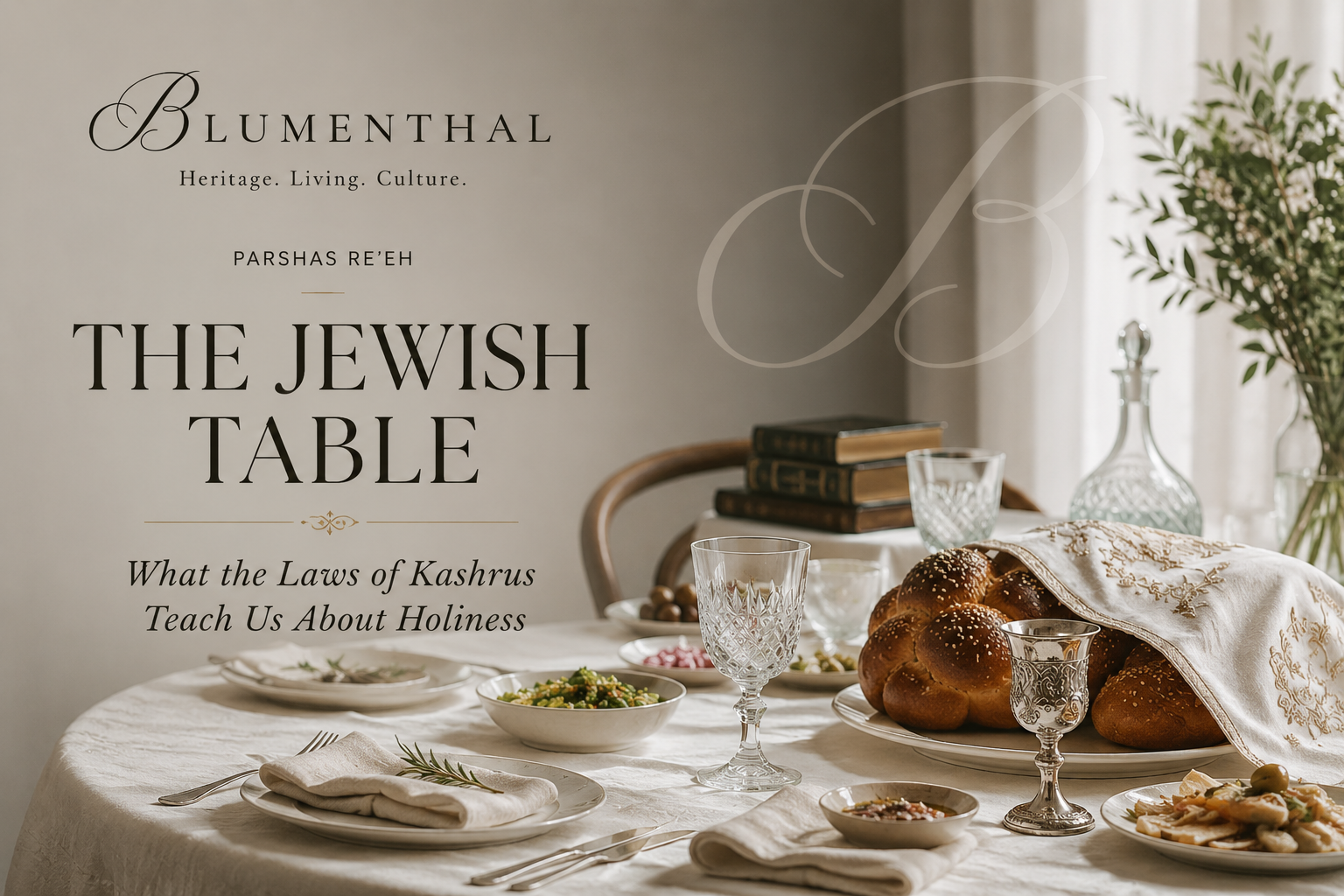
In Parshas Re’eh, the Torah reveals that eating is never merely physical. Every meal can become an expression of Jewish identity, discipline, gratitude, and connection to Hashem.
There are few activities more ordinary than eating.
We shop, prepare meals, set the table, clear the dishes, and begin again several hours later. Because food is so repetitive and physical, it is easy to imagine that eating belongs to practical life, while holiness belongs in the beis midrash, during prayer, or on Shabbos.
The Torah does not accept that division.
In Parshas Re’eh, Moshe Rabbeinu reviews the laws governing which animals, birds, and fish may be eaten. Yet before listing a single kosher sign, the Torah explains the identity from which these laws emerge:
“For you are a holy people to Hashem your God, and Hashem has chosen you to be for Him a treasured people from all the peoples that are upon the face of the earth. You shall not eat any abominable thing.” -Devarim 14:2–3
The order is significant. The Torah does not begin with a list of restrictions and then add holiness as an explanation. It begins by telling us who we are.
You are a holy people. You have been chosen for a particular relationship with Hashem. Therefore, even appetite must reflect that relationship.
Kashrus is not merely a system dividing food into permitted and forbidden categories. It is one of the Torah’s most constant ways of teaching that holiness must enter the kitchen, the marketplace, the restaurant, and the family table.
Holiness Begins With Distinction
The Hebrew word kadosh, usually translated as “holy,” also conveys separation and distinction. Something holy has been set aside for a higher purpose.
Judaism does not regard the physical world as shameful. The Torah asks us to enjoy it within boundaries.
The Gemara expresses this principle with the phrase:
“Sanctify yourself with that which is permitted to you.”
—Yevamos 20a
The Ramban to Vayikra 19:2 develops this idea in his commentary on “You shall be holy.” A person could technically avoid explicit prohibitions while still becoming a naval birshus haTorah—someone coarse within the Torah’s permission. Meat and wine may be allowed, but permission was never intended as a license for uncontrolled indulgence.
Holiness asks not only, “Is this permitted?” but also, “What kind of person am I becoming through the way I use it?”
Kashrus begins this education by requiring distinction. Before eating an animal, we must know whether it has split hooves and chews its cud. Fish require fins and scales. Birds require an established kosher tradition. Meat requires proper shechitah and preparation. Produce must be checked when infestation is a concern.
The Rambam, Mishneh Torah, Hilchos Ma’achalos Assuros 1:1, he writes:
“It is a positive commandment to know the signs that distinguish between domesticated animals, wild animals, birds, fish, and locusts that are permitted to be eaten and those that are not permitted to be eaten.”
Discernment itself becomes part of serving Hashem.
The Torah trains the Jew to look carefully at the world rather than consuming it indiscriminately.
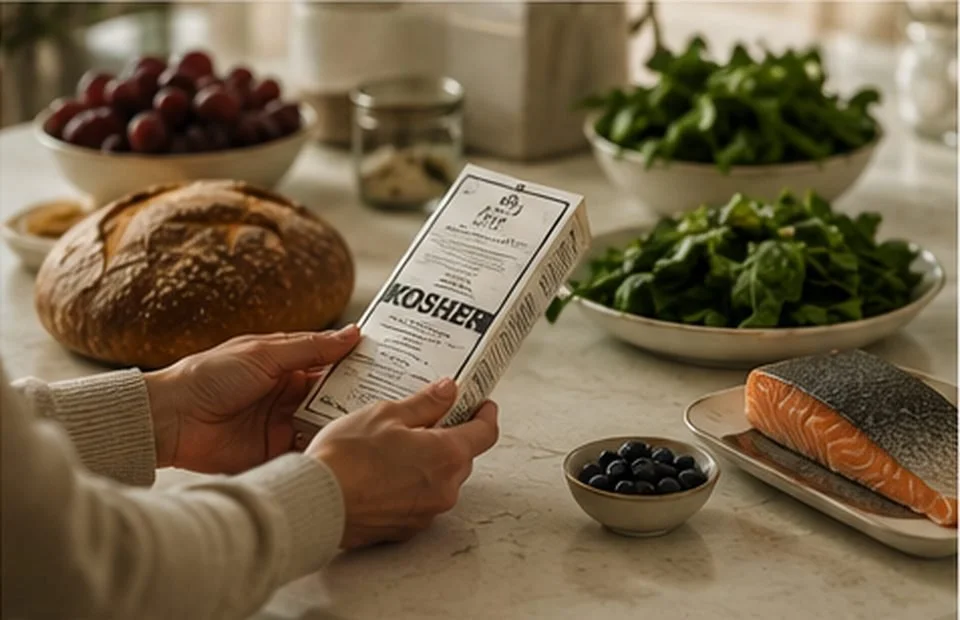
Kashrus trains us to pause, examine, and distinguish before consuming.
Every Meal Becomes a Declaration of Identity
Most desires speak the language of immediacy: I see it, I want it, and therefore I will take it.
Kashrus places a sacred question between desire and action:
May I eat this?
That question may require checking a label, recognizing a hechsher, asking how something was prepared, or walking away. It may arise in a supermarket, at an airport, during a business meeting, or while visiting another home.
The act may seem small, but it declares that desire alone does not determine behavior.
Kashrus therefore becomes a powerful expression of Jewish identity. Even far from a shul or Jewish neighborhood, the decision about what to eat carries the covenant into that place.
The Torah introduces these laws immediately after saying:
“You are children of Hashem your God.”
—Devarim 14:1
A child carries the identity of the family into every environment. Similarly, the Jewish people carry their relationship with Hashem into ordinary life. We do not cease to be His children when we leave shul and enter the dining room.

Even far from home, the choice of what to eat can become a quiet declaration of Jewish identity.
Not Everything Permitted May Be Combined
At the conclusion of the parsha’s list of permitted and forbidden species, the Torah repeats another foundational law:
“For you are a holy people to Hashem your God; you shall not cook a kid in its mother’s milk.”
—Devarim 14:21
Meat may be kosher. Milk may be kosher. Nevertheless, they may not be cooked or eaten together. The Gemara in Chullin 115b explains that the Torah repeats the prohibition three times:
“You shall not cook a kid in its mother’s milk”. (Shemos 23:19, Shemos 34:26, Devarim 14:21)
This triple repetition teaches us prohibitions against cooking, eating, and deriving benefit (such as selling it or feeding it to an animal) from a mixture of meat and milk.
This adds another dimension to holiness. Sometimes the problem does not lie in the individual object but in a combination, context, or relationship between two things.
A disciplined life therefore requires more than asking whether each element is acceptable on its own. We must also ask whether those elements belong together.
Kashrus teaches that holiness depends upon structure. Not everything available must be consumed. Not everything permitted must be combined. Not every desire must be satisfied immediately.
Without boundaries, freedom easily becomes slavery to appetite. Torah gives us the freedom to decide rather than react.
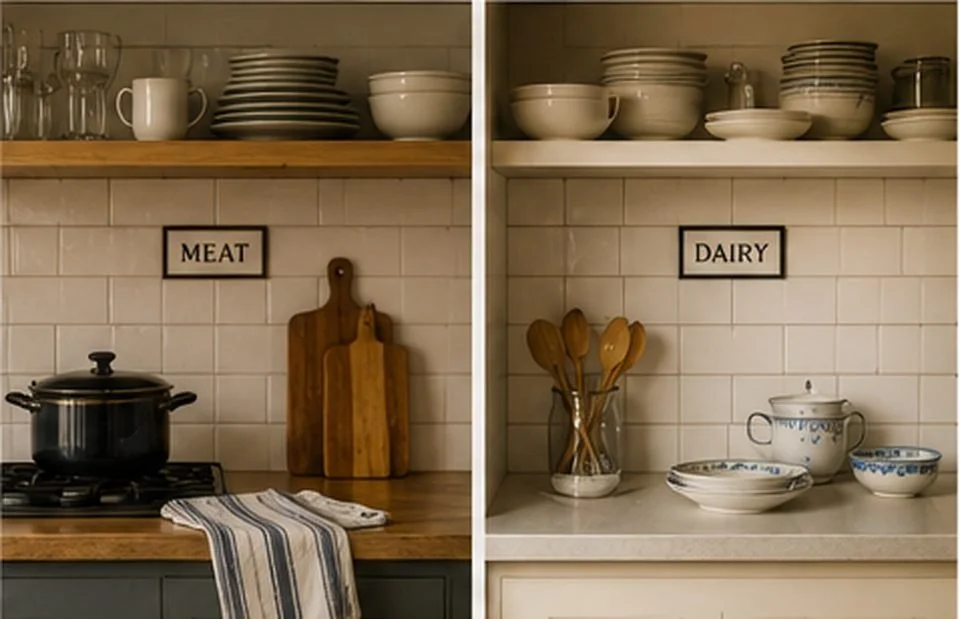
Kashrus teaches that holiness is created not only through ingredients, but also through boundaries and structure.
What We Consume Affects Who We Become
In Parshas Shemini, after presenting the laws of kosher and non-kosher creatures, Hashem says:
“You shall sanctify yourselves, and you shall be holy, for I am holy.”
—Vayikra 11:44
The Gemara in Yoma 39a notices an unusual spelling in the Torah’s warning not to become spiritually contaminated through forbidden creatures. It connects venitmeisem, “you will become contaminated,” with timtum, a dulling or blockage of the heart.
Forbidden consumption can reduce spiritual sensitivity. It may cloud the inner awareness through which a person recognizes holiness, wisdom, and responsibility.
The Ramchal explains in Mesillas Yesharim, Chapter 11, that forbidden food is especially serious as compared to other prohibitions because the food that we eat does not remain outside the person. It enters the body and becomes part of the energy with which we think, speak, act, pray, and perform mitzvos.
Kosher food does not automatically make a person refined. For instance, one may keep a meticulous kitchen while speaking lashon hara at the table.
Rather, the Torah teaches that spiritual life cannot be separated from physical habits. What repeatedly enters our lives affects us. Food shapes the body, habits shape character, and choices shape the soul.
The Sefer HaChinuch describes the body as an instrument through which the soul performs its work. The body is not the enemy of holiness. It is one of holiness’s most important vessels.
Sefer HaChinuch, Mitzvah 73, in the explanation of the prohibition against eating a tereifah—an animal that was fatally injured- he writes:
“The body is an instrument for the soul; through it, the soul performs its work, and without it, its work can never be completed.”
He then compares the body to tongs in the hand of a craftsman. When the instrument is strong and properly formed, the craftsman can perform his work successfully. When the instrument is damaged, the work is impaired. He uses this idea to explain why the Torah distances us from forbidden foods: the condition of the body affects the soul’s ability to carry out its purpose.
A Bracha Changes the Meaning of Eating
Kashrus determines what may enter our mouths. Brachos determine how we receive it.
The Gemara in Berachos 35a teaches that a person may not benefit from this world without first making a blessing. One who does so is compared to someone who has misappropriated something belonging to Hashem.
A bracha is only a few words, but it changes the posture of the entire act.
Without a blessing, food can feel like something we simply possess. We purchased it, prepared it, and placed it on our table. The bracha interrupts that illusion. Human beings do not create wheat, fruit, water, soil, sunlight, or life. We receive them.
Before eating bread, we recognize Hashem as the One “Who brings forth bread from the earth.” Before eating fruit, we recognize the Creator of the tree. Before drinking water, we acknowledge that everything came into being through His word.
The blessing does not make the food exist. It makes us notice why it exists.
After eating, the Torah commands:
“You shall eat and be satisfied, and you shall bless Hashem your God for the good land that He gave you.”
—Devarim 8:10
Bircas Hamazon teaches that satisfaction must lead to gratitude. The danger of abundance is not merely overeating. It is forgetfulness. A hungry person knows that he needs help; a satisfied person may begin to imagine that he is self-sufficient.
The Jewish response to fullness is therefore not entitlement but blessing.
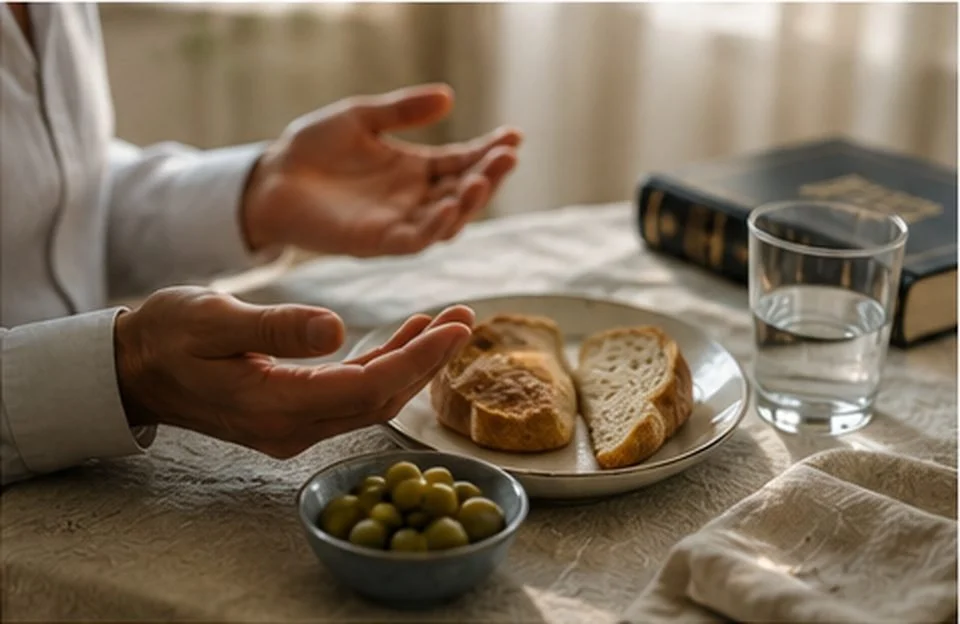
A bracha transforms food from something we possess into something we consciously receive from Hashem.
Eating for the Sake of Serving Hashem
The Rambam in Mishneh Torah Hilchos De’os 3:1-3 presents a broader vision of physical life. A person should not eat merely for pleasure, nor should he reject food through unnecessary self-denial. He should eat in a way that preserves health and enables him to serve Hashem.
When a person cares for the body so that he can learn, pray, work honestly, care for family, and perform mitzvos, even eating becomes part of avodas Hashem.
The Rambam writes that a person who lives with this intention can serve Hashem constantly—even while eating, sleeping, working, and attending to ordinary needs.
Spirituality does not require escaping daily life. It asks us to direct daily life toward a sacred purpose.
A nourishing breakfast eaten so that one can function with patience may be avodas Hashem. Preparing a meal for one’s family can become chesed. Caring for health can become responsibility. Serving beautiful food on Shabbos can become kavod Shabbos and oneg Shabbos.
Holiness comes not only from the food, but from the purpose, restraint, gratitude, and love brought to it.

When physical health is directed toward a higher purpose, even an ordinary meal can become part of avodas Hashem.
The Table That Replaced the Altar
The Sages offer a remarkable description of the Jewish table.
The Gemara in Berachos 55a teaches that while the Beis HaMikdash stood, the mizbe’ach brought atonement. After its destruction, a person’s table brings atonement—especially when it is used to feed others.
A dining table seems ordinary, while the mizbe’ach stood at the center of the holiest place in the Jewish world. Yet both can become places where a person gives rather than merely takes.
At the mizbe’ach, something was offered to Hashem. At the Jewish table, food can be offered to a guest, a poor person, a lonely neighbor, or a child who needs care and attention. The table becomes sacred when it is no longer devoted only to satisfying those who own it.
In Pirkei Avos 3:3, Rebbi Shimon teaches that when people eat together and share words of Torah, it is as though they have eaten from the table of Hashem.
This is the fuller meaning of a Jewish table. It is where Kiddush is recited, and challah is blessed. It is where children hear words of Torah, guests are welcomed, zemiros are sung, and family memories are formed.
A kosher table should therefore be measured not only by what is kept off it, but also by what is brought to it.
Are there words of Torah?
Is there gratitude?
Is there dignity?
Is there room for another person?
Is the conversation itself kosher?
The laws of kashrus protect the sanctity of the food. Our behavior must protect the sanctity of the meal.
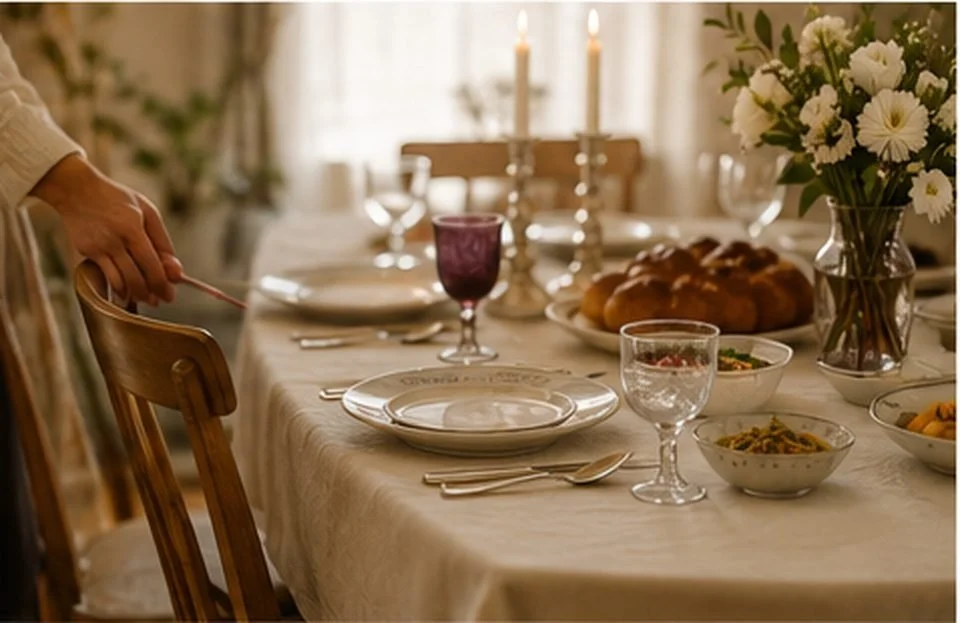
The Jewish table becomes sacred when it is used not only to feed ourselves, but also to welcome and care for others.
More Than a List of What We Cannot Eat
Parshas Re’eh does provide a list. It identifies the animals that may be eaten, the signs of kosher fish, prohibited birds, and the separation of meat and milk.
But the list carries a larger message.
Kashrus teaches that holiness begins with attention. It asks us to distinguish before consuming, to pause before satisfying desire, and to remember that not everything in the world belongs to us simply because we can obtain it.
It teaches discipline without rejecting pleasure.
It teaches identity without requiring an audience.
It teaches gratitude without denying human effort.
It teaches that the body can serve the soul and that a meal can serve Hashem.
The Jewish table is therefore not merely a place where kosher food is served. It is where appetite meets covenant. It is where the material world is received with a Bracha, governed by Torah, shared with others, and elevated toward a greater purpose.
The Torah does not ask us to leave the physical world behind to become holy.
It asks us to invite Hashem into the way we live within it.
And sometimes, that invitation begins simply by deciding what we will place on the table.