
Parshas Pinchas: Tribal Land and Identity:
The First Blueprint of Jewish Connection to Israel
Written by Yitzchak Zeitler
When Geography Becomes Destiny
Parshas Pinchas closes a turbulent chapter in the wilderness and opens the door to something far more permanent: the Jewish people’s relationship with Eretz Yisrael. After plague, leadership transition, and census, the Torah turns to what appears to be a technical matter—the division of the land among the tribes.
Yet the Torah does not treat this as administration. It treats it as a revelation.
The division of Eretz Yisrael is not merely about allocating territory. It is about defining identity. Each tribe’s inheritance becomes a spiritual expression of who they are meant to be within the collective body of Klal Yisrael.
What emerges is a profound idea: the geography of Eretz Yisrael is not political. It is ontological.
The Census Before the Land: Why Counting Comes First
The Torah records:
“To these shall the land be divided as an inheritance, according to the number of names.”
— Bamidbar 26:53
The passage in Bamidbar 26:52–56 establishes a direct relationship between the census and the land division. Only after each individual is counted does the land become assignable.
Rashi explains that this counting is not incidental. It reflects Hashem’s love for each individual. As Rashi states elsewhere (Bamidbar 1:1), Hashem repeatedly “counts” Israel because of His affection for them, like someone who constantly counts their treasured possessions.
But here, the counting serves another purpose: it becomes the foundation for inheritance.
A nation cannot inherit its land as a mass. It must first be defined in terms of individuals and tribes. Identity precedes geography.
Rashi: The Lottery That Was Never Random
The Torah instructs that the land be divided by lottery (goral). At first glance, a lottery seems to remove intention. It appears to introduce randomness.
Rashi (Bamidbar 26:54) overturns this assumption completely.
He explains that the lottery was not chance, but a vessel for Divine communication. The result that emerged was aligned with Hashem’s will in a precise and miraculous way. The land “spoke” its assignment through the draw.
In other words, the lottery did not obscure Divine intention—it revealed it.
This is a radical theological idea: what appears random in history may, in truth, be the most precise expression of Divine design.
The Jewish people do not receive land through power, politics, or negotiation. They receive it through revelation disguised as chance.
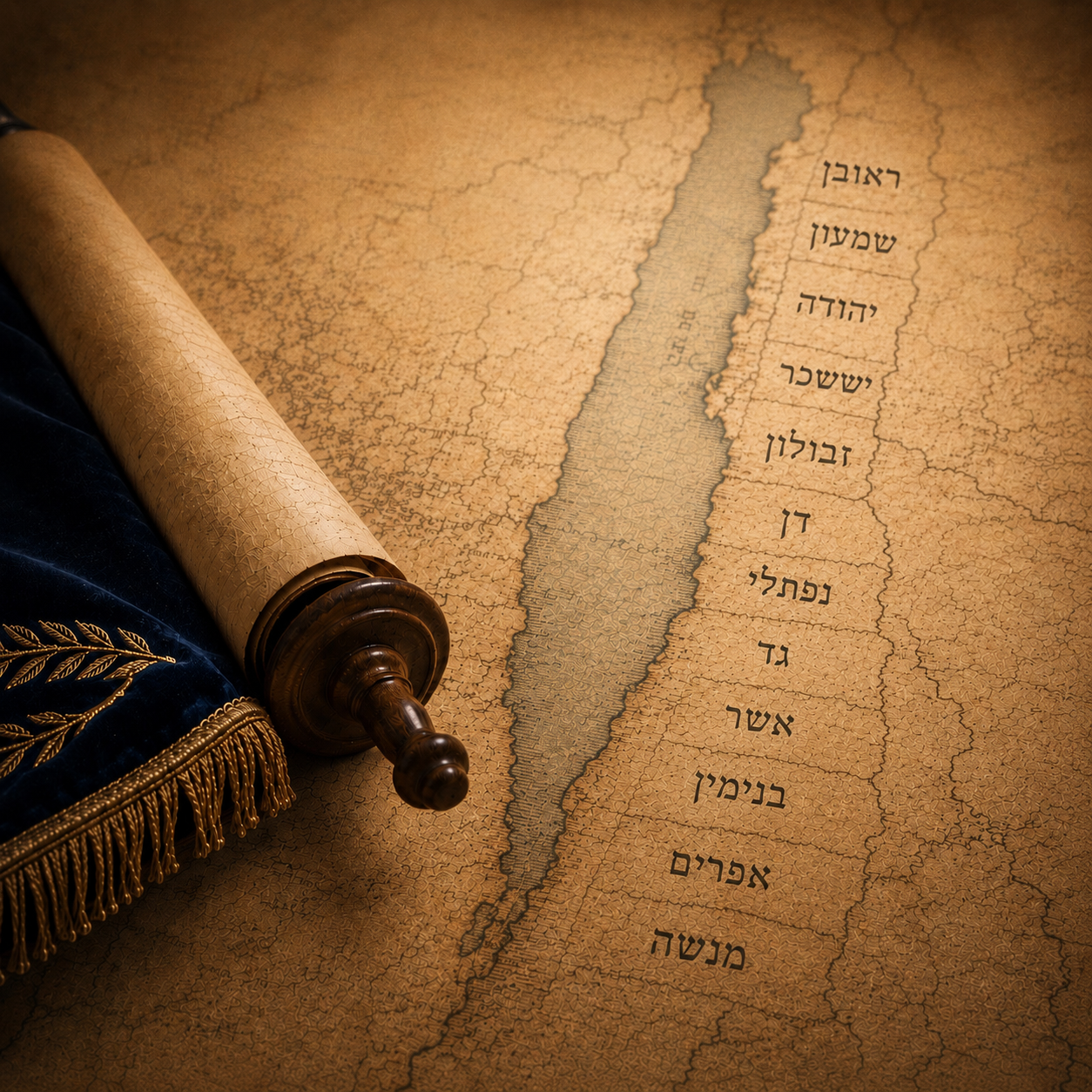
Bava Basra 122a: When Heaven Confirms the Map
The Talmud in Bava Basra 122a describes the division of Eretz Yisrael as a dual process involving both the goral (lottery) and the Urim v’Tumim, the breastplate of the Kohen Gadol through which Divine guidance was received.
The tribes’ names and the land boundaries aligned with supernatural precision. The lottery indicated one result, and the Urim v’Tumim confirmed it, leaving no doubt that the allocation was not humanly constructed.
The Talmud emphasizes that this process was not a political compromise or tribal negotiation. It was a Divine mapping of identity onto geography.
The land was not divided according to human logic. Human logic was shaped to fit the Divine division.
Ramban: Inheritance as Spiritual DNA
The Ramban deepens the concept of inheritance (nachalah) beyond legal ownership. For Ramban, inheritance is not acquisition—it is continuation.
A nachalah is something that expresses the essence of the recipient. It is not external property, but internal identity extended into physical space.
Thus, each tribe’s portion of Eretz Yisrael corresponds to its unique spiritual role within Klal Yisrael.
Yehudah’s kingship, Zevulun’s commerce, Yissachar’s Torah study, Dan’s justice—each tribe’s character is not abstract. It is rooted in land.
The land is not neutral. It is spiritually coded.
According to Ramban, this is why the Torah insists so strongly on precise boundaries. The land itself is part of the spiritual architecture of the Jewish people.
To remove a tribe from its land is not just displacement—it is disruption of identity alignment.
The Sfas Emes: The Land as Inner Alignment Made External
The Sfas Emes offers a Chassidic layer that transforms the entire discussion.
He explains that Eretz Yisrael is called the “center” of spiritual reality because it reflects the inner alignment of the Jewish soul. The physical land is not separate from spiritual identity—it is its outward expression.
According to the Sfas Emes, every tribe’s portion corresponds to its unique spiritual root. The land is not just a reward or inheritance—it is the physical manifestation of inner avodah.
This means that when the Torah assigns land to tribes, it is not assigning geography—it is revealing truth.
The land becomes a mirror. Each tribe sees itself embodied in its territory.
In this sense, Eretz Yisrael is not only a homeland. It is a spiritual map of the Jewish soul projected into physical reality.
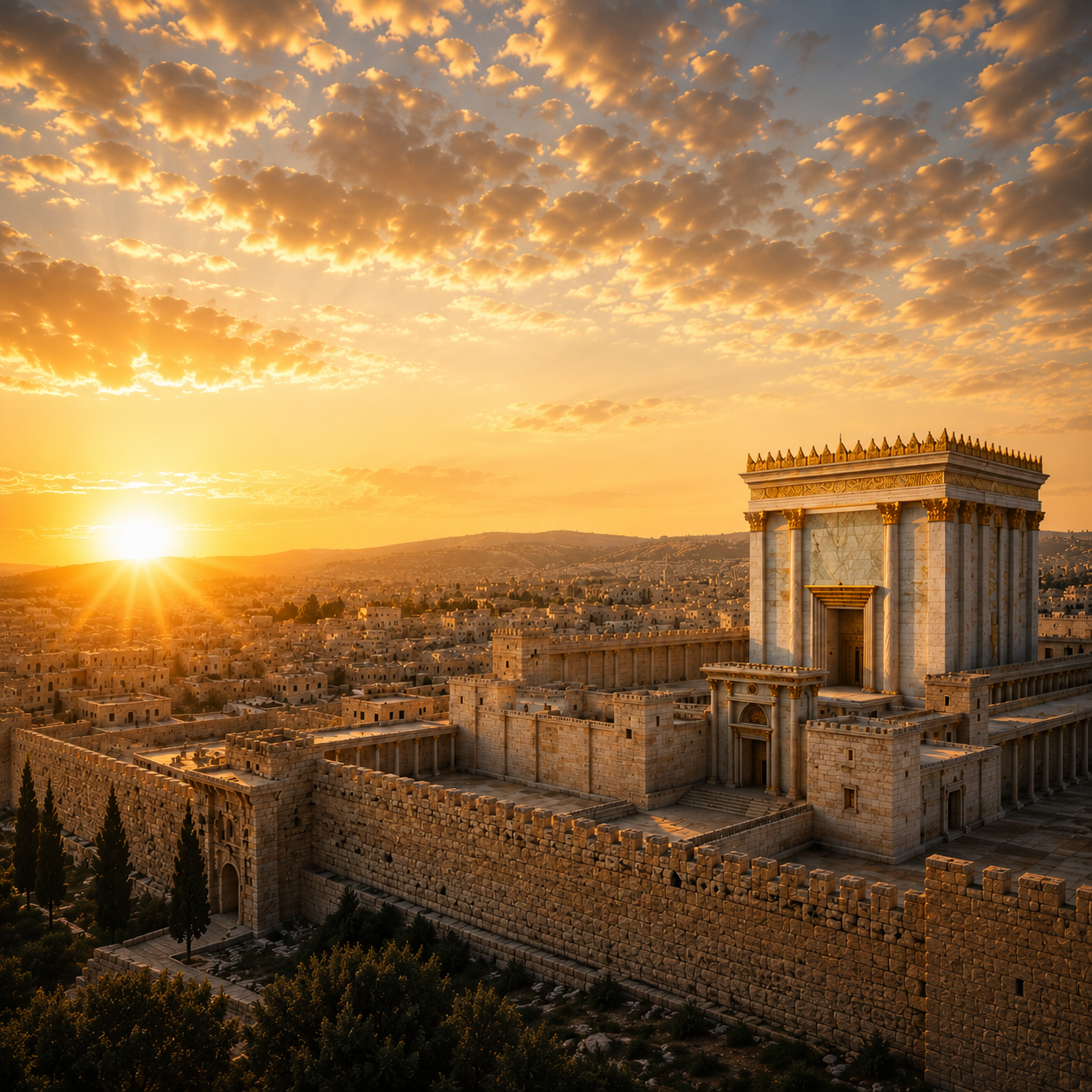
Why Tribal Identity Still Matters Today
At first glance, tribal identity appears historical. We no longer function as twelve distinct land-holding tribes. The Temple service is not divided by tribal territory. Modern Jewish life does not assign identity based on geography.
Yet the underlying principle remains deeply relevant.
The idea that each Jew has a unique spiritual role—rooted in the structure of Klal Yisrael—is still foundational.
The Baal Shem Tov taught that every Jew is essential, and every soul has a distinct mission. This echoes the tribal system: unity does not erase individuality—it depends on it.
Even without land division, the concept persists in spiritual form. Communities, traditions, personalities, and paths of avodah all reflect a continuation of tribal diversity within unity.
Eretz Yisrael becomes, in this framing, not just a physical inheritance but a spiritual anchor that holds the diversity of Jewish identity together.
From Territory to Testimony
Modern discourse often reduces land to politics: borders, governance, control, and sovereignty. But Parshas Pinchas presents a radically different framework.
The land is not primarily a political entity. It is a testimony.
It testifies to the relationship between Hashem and His people. It testifies that identity is not self-created—it is Divinely assigned. It testifies that geography itself can be holy when aligned with spiritual truth.
The division of the land is therefore not an endpoint of Jewish history. It is a revelation of its structure.
The Hidden Logic of the Lottery
One of the most striking ideas in this parsha is the use of a lottery to determine destiny.
Humanly speaking, a lottery is the absence of control. Spiritually speaking, in the Torah’s framework, it is the highest expression of Divine control.
The paradox is intentional. The Jewish people enter their land not through conquest alone, but through surrender to a system that appears random but is perfectly guided.
This teaches a deeper truth: what we perceive as uncertainty in life may, in fact, be concealed precision.
A Land That Reflects the Soul of a Nation
When all sources are combined—Rashi, Ramban, the Talmud, and the Sfas Emes—a unified picture emerges.
Eretz Yisrael is not just a homeland. It is a structured reflection of Jewish identity itself.
Rashi reveals that the lottery is Divine speech.
The Talmud shows that Heaven confirms the allocation.
Ramban explains that each portion reflects spiritual essence.
The Sfas Emes teaches that the land is the external expression of inner reality.
Together, they form a blueprint: the Jewish people and the Land of Israel are not separate entities that connect later in history. They are intertwined from the beginning of destiny.
Conclusion: Assignment Is Identity
Parshas Pinchas teaches that before the Jewish people could enter Eretz Yisrael, they had to be defined by it.
The census defined individuals. The tribes defined a structure. The lottery revealed Divine assignment. The land became the physical expression of spiritual identity.
In this way, Eretz Yisrael is not simply the Jewish homeland. It is the spatial unfolding of Jewish being.
The message that echoes through Rashi, Ramban, the Talmud, and the Sfas Emes is simple yet profound:
The land was not chosen. It was assigned.
And assignment, in Torah, is never arbitrary—it is identity revealed.