
Parshas Balak: When Enemies Unite, Hashem’s Protection Prevails
Written by Yitzchak Zeitler
The Jewish people endure not because of numbers, military power, political alliances, or human ingenuity. We endure because Hashem remains faithful to His covenant.
Parshas Balak reminds us that the nations of the world may unite, propagandists may rewrite history, and enemies may attempt to obscure the truth. But ultimately, Hashem’s plan prevails. It is our job to remember these things and not try to think that anything but Hashem can control our destiny.
Throughout Jewish history, enemies of the Jewish people have repeatedly sought our destruction. Sometimes they have come from a single nation.
At other times, bitter rivals have set aside their differences and united against a common target: the Jewish people.
Parshas Balak demonstrates a profound lesson that remains relevant today. Human beings often imagine that they control history, that political alliances determine outcomes, and that powerful individuals shape the destiny of nations.
Yet the Torah teaches that Hashem alone directs history. Those who place their trust in Him will ultimately prevail, while those who seek to oppose His will discover the limits of human power.
The message is beautifully expressed in this week’s Haftarah:
“The remnant of Jacob shall be, in the midst of many peoples, like dew from HASHEM, like raindrops on grass—which do not look to anybody nor place their hope in mankind”. (Micah 5:6)
And further:
”He has told you, O man, what is good, and what Hashem requires of you: Only the performance of justice, and to love kindness, and to walk humbly with your God.” (Micah 6:8)
The Jewish people are instructed not to place their faith in worldly powers but in Hashem alone.
The Story Behind the Story
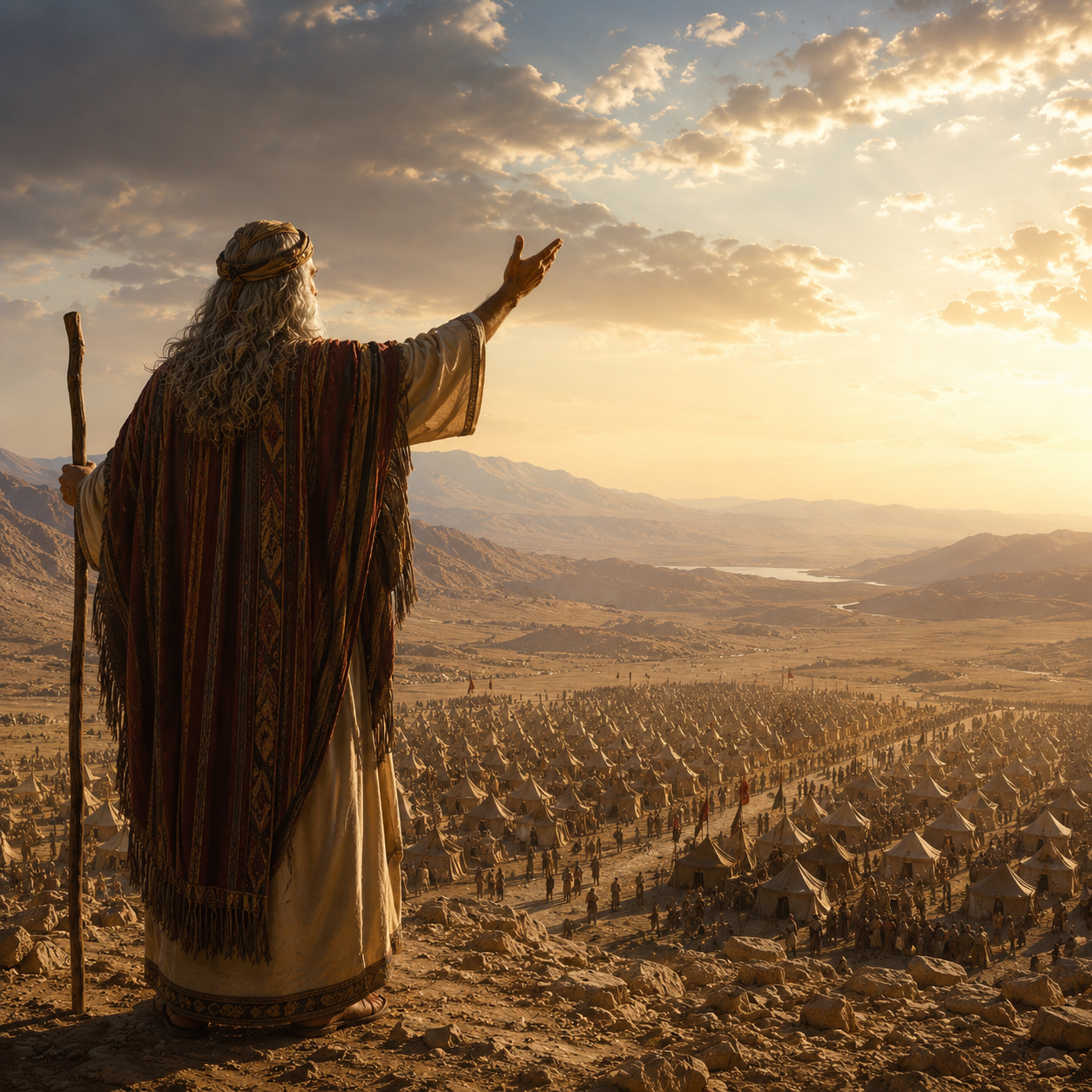
When reading Parshas Balak, it is important to remember the events that immediately preceded it.
In Parshas Chukas, the Torah records that the Jewish people approached Sihon, king of the Amorites, with a peaceful request:
“Let me pass through your country. We will not turn off into fields or vineyards, and we will not drink water from wells. We will follow the king's highway until we have crossed your territory.” (Bamidbar 21:22)
Sihon refused. Rather than allowing Israel passage, he assembled his army and attacked. The Torah then records that Israel defeated Sihon and captured his territory.
Significantly, the land Israel acquired had originally belonged to Moab before Sihon himself had conquered it. Rashi explains on Bamidbar 21:26 that the Torah specifically emphasizes this point because Hashem had instructed Israel not to attack Moab directly. Since Sihon had already taken the territory from Moav, it was now legally and morally permissible for Israel to conquer it from Sihon. The land no longer belonged to Moav.
The same idea appears in Midrash Tanchuma (Chukas 24), where the Midrash explains that Hashem, who loves justice and hates robbery, arranged matters so that Israel would not be guilty of taking land directly from Moav. Sihon first conquered the territory, and only afterward did Israel conquer it from Sihon.
Far from being an act of theft or aggression, the conquest unfolded according to Hashem’s plan and His standards of justice.
Bilaam’s Attempt to Rewrite History
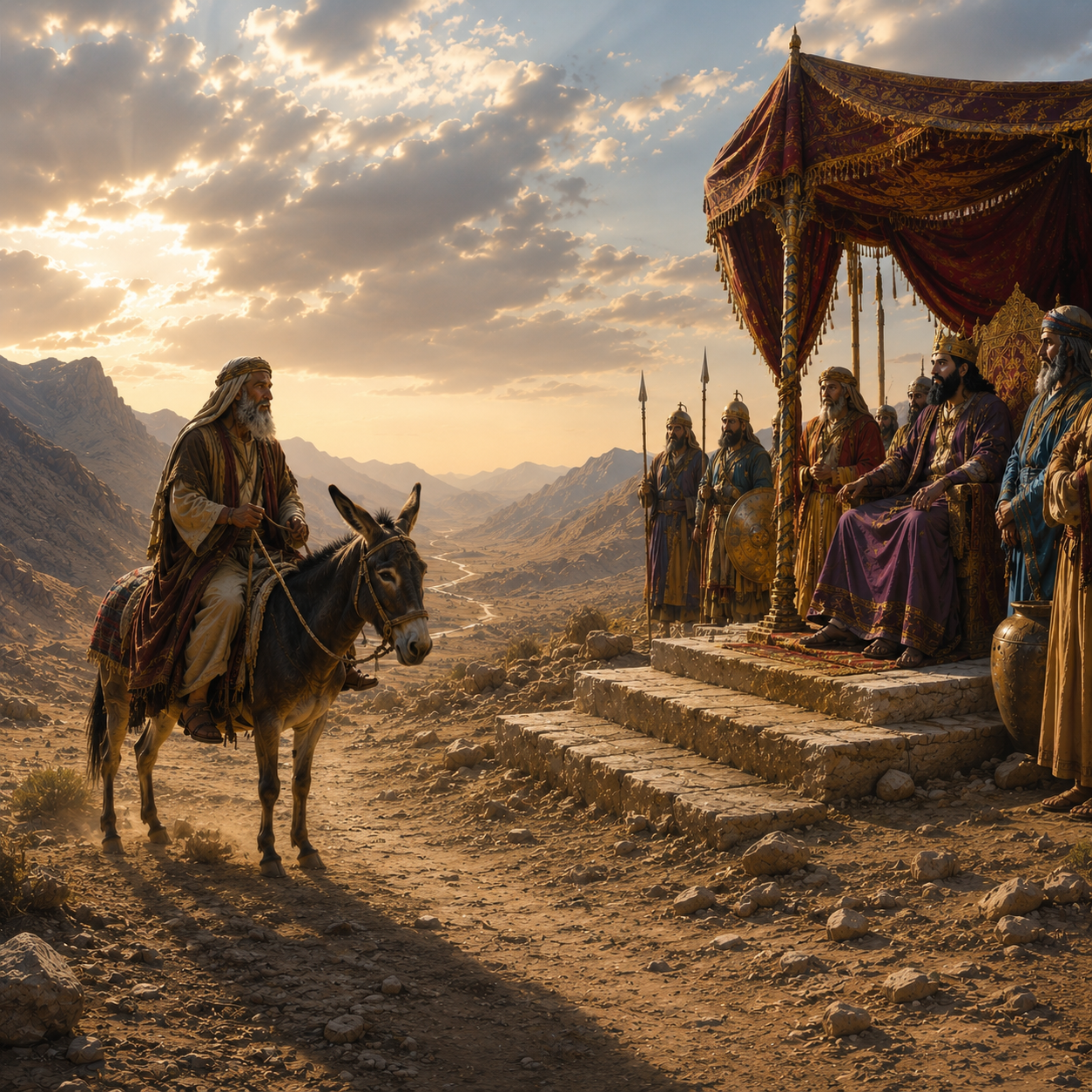
Yet not everyone told the story that way.
The Torah states:
“About this the Poets would say: Come to Heshbon; let it be built and established as the city of Sihon.” (Bamidbar 21:27)
Rashi identifies these “poets” as Bilaam and his father Beor.
According to Rashi, Sihon had difficulty capturing Heshbon and enlisted Bilaam to curse the city. Bilaam then took credit for Sihon’s success, creating the impression that his own powers had determined the outcome. This claim is particularly revealing.
The Torah repeatedly emphasizes that Hashem Himself hardened Sihon’s heart (Devarim 2:30) and delivered him into Israel’s hands:
“Hashem your God delivered him to us” (Devarim 2:33)
What Bilaam portrayed as the result of his own supernatural abilities was, in reality, part of Hashem’s plan from the beginning.
The Gemara (Sanhedrin 105a) identifies Beor as Lavan the Aramean, another historic enemy of the Jewish people. Once again, we encounter a figure seeking influence and recognition while obscuring the true source of events.
The lesson is timeless. Human beings often seek credit for outcomes that ultimately emerge from Divine providence. Not to dig specifically into the politics of today, but today’s political leaders, military strategists, commentators, and self-proclaimed experts may all claim to understand history’s movements.
The Torah reminds us that behind every event stands Hashem.
Strange Allies Against a Common Enemy
This context helps us appreciate the remarkable developments at the beginning of Parshas Balak. After witnessing Israel’s victory over Sihon, Balak became terrified:
“Moav was alarmed because that people was so numerous.” (Bamidbar 22:3)
Balak sought help from Bilaam, the very man whom tradition associates with Moav’s earlier loss of territory.
An obvious question emerges: Why would Moav hire Bilaam? If Bilaam had played a role in Sihon’s conquest of Moav, why would the Moabites trust him? The answer reveals the depth of their fear.
Even more surprising was Moav’s alliance with Midian.
Rashi notes that Moav and Midian were long-standing enemies. Yet they temporarily set aside their hostilities because they viewed Israel as a greater threat. The Midrash explains that they observed Israel’s victories and recognized that Israel’s strength was not military alone. Moshe had grown up in Midian, so they consulted the Midianites regarding the source of Israel’s power.
The answer they received was striking:
“His power lies only in his mouth”.
Israel’s strength came through prayer, through its relationship with Hashem.
Moav, therefore, sought a man whose power also lay in his mouth: Bilaam.
Their strategy was simple. If Israel’s weapon was prayer, they would respond with curses.
The Alliance of Fear
The Gemara (Sanhedrin 105a) offers a memorable parable. Two dogs constantly fought with one another. One day, a wolf attacked one of them. The other dog realized that if he failed to help, the wolf would eventually attack him as well. Together, they defeated the wolf.
So too, Moav and Midian suspended their mutual hatred because they believed they faced a common danger.
Rav Pappa adds another proverb: “A weasel and a cat made a wedding from the fat of the luckless.” Even natural enemies can cooperate when mutual interests align. This pattern has appeared throughout history. Groups that disagree on nearly everything else sometimes unite in opposition to the Jewish people. Parshas Balak reminds us that such alliances are neither new nor surprising.
The Wisdom of Midian’s Elders
Ironically, some of the wisest people in the story were the elders of Midian. Midrash Tanchuma (Balak 5) explains that they brought divination tools to Bilaam to ensure that he could immediately begin his work.
Yet when Bilaam said:
“Lodge here tonight, and I will bring you word when the Lord speaks to me.” (Bamidbar 22:8)
The elders of Midian departed. Why? Because they understood something fundamental. If Bilaam needed permission from Hashem, then he was powerless to act independently.
The Gemara explains their reasoning:
“Is there any father who hates his son?”
They recognized that Hashem would not assist someone seeking to destroy His people.
Remarkably, these pagan elders displayed greater clarity than Bilaam himself. They understood that no curse could succeed against a nation protected by Hashem.
The Eternal Lesson
Parshas Balak teaches that enemies may gather, alliances may form, and powerful individuals may attempt to shape events through political influence, military strength, or spiritual manipulation.
Yet none of these forces determines history. Bilaam could not curse whom Hashem had blessed. Balak could not defeat a nation protected by Hashem.
Moav and Midian could not overturn Divine promises through human schemes.
The Haftarah, therefore, concludes with a message that transcends every generation:
“The remnant of Jacob shall be... like dew from GOD... which do not look to anybody nor place their hope in mankind.”
The Jewish people endure not because of numbers, military power, political alliances, or human ingenuity. We endure because Hashem remains faithful to His covenant.
Parshas Balak reminds us that the nations of the world may unite, propagandists may rewrite history, and enemies may attempt to obscure the truth. But ultimately, Hashem’s plan prevails. It is our job to remember these things and not try to think that anything but Hashem can control our destiny.
The proper response is not fear, but faith. As the prophet Micah teaches:
“He has told you, O man, what is good, and what Hashem requires of you: Only the performance of justice, and to love kindness, and to walk humbly with your God.”
When we place our trust in Hashem rather than in human power, we discover the lesson that Balak, Bilaam, and even the elders of Midian eventually learned:
No force can overcome those whom Hashem chooses to protect.