
When Heaven Says No: What Moshe's 515 Prayers Teach Us About Faith
Written by Yitzchak Zeitler
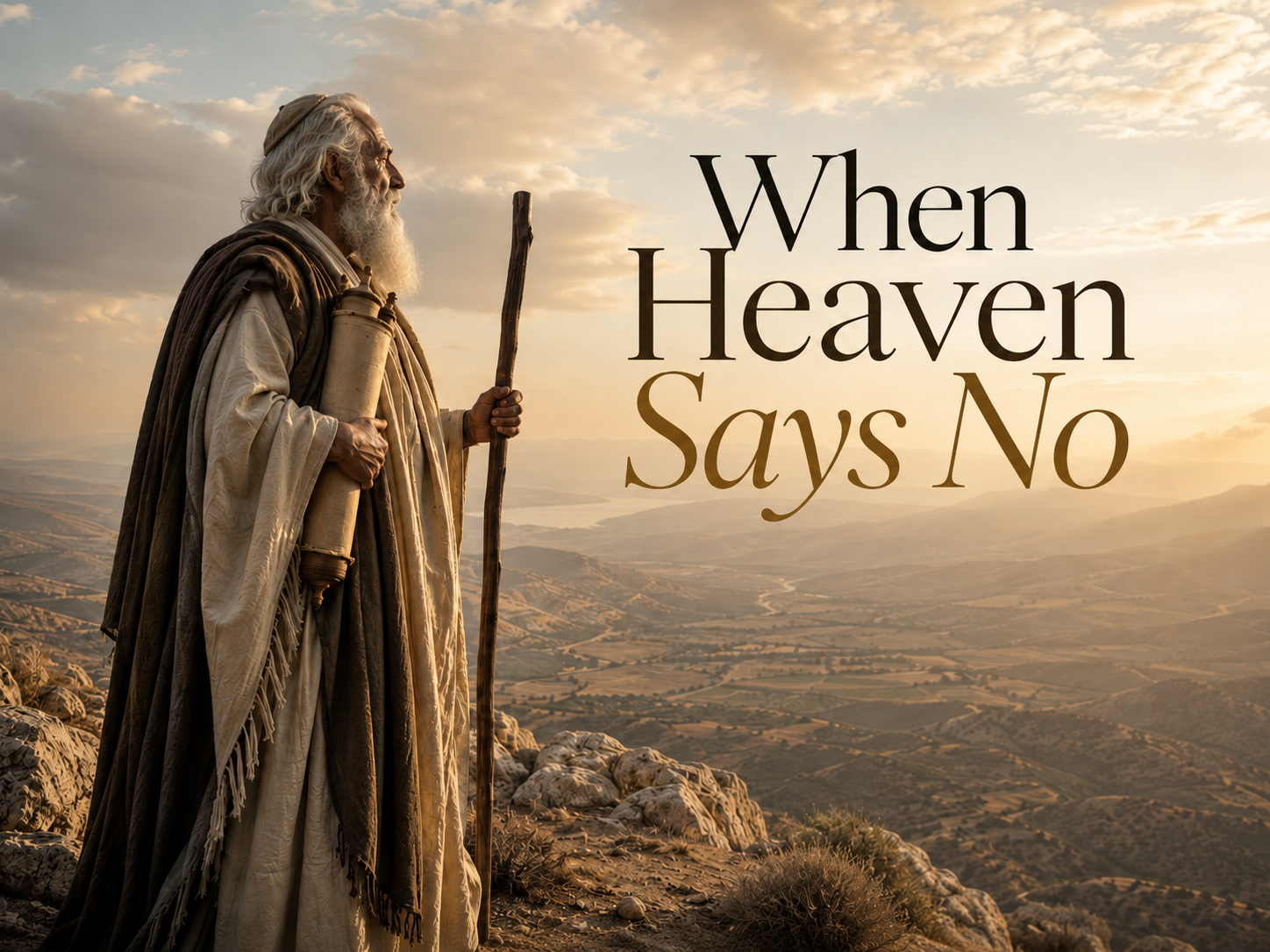
Longing → Prayer → Acceptance → Transformation → Legacy
There is perhaps no greater mystery in the life of faith than an unanswered prayer.
A parent whispers Tehillim beside a hospital bed. A couple waits years for the blessing of children. Someone prays for healing, reconciliation, livelihood, or clarity in a difficult season. The prayers are sincere. The tears are real. Yet Heaven seems silent.
It is tempting to believe that unanswered prayer reflects weak faith or Divine distance.
Parshas Va'eschanan shatters that assumption. For if there was ever a person whose prayers should have been answered, it was Moshe Rabbeinu.
The greatest prophet who ever lived. The faithful shepherd of Israel. The man who spoke with Hashem panim el panim—"face to face." The one through whom the Torah was given. And yet, the greatest prayer of his life received the answer he never wanted to hear.
No.
"I pleaded with Hashem at that time..."
— Devarim 3:23
A Lifetime's Dream
Moshe's longing for Eretz Yisrael did not begin in the plains of Moav. For forty years, every challenge endured, every miracle witnessed, and every step through the wilderness moved the Jewish people closer to the fulfillment of Hashem's covenant with Avraham, Yitzchak, and Yaakov. Yet after the incident at Mei Merivah, Hashem declared that Moshe would lead the nation to the border—but would not enter the Land himself.
For another leader, such a decree might have inspired bitterness. For Moshe, it inspired prayer.
Parshas Va'eschanan opens with one of the Torah's most moving scenes:
"Va'eschanan el Hashem—I pleaded with Hashem at that time..."
The Torah could have used many different words for prayer. Instead, it chooses Va'eschanan.
The Language of Grace
Rashi, quoting the Sifrei, explains that tachanunim—supplications—are not demands. They are requests for undeserved kindness.
Even the righteous do not approach Hashem claiming they are entitled to reward. They ask for matanas chinam—a gift freely given through Divine mercy.
If Moshe Rabbeinu did not stand before Hashem saying, "I have earned this," then certainly we must recognize that every blessing in our lives is ultimately an act of kindness from Above.
Prayer is not a legal argument.
It is not a negotiation.
It is the conversation of a child with a loving Father.
Moshe was not demanding entrance into Eretz Yisrael.
He was asking.
Begging.
Pleading.
Trusting that even when justice had spoken, mercy might yet prevail.
Five Hundred Fifteen Prayers
The Midrash (Devarim Rabbah 11:10) reveals an extraordinary detail hidden within the opening word of the parsha.
The numerical value of Va'eschanan is 515.
From this, Chazal teach that Moshe offered 515 separate prayers, each one asking for a single privilege:
"Let me cross over and see the good land." (Devarim 3:25)
Imagine those prayers.
Five hundred and fifteen moments of hope.
Five hundred and fifteen conversations with the Creator of the universe.
This was not a passing wish. It was the deepest longing of Moshe's heart.
The Midrash teaches that had Moshe offered one more prayer, the decree would have been overturned.
Instead, Hashem told him:
"Rav lach."
"It is enough."
"Do not continue speaking to Me about this matter."
(Devarim 3:26)
Why would Hashem stop the prayers of the greatest prophet who ever lived?
The answer reveals one of Judaism's deepest teachings about tefillah.
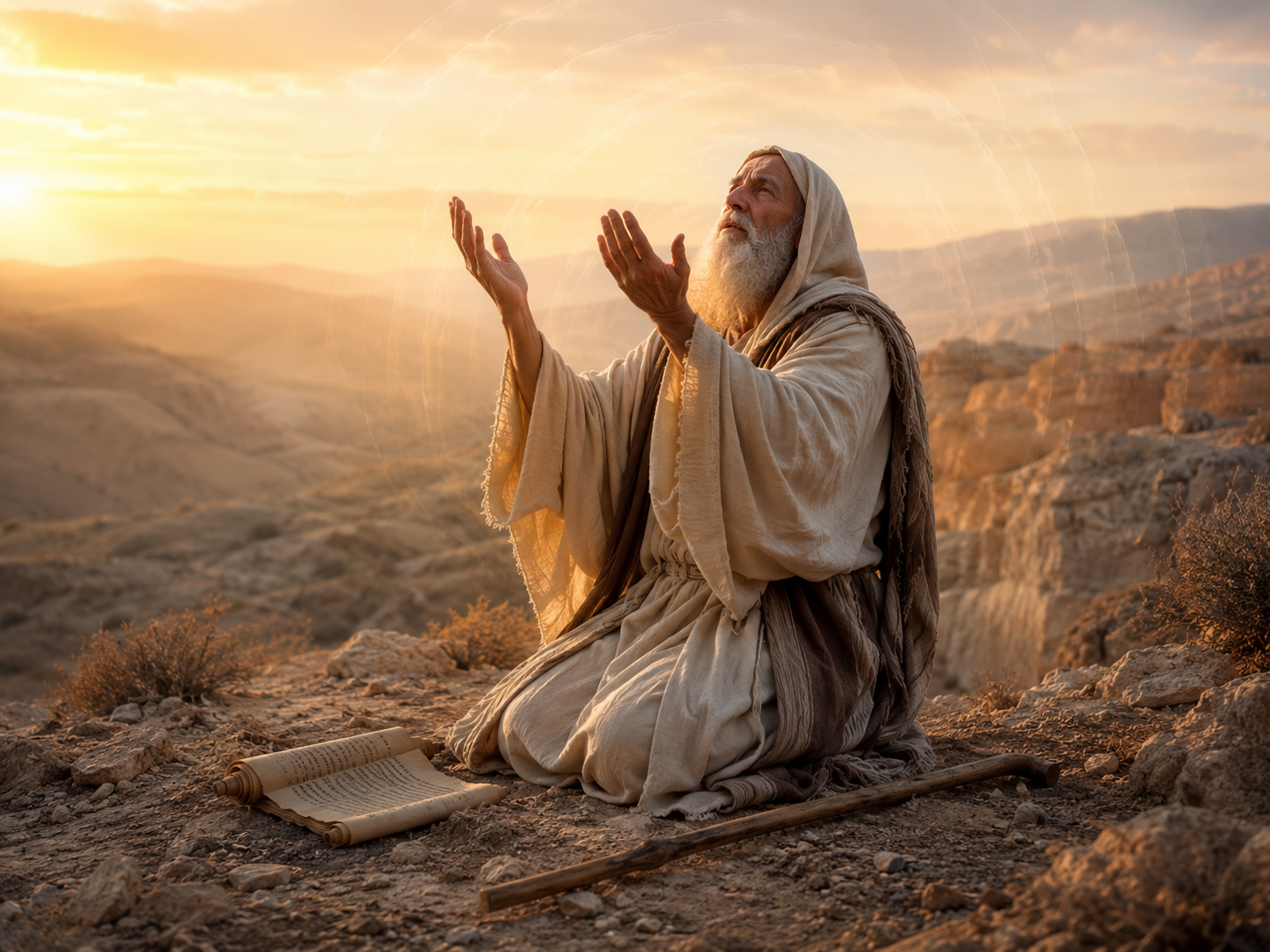
The Power of Prayer
The Midrash's message is not that prayer was ineffective.
Quite the opposite.
Moshe's prayers were so powerful that they could have overturned the decree. Hashem stopped him not because prayer lacked power, but because the Divine plan required another path. Hashem had already determined that Yehoshua would lead the nation into the Land.
Prayer changes us. Prayer can change circumstances. But prayer does not replace Divine wisdom.
There are moments when Hashem, Who sees all generations simultaneously, knows that even a beautiful request cannot be granted without affecting a greater purpose.
Why Did Moshe Want the Land?
Many assume Moshe wanted to enter Eretz Yisrael simply to experience its beauty.
The Gemara (Sotah 14a) rejects this idea.
Was Moshe seeking its fruits?
Was he seeking its physical blessings?
Certainly not.
Moshe longed to fulfill the mitzvos that can only be performed in the Land of Israel. For Moshe, Eretz Yisrael was not merely geography.
It represented another opportunity for connection with Hashem.
Every mitzvah was another encounter with the Divine.
Even after receiving the Torah, speaking directly with Hashem, and leading the Jewish people for forty years, Moshe still believed there was another level to reach.
True greatness never believes it has arrived.

The Hardest Word
Why, then, was the answer no?
This question has occupied generations of Torah commentators.
The Midrash offers a profound perspective: had Moshe entered Eretz Yisrael and built the Beis HaMikdash, its holiness would have been so absolute that it could never have been destroyed.
At first, that sounds like the greatest blessing imaginable. Yet history tells another story.
When the Jewish people sinned, Hashem allowed His wrath to fall upon wood and stone rather than upon His nation. The destruction of the Beis HaMikdash became, paradoxically, an act of mercy that preserved Am Yisrael.
Had Moshe built it, the consequences may have been far greater.
Only Hashem could see that future. We judge events from within time. Hashem sees beyond time.
Prayer Is Transformation
We often evaluate prayer by asking one question:
Did it work?
If we receive what we asked for, we call the prayer successful.
If we do not, we wonder whether our prayers accomplished anything.
Judaism offers a deeper understanding. Prayer is not only about changing circumstances. It is about changing the person who prays.
Rav Yosef Soloveitchik explains that tefillah is not simply about changing God's will, but about transforming the person standing before God.
Prayer is relationship.
It is an encounter between finite humanity and the Infinite.
Every sincere tefillah leaves an imprint on the soul. Every moment spent standing before Hashem deepens a connection that no earthly outcome can measure.
Seen through this lens, none of Moshe's 515 prayers were wasted.
Each prayer expressed love.
Each prayer strengthened trust.
Each prayer reflected an unbreakable desire to draw closer to the Ribbono Shel Olam.
The request remained unanswered.
The relationship grew stronger.
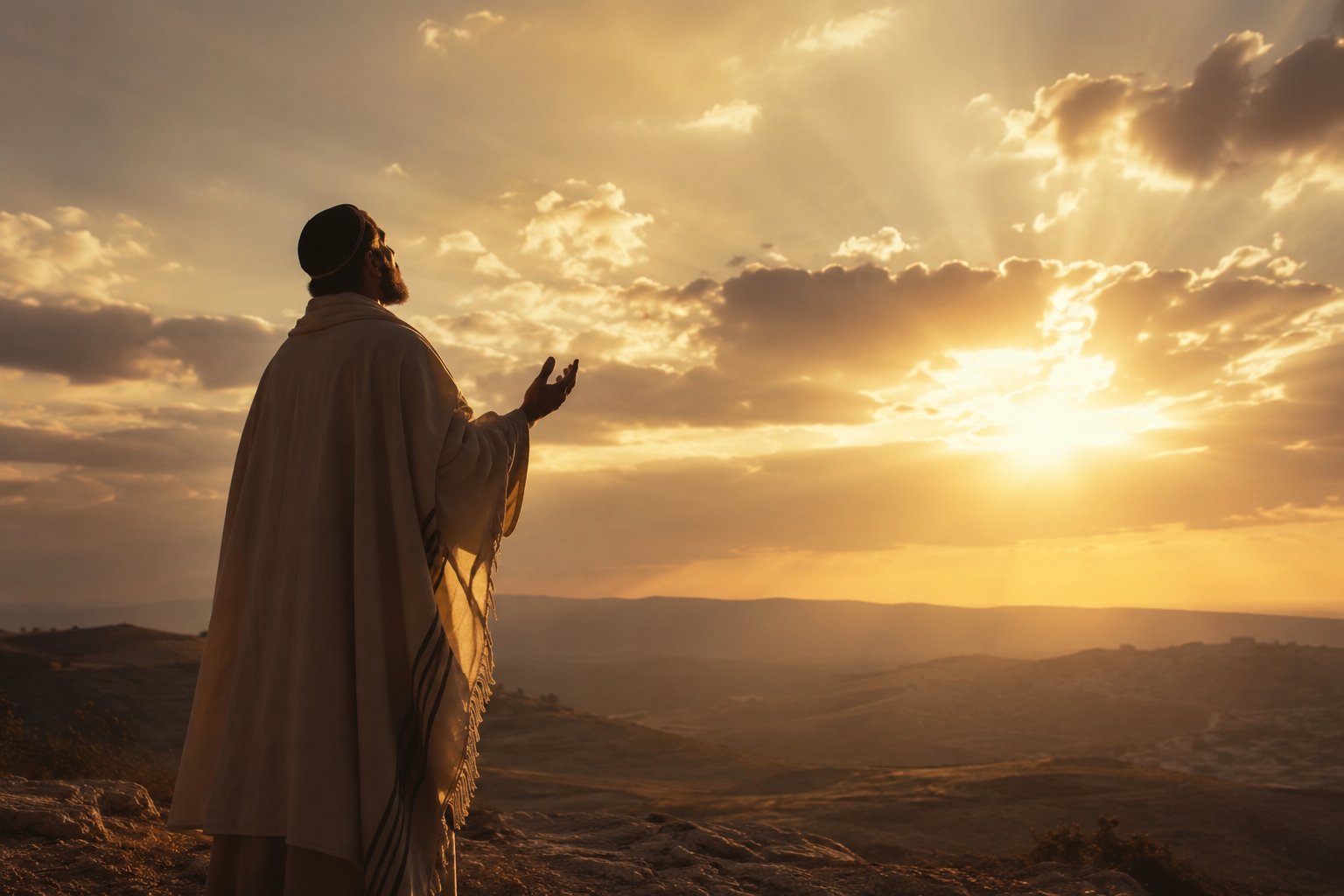
Accepting the Answer
Acceptance does not mean disappointment disappears. The Torah never asks us to pretend that pain does not exist.
Moshe pleaded.
Moshe persisted.
Moshe desired deeply.
But when Hashem said, "Rav lach," Moshe accepted that the God who had guided him faithfully throughout his life still loved him, even while denying his greatest earthly dream.
Judaism does not teach passive surrender.
We pray for healing while seeking the best doctors.
We pray for livelihood while working honestly.
We pray for peace while striving to create peace.
Faith means doing everything within our power while recognizing that the final outcome belongs to Hashem.
Looking Across the Jordan
If Moshe could not enter Eretz Yisrael, why did Hashem allow him to see it from Har Nevo?
Perhaps because seeing a dream fulfilled by others is also a blessing.
Moshe would not plant vineyards there.
He would not walk its hills.
He would not stand in the Beis HaMikdash.
Yet he witnessed the fulfillment of the covenant for which he devoted his life.
Teachers understand this.
Parents understand this.
Grandparents understand this.
Many of the greatest accomplishments in history are completed by those who continue the work of those who came before them.
Moshe's mission was never about himself.
It was always about Klal Yisrael.
A Legacy That Continues
Chassidic thought teaches that the spiritual aspirations of the righteous do not disappear.
Moshe's longing for Eretz Yisrael became part of the spiritual inheritance of every Jew. Whenever a Jew yearns for greater closeness to Hashem, for the fulfillment of mitzvos, for Jerusalem, and for redemption, that longing continues the same desire that burned within Moshe.
His prayer was never silenced. It echoes through every generation.
Perhaps that is why Parshas Va'eschanan is read after Tishah B'Av, during the beginning of the Seven Weeks of Consolation.
Even after destruction comes hope.
Even after disappointment comes renewal.
Even after exile comes the promise of return.
Moshe did not personally enter the Land. But his dream carried an entire nation across the Jordan.
The Mystery We Cannot Solve
There is a natural desire to understand every disappointment.
"If only I knew why."
Sometimes the Torah provides answers. Often it does not.
The message of Sefer Iyov is that human beings do not always possess the perspective necessary to understand Divine wisdom. When Hashem responds to Iyov, He does not reveal every hidden reason behind suffering; He reminds him that human understanding is limited compared with the wisdom of the Creator.
Parshas Va'eschanan teaches the same lesson:
Faith is not the absence of unanswered questions.
Faith is the courage to continue walking with Hashem despite them.
Our Own Five Hundred Fifteen Prayers
Most of us will never stand where Moshe stood.
We will not speak with Hashem face to face.
Yet we all know what it means to carry an unanswered prayer.
A loved one's recovery.
A child.
A spouse.
Meaningful work.
Strength to begin again.
The lesson of Parshas Va'eschanan is not that we should stop praying.
Quite the opposite.
Moshe prayed 515 times.
The Torah records his persistence to inspire us.
Pray again.
Hope again.
Trust again.
Never allow disappointment to become distance from Hashem.
The greatest prophet who ever lived also heard the word "no."
That answer did not diminish his faith.
It refined it.
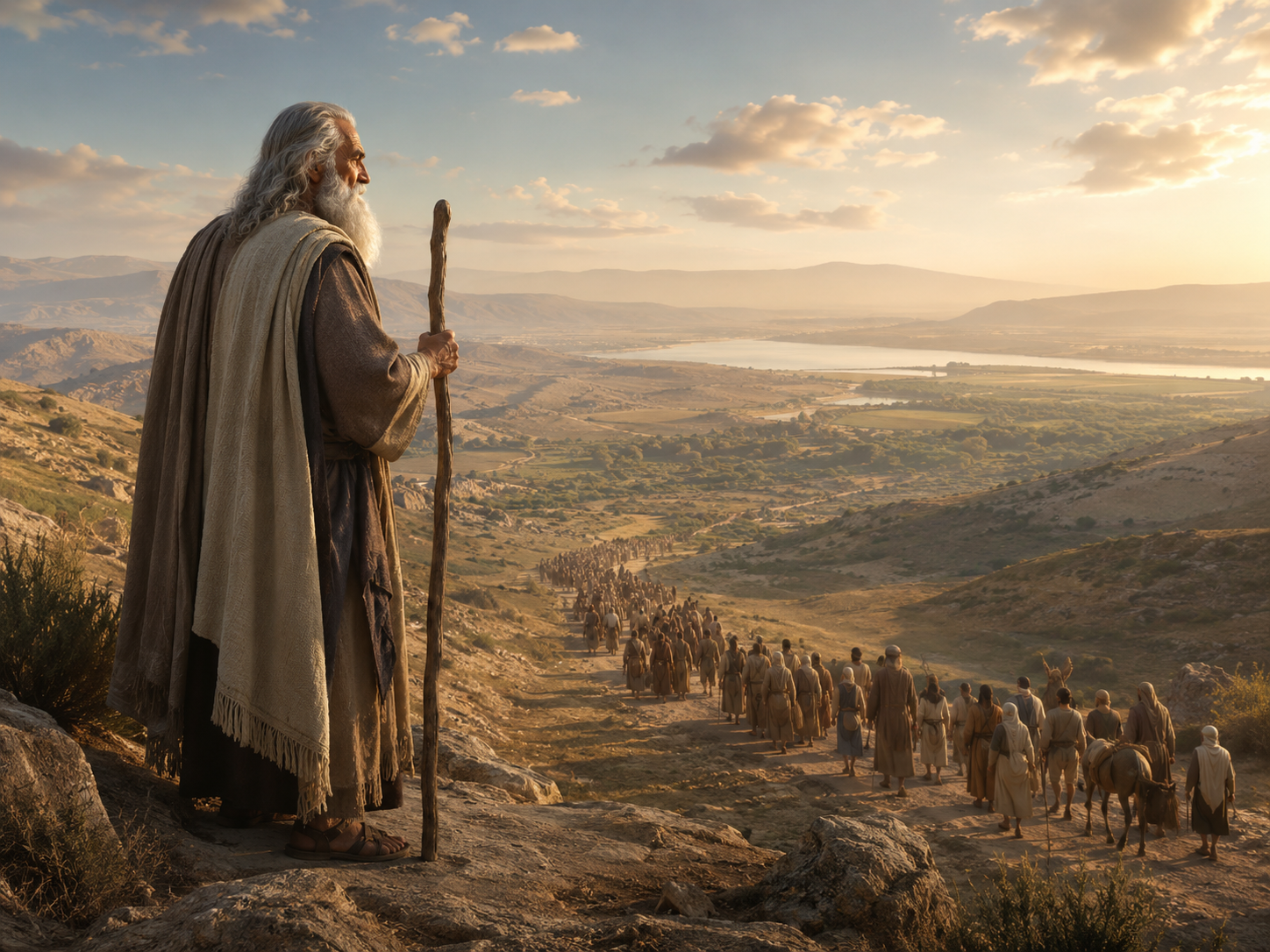
A Legacy Greater Than Entry
Moshe stood overlooking the Land he would never enter. From a human perspective, it feels like tragedy. Yet history tells another story.
No Jew has inspired more love for Eretz Yisrael than the one who never lived there. No teacher shaped Jewish destiny more profoundly than the one who prepared others to continue his mission.
The Torah does not measure greatness by fulfilled ambitions. It measures greatness by unwavering faithfulness.
Moshe's greatest victory was not crossing the Jordan. It was remaining devoted to Hashem even when he could not.
Moshe never entered Eretz Yisrael.
But through his prayers, humility, and unwavering trust, he entered something even greater.
He entered eternity.