
The Land That Teaches Us to Bless
Written by Yitzchak Zeitler
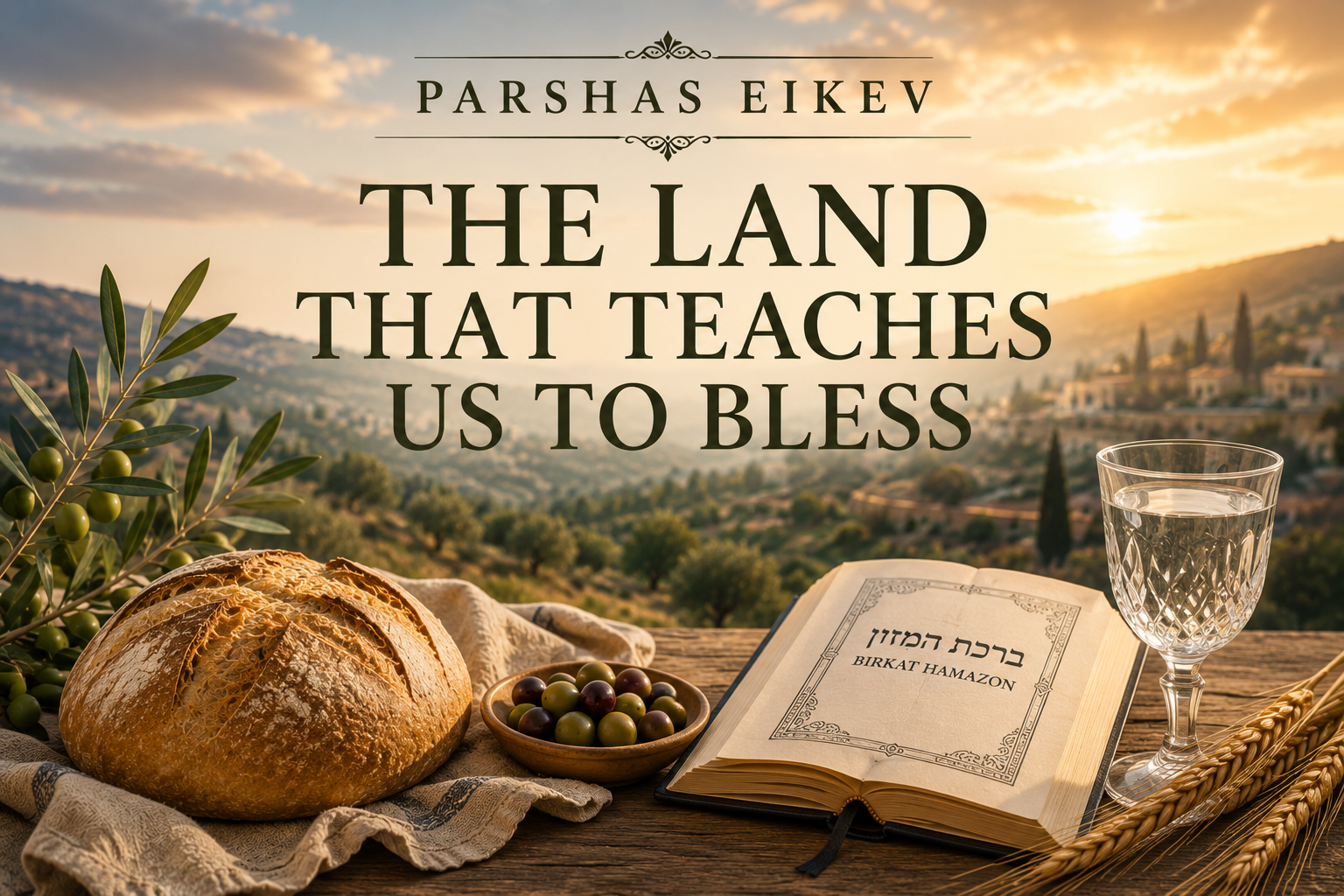
Birkat Hamazon, the Seven Species, and Israel’s Relationship with HaShem
Parshas Eikev contains one of the Torah’s most beautiful descriptions of Eretz Yisrael. In Devarim 8:7-9, Moshe speaks of “a good land,” rich with streams and springs; “a land of wheat and barley, vines, figs and pomegranates, a land of oil-producing olives and honey”; a land in which bread will not be eaten in poverty and nothing essential will be lacking. Then comes the command that has accompanied Jewish meals ever since:
“You shall eat, you shall be satisfied, and you shall bless HaShem your God for the good land that He has given you.” (Devarim 8:10)
The order matters. First, the Torah describes abundance. Then it commands blessing. Immediately afterward, it warns: “Take care lest you forget HaShem your God.” The danger in this passage is not hunger but fullness. It is possible to call out to HaShem when the table is empty and forget Him when the pantry is full.
Birkat Hamazon is the Torah’s answer. It turns satisfaction into memory, food into relationship, and ownership into gratitude.
A Land Whose Produce Speaks Torah
The Torah names the seven species for which Eretz Yisrael is praised:
“A land of wheat, barley, grapes, figs, pomegranates, oil olives, and (date) honey.” (Devarim 8:8)
Rashi on the Gemara (Sukkah 6a) explains that the “honey” in this context is produced from dates, not bees.
These are not merely seven attractive crops. The Mishnah teaches that bikkurim, the first fruits brought to the Beis HaMikdash, were brought specifically from the seven species. The first yield of the land was therefore not treated as a private achievement. It was carried to Yerushalayim as testimony that the land and its harvest came from HaShem.
The Gemara in Berakhot 41a goes further by discussing how the order of the species in the verse helps determine precedence when making blessings over different fruits. In the Gemara in Sukkah 5b, Rebbi Chanan also teaches that the verse serves as a source for halachic measurements for its various species. The produce of Eretz Yisrael does more than nourish Jewish bodies; it helps structure Jewish practice.
This explains why the Torah does not say merely, “Bless HaShem for the food.” It says to bless Him “for the good land that He has given you.” The seven species come from soil; soil belongs to the land; and the land is a gift from HaShem.
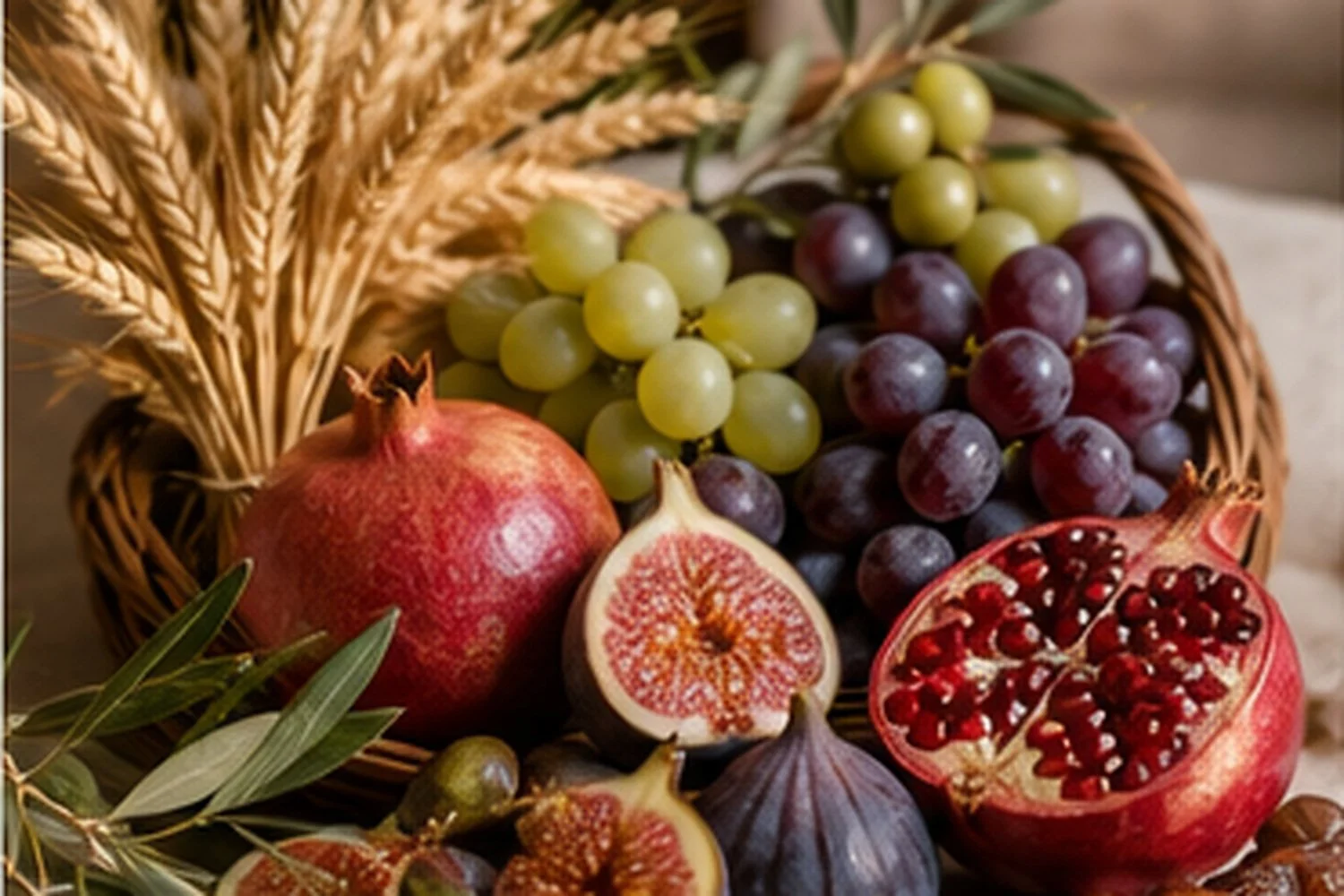
The seven species for which Eretz Yisrael is praised connect the physical bounty of the land with Jewish memory, blessing, and halachah.
The Lesson of Manna Before the Blessing of Bread
Before describing the seven species, Moshe reminds the Jewish people of the manna. HaShem allowed them to experience hunger and then fed them food they had never known:
“To make you know that man does not live by bread alone, but by everything that comes from the mouth of HaShem does man live” (Devarim 8:3).
The verse does not teach that bread is unimportant. It teaches that bread is not independent. Food sustains because HaShem wills it to sustain. In the wilderness, this was impossible to miss: manna appeared daily and taught dependence through a visible miracle.
Entering Eretz Yisrael would change the form of that dependence. The people would plough, plant, harvest, mill and bake. Human effort would become more visible, while the Divine source could become easier to overlook. Birkat Hamazon carries the lesson of manna into ordinary agriculture. The Jew may have purchased the flour, kneaded the dough and set the table, but after eating, he declares that sustenance still comes from HaShem.
Ramban reads Devarim 8:10 within this history. After remembering slavery in Egypt and affliction in the wilderness, the people would eat to satisfaction in the good land and bless HaShem for it. Gratitude is sharpened by remembering what came before.
Sforno gives the blessing a similarly direct purpose: we bless to remember that these good things came from HaShem.
“The reason why HaShem blesses you in such a fashion is so that you will remember that only from Him could you have been given a land with such an abundance of advantages.”
Words spoken after the meal correct the illusion created by comfort and return the gift to its Giver.
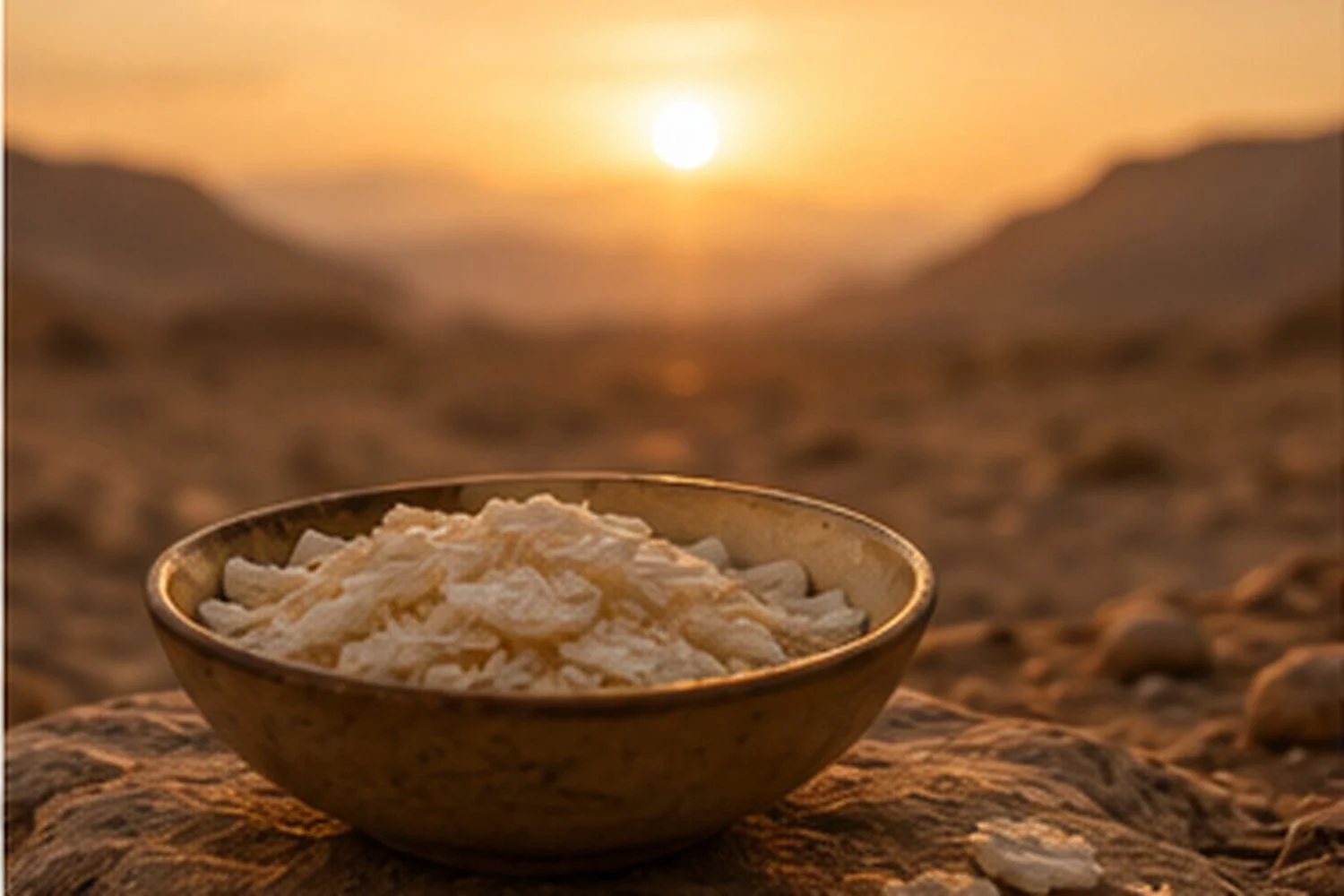
The manna taught the Jewish people that human beings do not live by bread alone, but by everything that comes from Hashem.
A Torah Commandment Written into Jewish History
The Gemara in Berakhot 48b identifies Devarim 8:10 as the Torah source for Birkat Hamazon. The Rambam rules that it is a positive Torah commandment to bless after eating to satisfaction. The obligation after eating a smaller halachically significant amount of bread is rabbinic.
Chazal also describe the text of Birkat Hamazon as the unfolding history of the Jewish people. Moshe established Hazan es hakol when the manna descended. Yehoshua established the blessing for the land when the people entered Eretz Yisrael. David and Shlomo established the blessing concerning Yerushalayim and the Beis HaMikdash.
The Sages at Yavneh established Hatov Vehameitiv when the victims of Beitar were finally permitted burial: “Hatov” because their bodies had not decomposed, and “Vehameitiv” because they were brought to burial.
Birkat Hamazon is therefore not simply a thank-you after lunch. It is a compressed spiritual history of Am Yisrael. It begins with sustenance, moves to the land, rises toward Yerushalayim, and still finds language for HaShem’s goodness after catastrophe.
At a family table, the Jew benches with the wilderness, the land, the kingdom of David, the Beis HaMikdash, exile and survival all present in the words. Jewish gratitude is not shallow because Jewish memory is not short.

Birkat Hamazon carries the story of the Jewish people—from the manna and the land to Yerushalayim, exile, and survival.
Why HaShem Praises Jews Who Bless After Eating Little
One of the most striking teachings appears in Berakhot 20b.
Rav Avira taught, sometimes he said it in the name of Rabbi Ami, and sometimes he said it in the name of Rabbi Asi: The ministering angels said before the Holy One, Blessed be He: Master of the Universe, in Your Torah it is written: “The great, mighty and awesome God who favors no one and takes no bribe” (Devarim 10:17), yet You, nevertheless, show favor to Israel, as it is written: “The Lord shall show favor to you and give you peace” (Bamidbar 6:26). He replied to them: And how can I not show favor to Israel, as I wrote for them in the Torah: “And you shall eat and be satisfied, and bless the Lord your God” (Devarim 8:10), meaning that there is no obligation to bless the Lord until one is satiated; yet they are exacting with themselves to recite Grace after Meals even if they have eaten as much as the size of an olive-bulk or the size of an egg-bulk. Since they go beyond the requirements of the law, they are worthy of favor.
The greatness is not that Jews glorify deprivation, nor that eating little is inherently holier. It is that they refuse to measure gratitude only by how much they received. The Torah-level threshold is satisfaction; Am Yisrael says, in effect: even when the portion was modest, the gift still came from You.
The olive-sized and egg-sized measures reflect the views discussed by Rabbi Meir and Rabbi Yehudah in Berakhot 49b. Rabbi Meir understands “you shall eat” as referring to a halachically significant act of eating—an olive-sized amount—while Rabbi Yehudah reads the phrase as eating that contains a measure of satisfaction, identified there with an egg-sized amount.
In practical halachah, the Rambam rules that actual satisfaction creates the Torah-level obligation, while eating a kezayis of bread creates a rabbinic obligation to recite Birkat Hamazon.
Yet the aggadic message reaches beyond measurement. HaShem cherishes a people who notice even the smaller gift. Anyone can feel grateful after abundance overwhelms him. Jewish gratitude begins before that point. A small portion of bread can awaken a full recognition of HaShem. The size of the food does not determine the size of the relationship.
The Gemara calls Israel medakdekim al atzmam—exacting with themselves. They do not demand that HaShem first satisfy every desire before they acknowledge Him.
Their blessing says:
I may still have needs. I may not feel completely full or satisfied. Nevertheless, what I received is real, and I will not allow what is missing to erase what was given.
That is a particularly Jewish form of greatness.

Hashem praises the Jewish people for blessing Him even after eating only a small amount.
Blessing Changes the Person Who Receives
The Gemara in Berakhot 35a teaches that one may not benefit from this world without first reciting a blessing. A berachah does not inform HaShem of something He does not know; it changes the person who receives.
Sefer HaChinuch explains that our words cannot add anything to HaShem, Who is already the source of all blessing. Rather, blessing awakens our souls to recognize that every good comes from Him. Through that recognition, we become fit to receive His goodness.
Appetite naturally focuses us on ourselves: what we want, what we taste, and whether we have enough. Birkat Hamazon redirects the satisfied person outward and upward.
The blessing does not make the food less enjoyable. It makes the enjoyment truthful.
Eretz Yisrael: A Land of Visible Dependence
The parsha later contrasts Eretz Yisrael with Egypt. Egypt was irrigated from the Nile through human labor, while Eretz Yisrael “drinks water from the rain of heaven.” It is “a land that HaShem your God seeks; the eyes of HaShem your God are always upon it, from the beginning of the year until the end of the year” (Devarim 11:10–12).
Rashi, citing the Sifrei, explains that in Egypt water had to be carried and directed from lower ground to higher ground. In Eretz Yisrael, HaShem waters high and low places through rain.
Rashi also comments that although HaShem cares for every land, His care is focused upon Eretz Yisrael, and through His care for it, the other lands are cared for as well.
The Torah is not promising that life in Israel will always be easy. It describes a land whose physical structure makes dependence difficult to deny. Rain falls—or does not. Crops grow—or fail. Human beings must work, but effort alone is visibly insufficient. The farmer works while looking upward.
That is the spiritual pattern of Birkat Hamazon. We work, cook, and eat, but then we look upward. We do not deny human effort; we deny that human effort is the final cause.
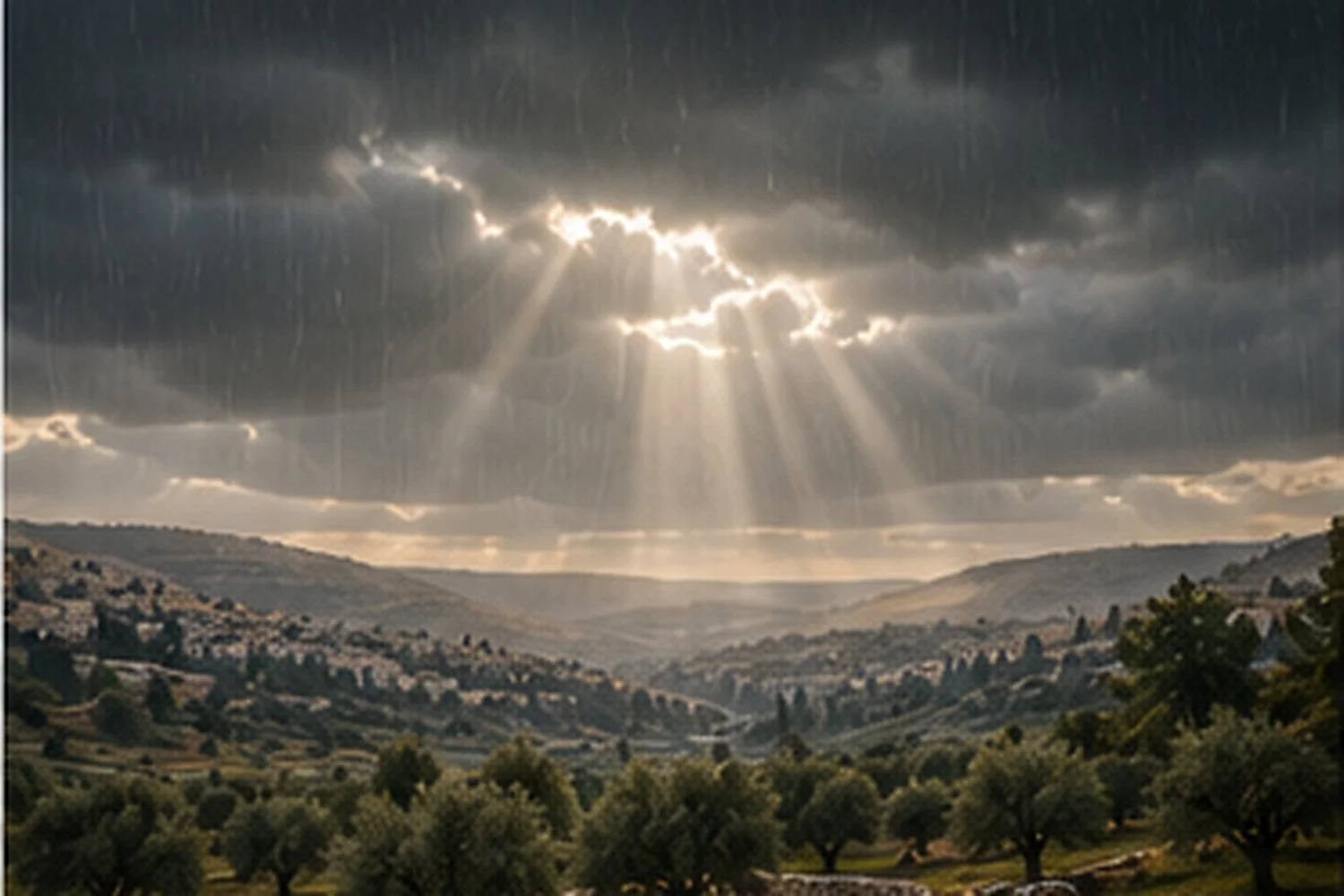
Eretz Yisrael is a land in which human effort and dependence on Heaven remain visibly intertwined.
The Danger of Saying “My Strength”
After commanding Birkat Hamazon, Moshe warns us that prosperity can enlarge the heart in the wrong way. A person may build houses, increase livestock, and accumulate wealth, and then say:
“My strength and the might of my hand made me this wealth.” (Devarim 8:17)
The correction is not passivity. The next verse says:
“You shall remember HaShem your God, for He is the One Who gives you strength to make wealth.” (Devarim 8:17)
Both statements appear within the same warning in Devarim 8:12–18.
This is one of the Torah’s most balanced teachings about achievement. Your strength matters—but the strength itself is given. Your work matters—but the conditions that allow it to succeed are not entirely yours.
Birkat Hamazon trains this balance every day. It allows us to enjoy, build, and succeed without turning success into self-worship.
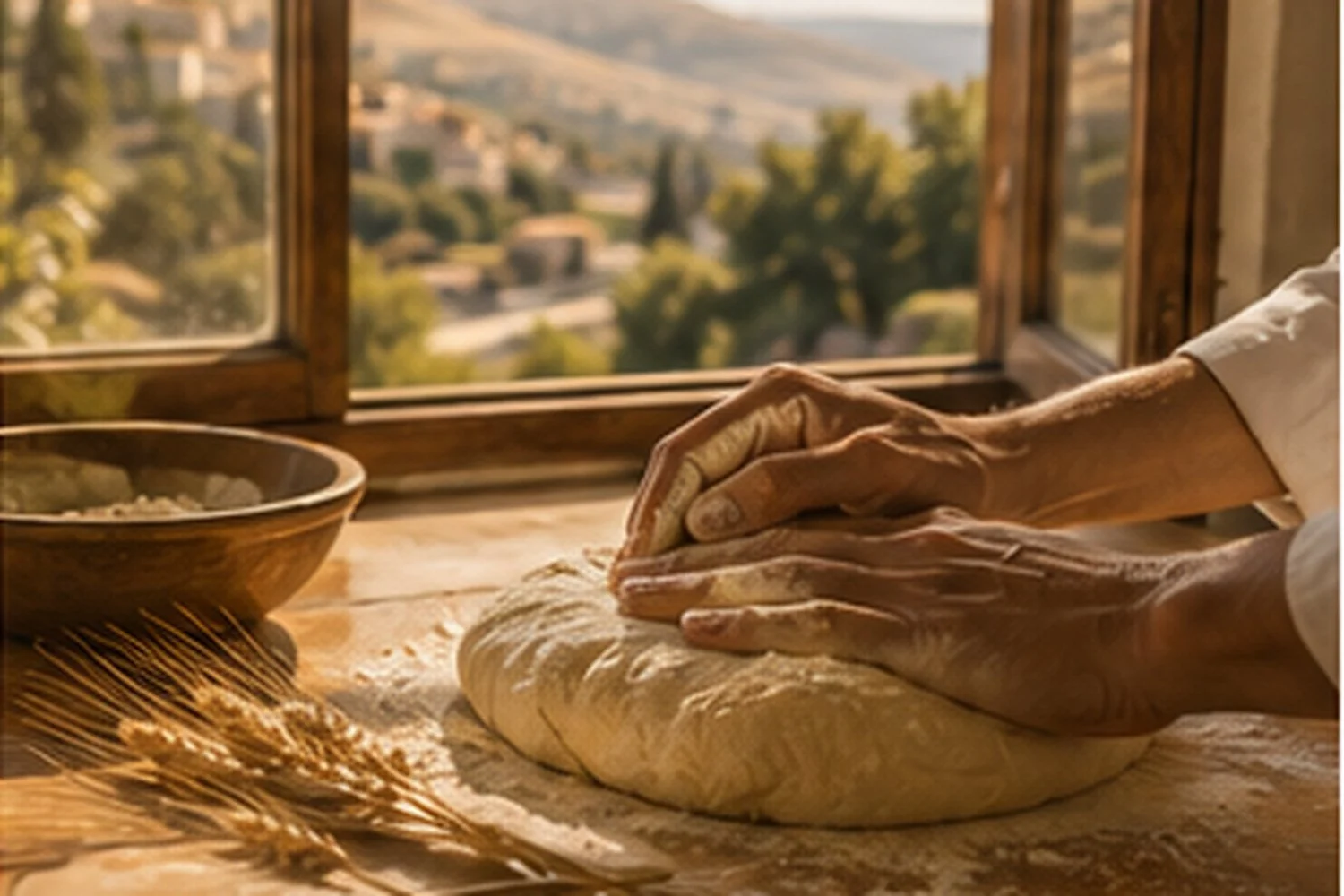
“We do not deny human effort; we deny that human effort is the final cause.”
A Relationship Renewed at the Table
Klal Yisrael’s relationship with HaShem is often described through spectacular moments: the splitting of the sea, the revelation at Sinai, and the entry into the land. Parshas Eikev brings that relationship into the dining room.
A Jew eats bread and remembers manna.
He tastes the produce of the land and remembers Who gave it.
He feels satisfied and guards against forgetting.
He eats only a little and blesses anyway.
He mentions Yerushalayim even when sitting far from it.
He asks for mercy while giving thanks.
Perhaps that is why HaShem speaks so lovingly in the Gemara about Jews who bless over a small amount. Their greatness lies in maintaining a large relationship through an ordinary act.
The Torah’s vision is not that we escape physical life to find HaShem. It is that food, land, rainfall, work, memory, and blessing become meeting places with Him.
V’achalta v’savata u’veirachta—you shall eat, you shall be satisfied, and you shall bless.
The meal ends, but the relationship is renewed.