
The Inner Courtroom: Parshat Shoftim and the Work of Elul
Parshas Shoftim opens with a command to appoint judges and officers at every gate. As Elul begins, those words take on a deeply personal meaning. What happens when the courtroom moves inward? Through Gemara, Midrash, and classical Torah sources, we explore how honest judgment, guarded gates, careful self-examination, and teshuvah can prepare us to stand before Hashem on Rosh Hashanah.
How to Do Teshuvah: The Rambam’s Four Steps of Returning to Hashem
Teshuvah is not simply a feeling of guilt—it is a practical process of returning to Hashem. Drawing on the Rambam’s Hilchos Teshuvah, this guide explains the four essential steps: recognizing and leaving wrongdoing, experiencing honest regret, confessing before Hashem, and making a sincere commitment to change. It also offers practical guidance for repairing harm, creating safeguards, and beginning again after a setback.
A Complete Guide to the Aseres Yemei Teshuvah - The Ten Days of Repentance
The Aseres Yemei Teshuvah are far more than the days separating Rosh Hashanah and Yom Kippur. They are a sacred period of prayer, judgment, reflection, reconciliation, and return. This complete guide explores the meaning of the Ten Days of Repentance, the changes made to daily prayers, the customs of Shabbos Shuvah and Erev Yom Kippur, and practical ways to approach teshuvah with honesty, hope, and purpose.
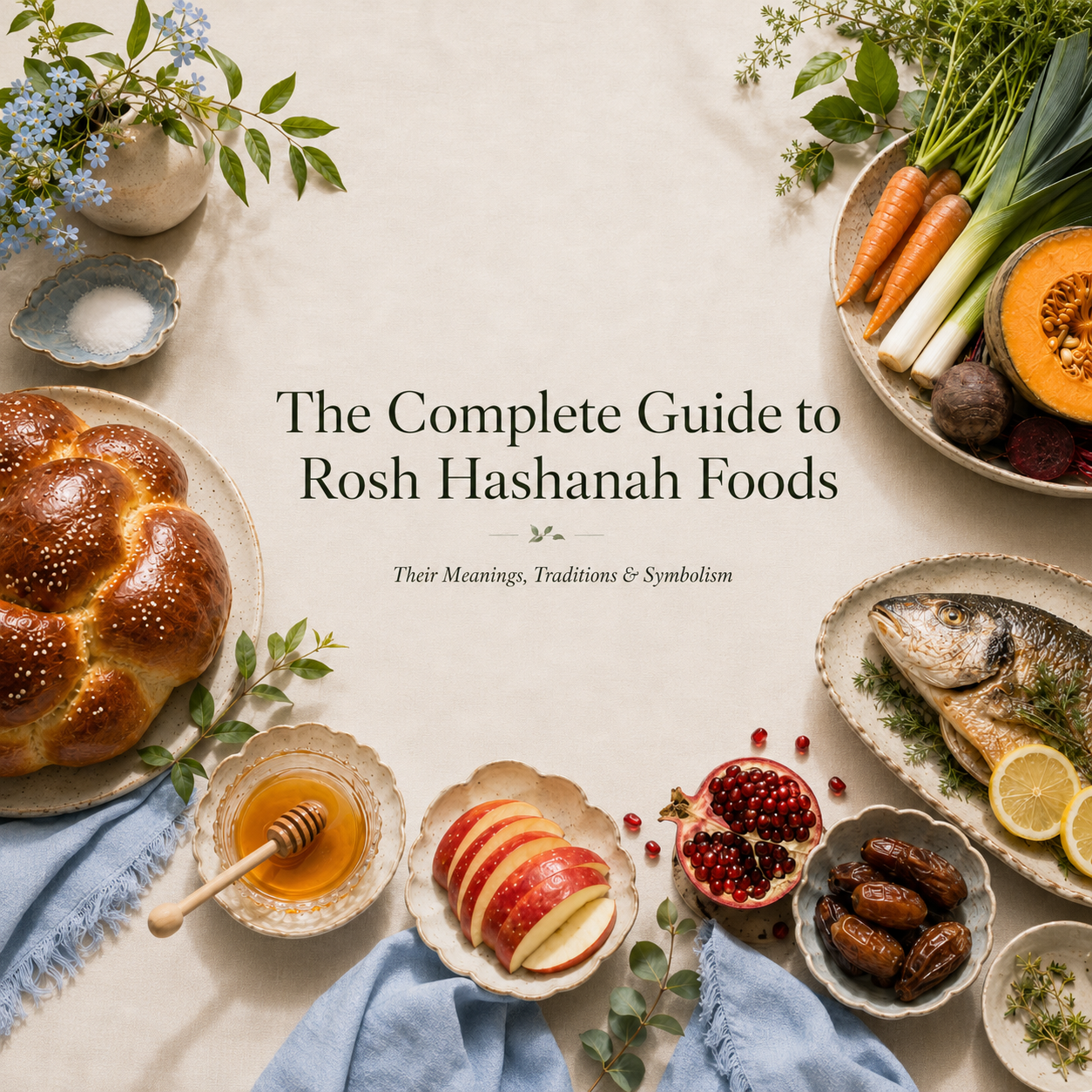
The Complete Guide to Rosh Hashanah Foods and Their Meanings
From apples dipped in honey to pomegranates, dates, fish, carrots, and round challah, the Rosh Hashanah table is filled with foods that carry prayer, symbolism, and hope. Discover the meanings behind the traditional simanim and how to incorporate them beautifully into your holiday meal.
101 Meaningful Rosh Hashanah Wishes, Greetings and Blessings
Looking for the right words for the Jewish New Year? Discover 101 meaningful Rosh Hashanah wishes, traditional Hebrew greetings, family blessings, professional messages, and short greetings for cards, texts, and WhatsApp.
The Relationship Audit: The Elul Guide to Repairing Relationships Before Rosh Hashanah - PART TWO
Part Two
Elul is the ideal time to conduct a personal relationship audit before Rosh Hashanah. In Part Two of this series, discover practical Torah guidance for repairing relationships through forgiveness, gratitude, humility, and honest self-reflection. Drawing on the wisdom of the Baal Shem Tov, Rambam, Sefer HaChinuch, Mesillas Yesharim, Rav Kook, the Alter Rebbe, and other classical Jewish sources, this article offers a practical roadmap for strengthening our relationships with others—and, in turn, deepening our relationship with Hashem as we prepare for the Days of Awe.
The Relationship Audit: The Elul Guide to Repairing Relationships Before Rosh Hashanah - PART ONE
The Relationship Audit: The Elul Guide to Repairing Relationships Before Rosh Hashanah (Part One)
As Elul begins, Judaism calls us to look beyond personal spirituality and examine the relationships that shape our lives. Drawing on the Rambam, Rabbeinu Yonah, the Chafetz Chaim, and classical Torah sources, Part One explores why repairing relationships is central to teshuvah, how unresolved conflict affects our spiritual growth, and why reconciliation with others is an essential step before Rosh Hashanah.