
The Complete Guide to Rosh Hashanah Foods and Their Meanings
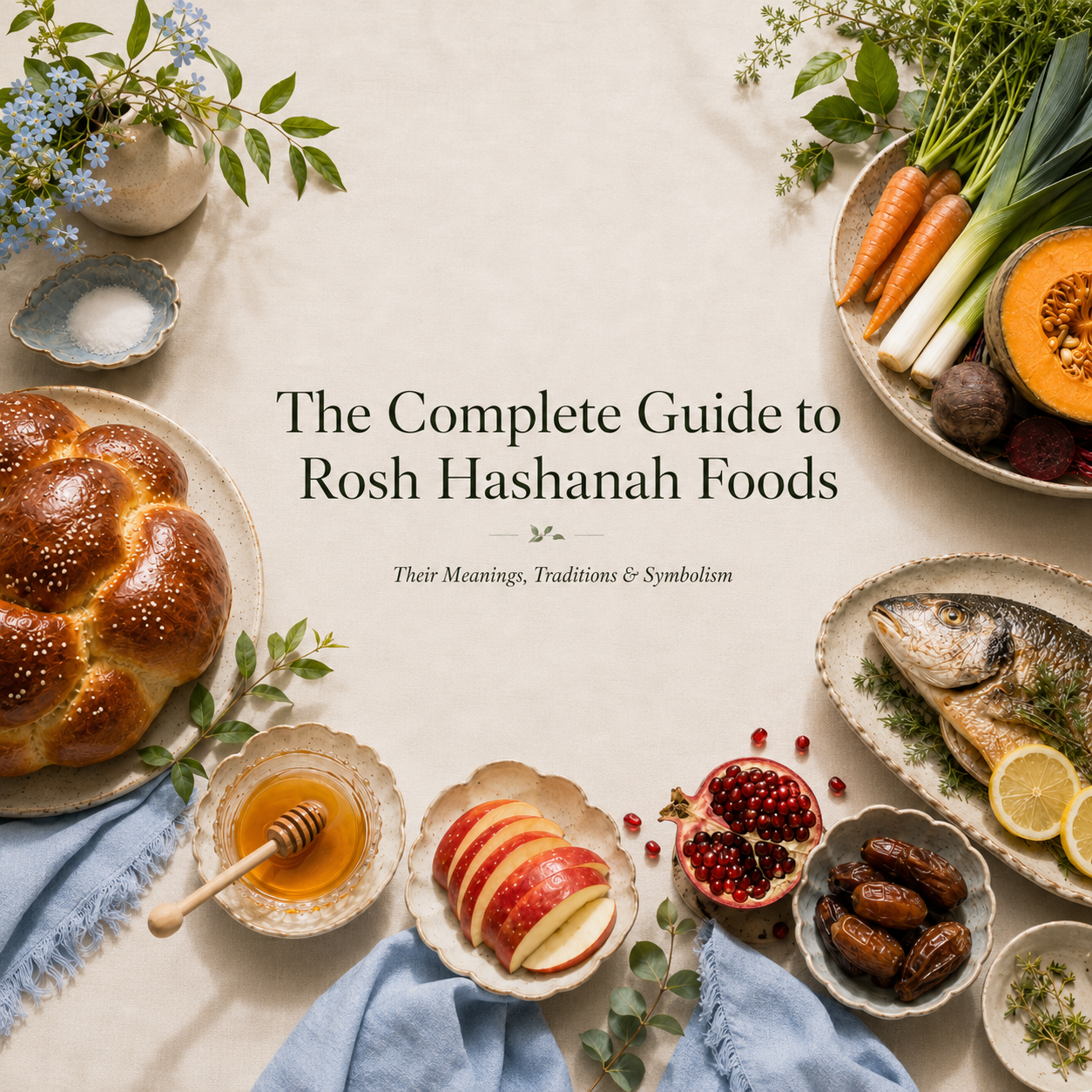
Apples, Honey, Pomegranates, and the Symbolic Foods That Welcome the Jewish New Year
The Rosh Hashanah table is unlike any other table of the year. It is festive and beautiful, but it is also deeply meaningful. Every dish seems to carry a message, every ingredient offers an opportunity for prayer, and even familiar foods take on added significance as we enter a new year.
Apples are dipped into honey for sweetness. Pomegranates evoke abundance. Round challah reflects the cycle of the year, while fish and other symbolic foods express our hopes for growth, leadership, protection, and blessing.
These traditional foods are known as simanim, or signs. They allow us to begin the year not only by speaking about what we hope for, but by bringing those hopes directly to the table.
Customs differ between communities and families, and not every Rosh Hashanah meal will include every food listed below. Some families serve a small selection of simanim before the meal, while others build an entire menu around them. The details may vary, but the central idea remains the same: we begin the year with intention.
In This Guide
Explore the traditional Rosh Hashanah foods, the prayers connected with them, and beautiful ways to include them in your holiday meal.
- 01 Why We Eat Symbolic Foods
- 02 Apples and Honey
- 03 Dates
- 04 Pomegranate
- 05 Fish
- 06 The Head of a Fish
- 07 Carrots
- 08 Leeks
Why Do We Eat Symbolic Foods on Rosh Hashanah?
Rosh Hashanah is a time of prayer, judgment, renewal, and possibility. As we stand at the entrance to a new year, we ask Hashem for life, health, peace, sustenance, spiritual growth, and blessing.
The symbolic foods of Rosh Hashanah give physical form to those requests. Their names, shapes, colors, and natural qualities remind us of the blessings we seek.
The simanim are not magical objects, nor are they meant to replace sincere prayer or personal growth. Rather, they help create a moment of focus. We hold a food in our hands, consider its meaning, recite an appropriate yehi ratzon—“May it be Your will”—and articulate the kind of year we hope to live.
This transforms the Rosh Hashanah meal into something more than a festive dinner. It becomes a series of small, meaningful prayers.
Apples and Honey: A Sweet New Year
Few images are more closely associated with Rosh Hashanah than an apple dipped into honey.
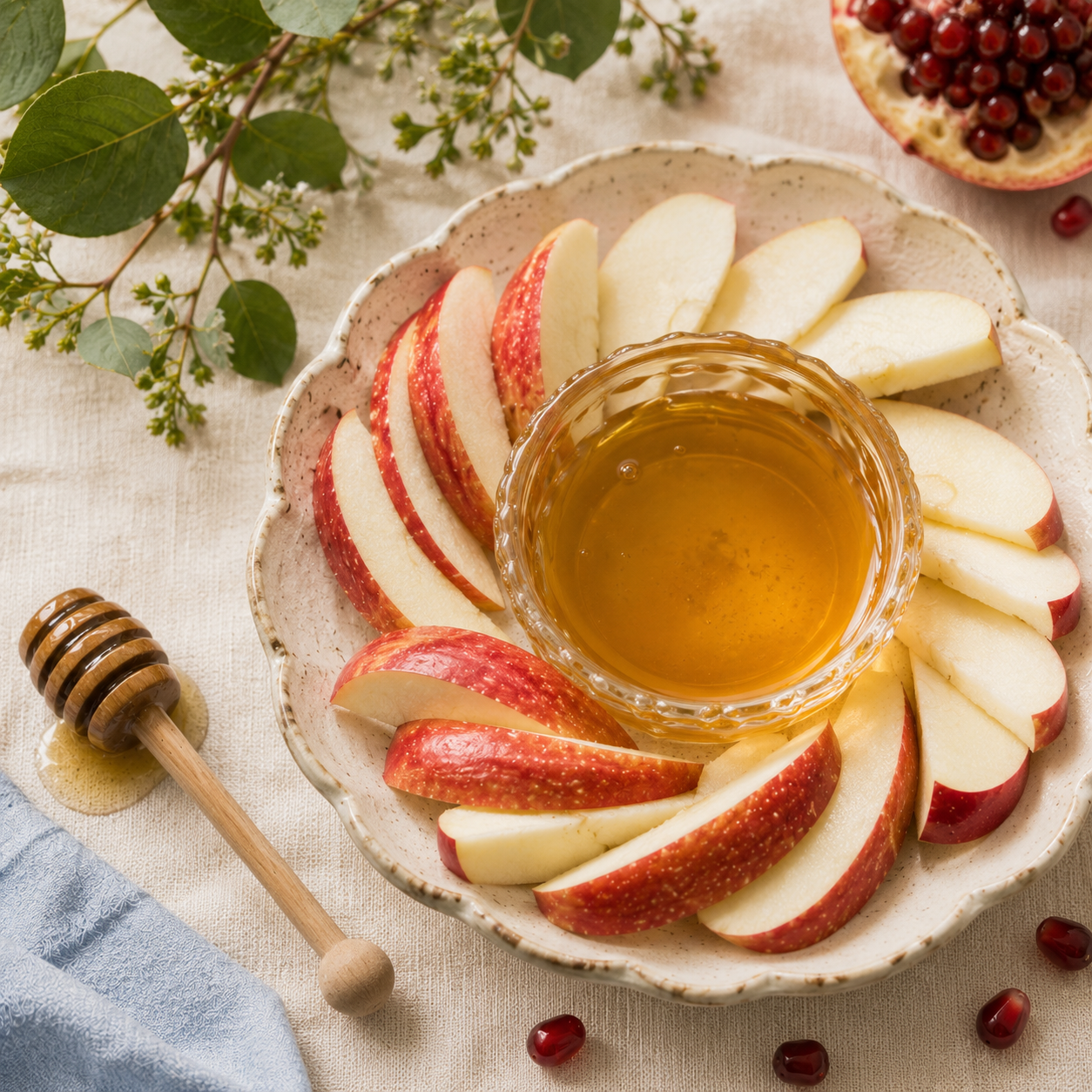
After making the blessing over the apple, it is customary to dip it into honey and ask Hashem to renew for us a good and sweet year. The sweetness is not meant to represent comfort alone. We are asking for a year whose goodness can be felt and recognized—a year that is not only ultimately beneficial, but openly sweet.
Apples have their own associations within Jewish tradition, while honey represents natural richness and abundance. Together, they have become the most familiar symbol of the Jewish New Year.
How to Serve Apples and Honey
Apples may be sliced just before the meal and arranged around a small bowl of honey. Choose crisp apples that will hold their shape, and consider using a mixture of red and green varieties for a more elegant presentation.
For a larger table, place several small honey dishes within easy reach rather than passing one bowl from person to person.
Visual idea: Arrange thin apple slices in overlapping circles around a glass or ceramic honey dish, with a few pomegranate seeds scattered around the platter.
Dates: A Prayer for the End of Our Enemies
Dates are a traditional Rosh Hashanah food in many homes.
The Hebrew word for a date, tamar, is connected through wordplay to the hope that our enemies and those who wish us harm will come to an end. The accompanying prayer asks Hashem to remove destructive forces from our lives.
Dates are naturally sweet, making them especially appropriate for a holiday filled with wishes for sweetness and blessing. They also bring a rich, jewel-like appearance to the Rosh Hashanah table.
How to Serve Dates
Serve whole Medjool dates on a platter, or remove the pits and fill them with chopped nuts. Dates can also be incorporated into roasted vegetables, rice dishes, salads, or desserts.
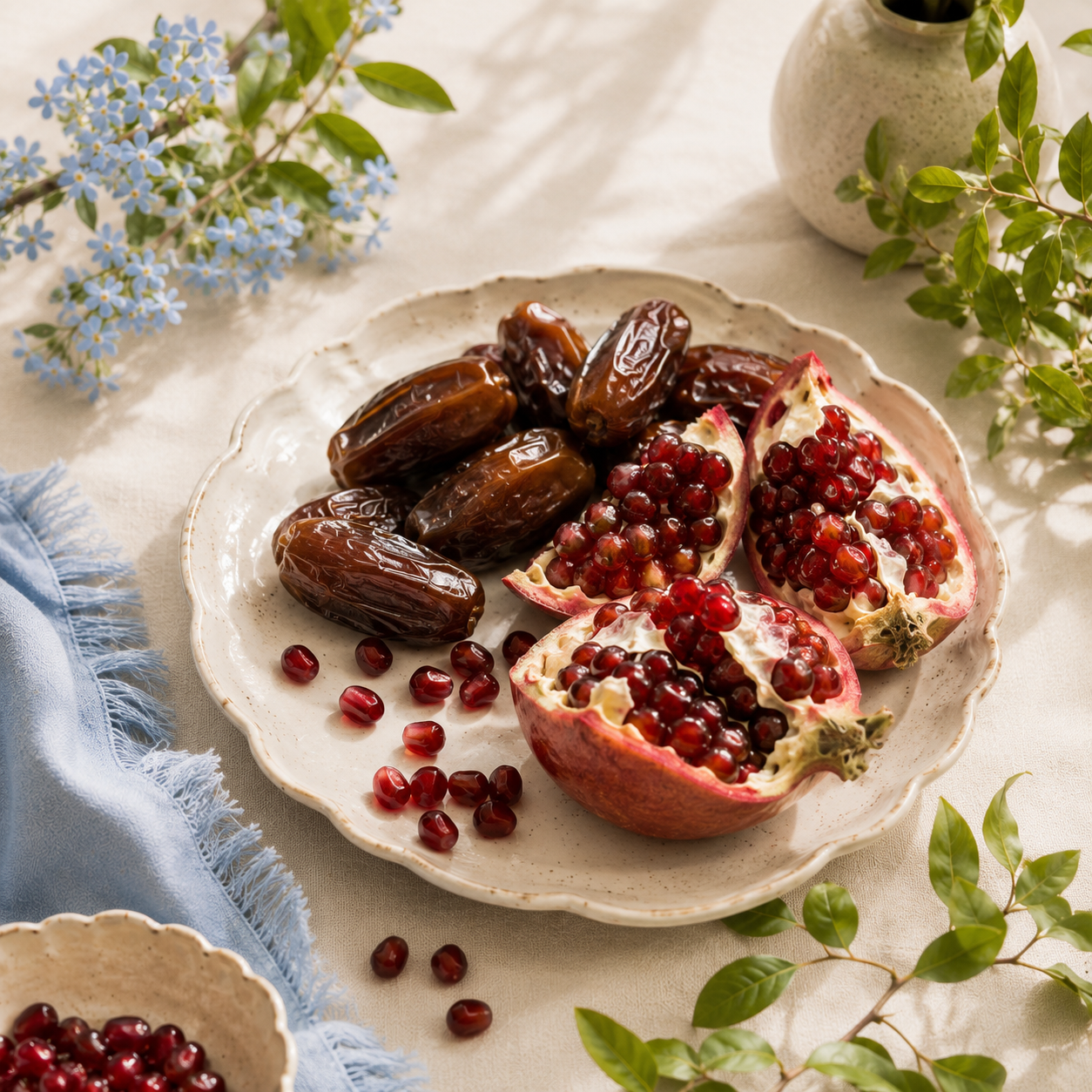
Visual idea: Place glossy dates on a small brass, silver, or cream-coloured dish alongside almonds and pomegranate seeds.
Pomegranate: Abundance and Mitzvos
The pomegranate is one of the most striking symbolic foods served on Rosh Hashanah.
Its many seeds represent abundance. A traditional prayer asks that our merits increase like the seeds of a pomegranate.
The fruit also carries deep associations with Eretz Yisrael and is one of the seven species for which the Land of Israel is praised. Its rich red exterior and jewel-like seeds make it particularly suited to a beautiful holiday table.
Although people often repeat the idea that every pomegranate contains exactly 613 seeds, the actual number varies from fruit to fruit. The enduring symbolism lies in its extraordinary abundance of seeds and its traditional association with mitzvos and merit.
How to Serve Pomegranate
A whole pomegranate makes a beautiful centerpiece, while an opened fruit reveals its vivid interior. The seeds can be scattered over salads, roasted vegetables, rice, desserts, or honey cake.
Some families use a pomegranate as the new fruit for the second night of Rosh Hashanah, particularly when it has not yet been eaten that season.
Visual idea: Photograph a split pomegranate on ivory linen, with loose seeds surrounding it and soft greenery in the background.
Fish: A Year of Growth and Blessing
Fish are associated with fruitfulness and abundance. Because fish multiply in great numbers and live beneath the water, where they are less visible, they are also traditionally connected with blessing and protection from the evil eye.
A prayer may be said that we should be fruitful and multiply like fish.
Fish appears naturally in many Rosh Hashanah menus, whether served as gefilte fish, baked salmon, Moroccan fish, or another family recipe. This makes it one of the easiest simanim to incorporate into the meal itself.
How to Serve Fish
Serve a fish course at the beginning of the meal, or prepare individual portions as part of the main course. Garnish with fresh herbs, lemon slices, roasted tomatoes, or pomegranate seeds.
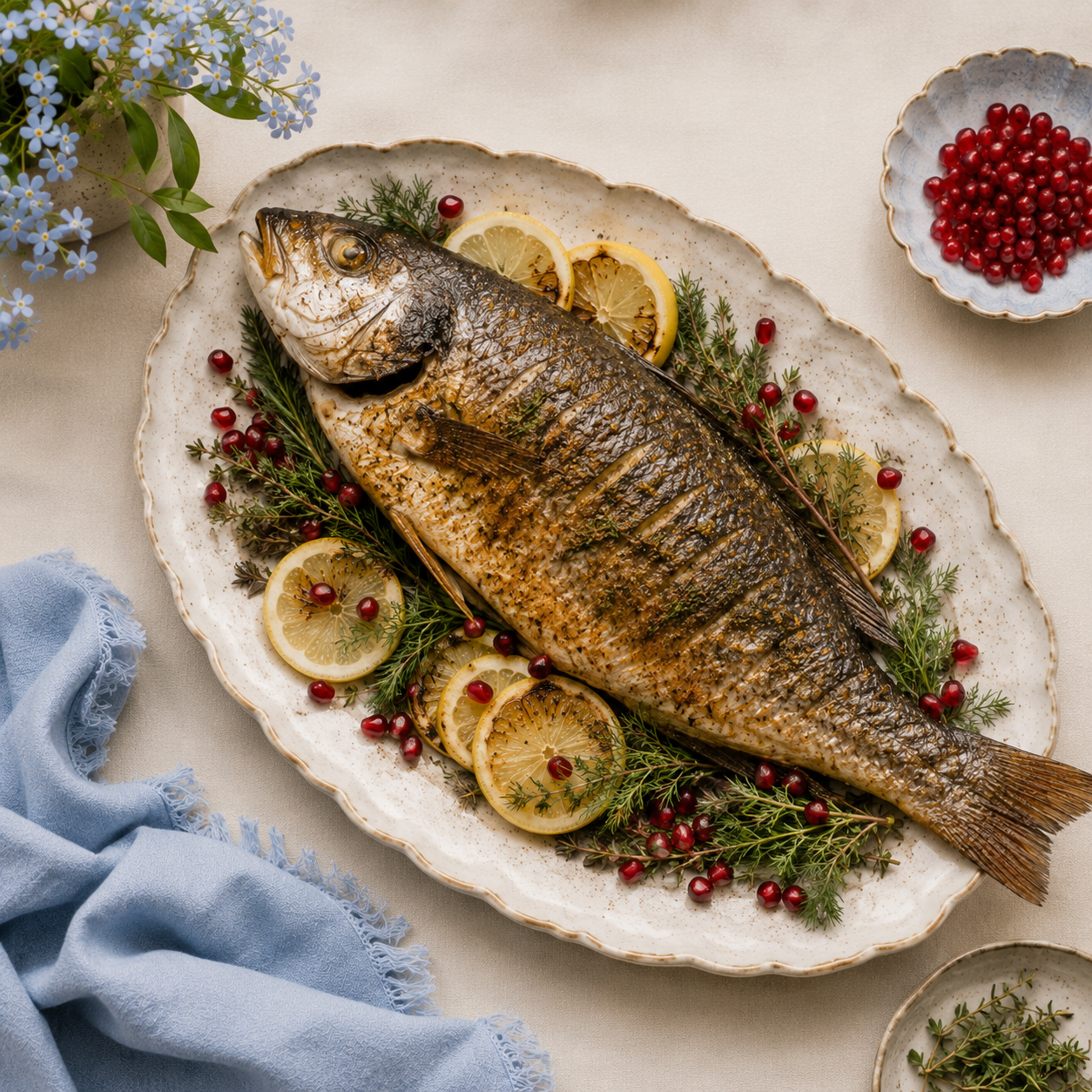
Visual idea: A beautifully plated fish fillet surrounded by herbs, citrus, and ruby-red pomegranate seeds.
The Head of a Fish: To Be a Head and Not a Tail
Some families place the head of a fish on the Rosh Hashanah table and recite a prayer that we should be “a head and not a tail.”
This expresses the hope that we will lead rather than follow blindly, move forward rather than remain behind, and live with purpose and spiritual direction.
The prayer is not simply a request for status. It is an appeal to become thoughtful, responsible people who make good decisions and use their influence well.
Certain communities use the head of a sheep or another symbolic head instead. Family and communal customs should be followed.
How to Serve a Fish Head
A fish head may be presented on a separate dish as one of the simanim rather than served as a main course. It can be surrounded by herbs, lemon, or roasted vegetables to make the presentation feel intentional and respectful.
Visual idea: Keep this image refined and editorial: a carefully prepared fish dish photographed from above, with the symbolic head visible but not overly prominent.
Carrots: A Wish for Increased Merit and Blessing
Carrots are especially common on Ashkenazi Rosh Hashanah tables.
In Yiddish, the word for carrots, meren, can also suggest increasing or multiplying. Eating carrots therefore expresses the hope that our merits and blessings will increase in the coming year.
Sliced carrots also resemble coins, connecting them in popular custom with prosperity and sustenance.
One of the best-known Rosh Hashanah carrot dishes is tzimmes, a sweet mixture that may include carrots, sweet potatoes, dried fruit, honey, or brown sugar. Recipes vary widely between families, but the dish’s warm sweetness fits naturally into the holiday meal.
How to Serve Carrots
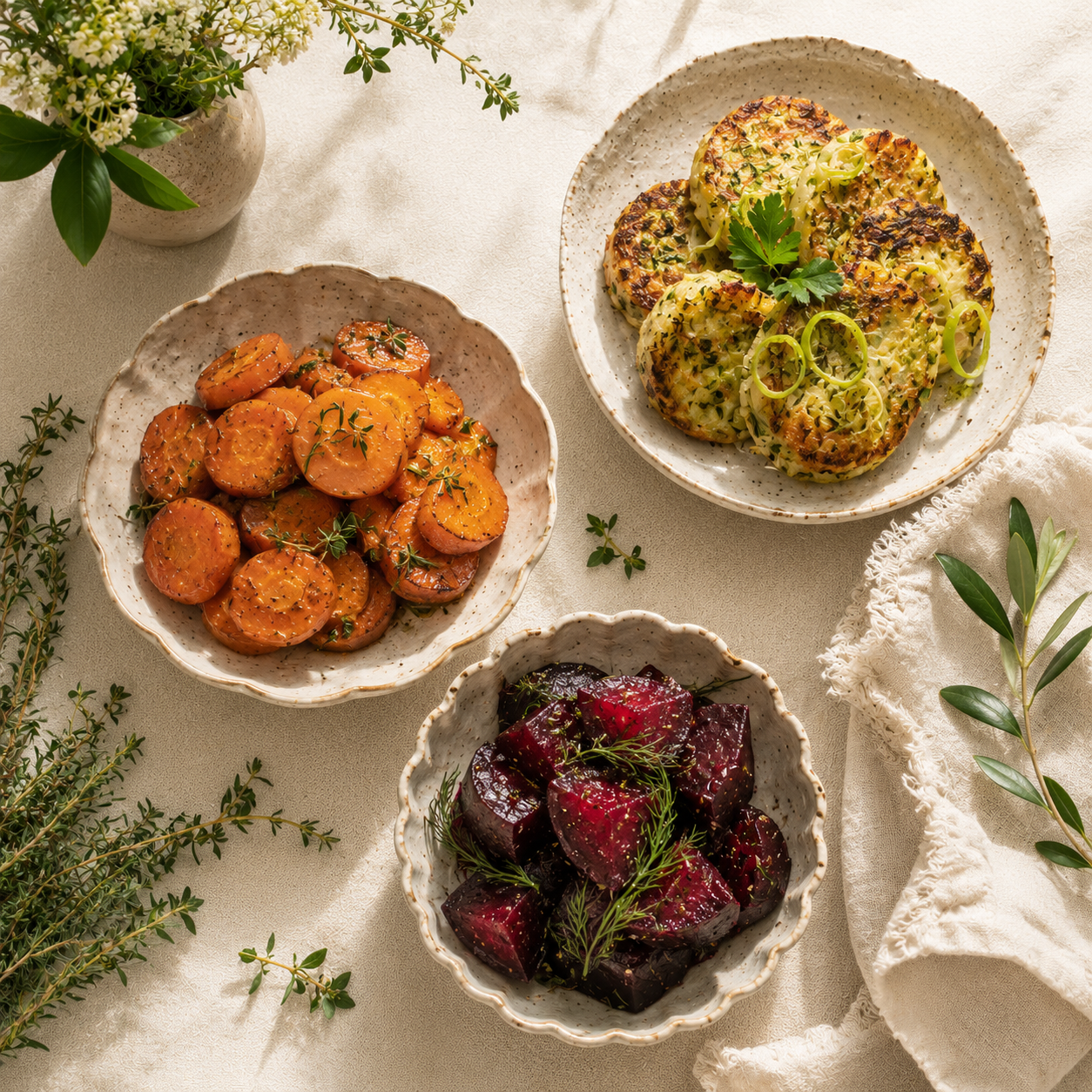
Prepare a traditional tzimmes, roast carrots with honey and herbs, or serve glazed carrot rounds as a side dish.
Visual idea: Photograph roasted carrots on a cream platter with honey glaze, thyme, and a scattering of dates.
Leeks: Removing Those Who Wish Us Harm
Leeks are part of the traditional Sephardic seder for Rosh Hashanah.
The Aramaic or Hebrew name of the food is connected through wordplay to a prayer that those who hate us or seek our harm should be cut off.
This prayer can also be understood on a personal level. We may ask that destructive influences, harmful habits, resentment, and spiritual obstacles lose their power over us.
How to Serve Leeks
Leeks can be steamed or sautéed and served simply, but many families prepare leek patties or fritters. They may also be incorporated into soups, savory tarts, or roasted vegetable dishes.
Be sure to wash and inspect leeks carefully according to appropriate kosher guidelines, as dirt and insects can become trapped between the layers.
Visual idea: Arrange small leek patties on a white platter with herbs and lemon wedges.
Pumpkin or Gourd: A Prayer for Favorable Judgment
Pumpkin, squash, or another type of gourd is known as k’ra and is included among the traditional simanim.
Its name is associated with two hopes: that any negative decree against us should be torn up, and that our merits should be read or proclaimed before Hashem.
The symbolism feels especially appropriate on Rosh Hashanah, when we ask to be remembered for life and judged with mercy.
How to Serve Pumpkin
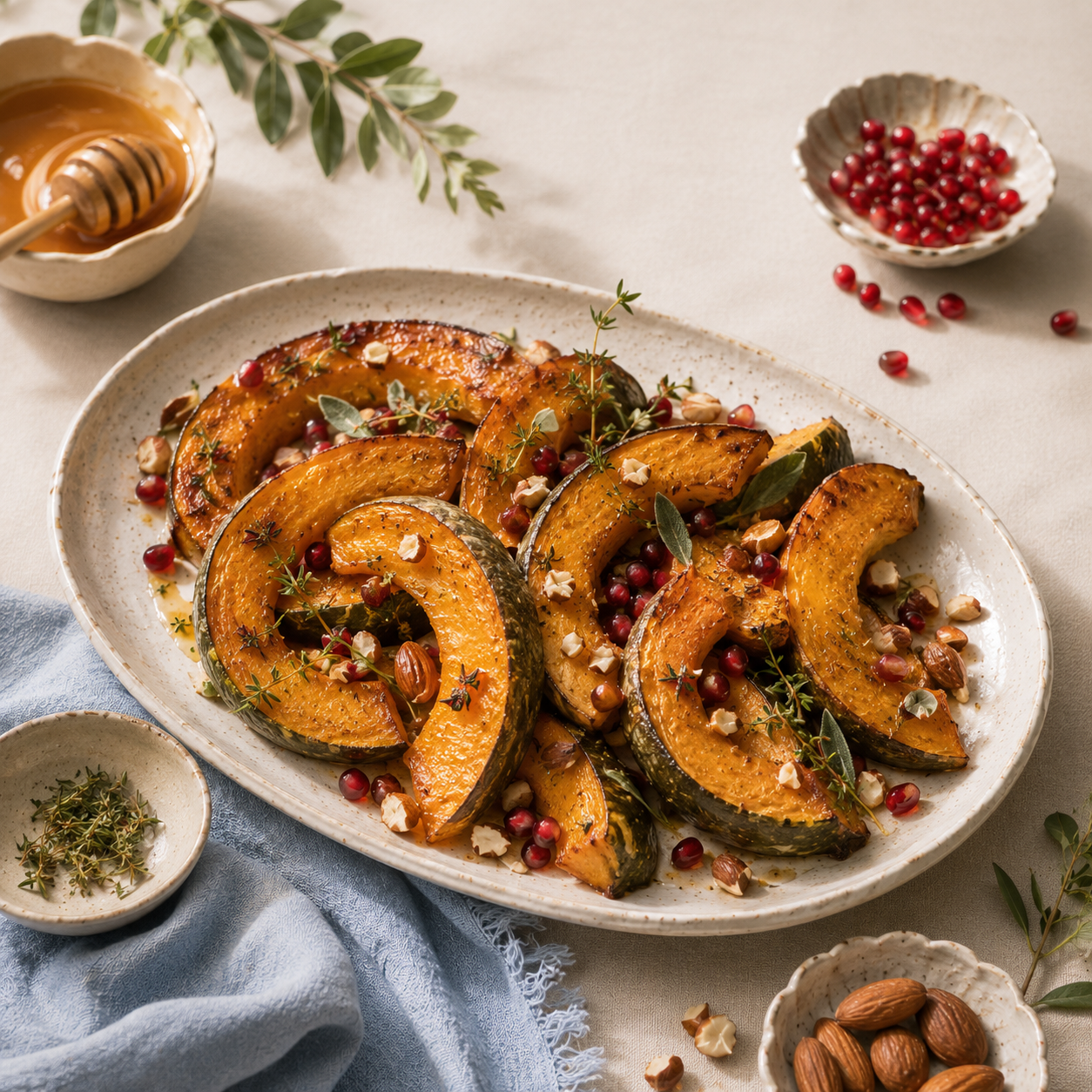
Roast pumpkin cubes with honey, cinnamon, or warming spices. Pumpkin can also be served as a purée, soup, side dish, or filling for savory pastries.
For a more modern Rosh Hashanah meal, combine roasted pumpkin with pomegranate seeds, herbs, toasted nuts, and a light honey dressing.
Visual idea: A warm platter of roasted pumpkin topped with pomegranate seeds and fresh green herbs.
Beets: Removing Adversity
Beets are another traditional food in the Sephardic Rosh Hashanah seder.
The Hebrew or Aramaic name is linked to the hope that our enemies and adversaries should depart. Like the prayer associated with leeks, this can also be applied inwardly. We may ask Hashem to help us remove the fears, patterns, and distractions that prevent us from becoming who we are meant to be.
With their dramatic color, beets are one of the most visually appealing foods on the Rosh Hashanah table.
How to Serve Beets
Serve roasted beet wedges, a beet salad with citrus, or chilled beets dressed with herbs and vinaigrette. Beets pair particularly well with apples, pomegranate, walnuts, and leafy greens.
Visual idea: Deep red beet slices layered with green leaves and pomegranate seeds on a pale ceramic plate.
Round Challah: The Cycle and Crown of the Year
Throughout most of the year, challah is commonly braided into a long loaf. On Rosh Hashanah, many families serve it in a round shape.
The round challah is often understood as a symbol of the cycle of the year. One year ends and another begins, reminding us that time moves forward while continually offering opportunities to return, rebuild, and begin again.
Its shape can also resemble a crown, reflecting one of the central themes of Rosh Hashanah: recognizing Hashem as King.
Many Rosh Hashanah challahs are made slightly sweeter than usual. Some include raisins, cinnamon, apples, or honey. After making hamotzi, many families dip the challah into honey rather than salt during the Rosh Hashanah meals.
How to Serve Round Challah
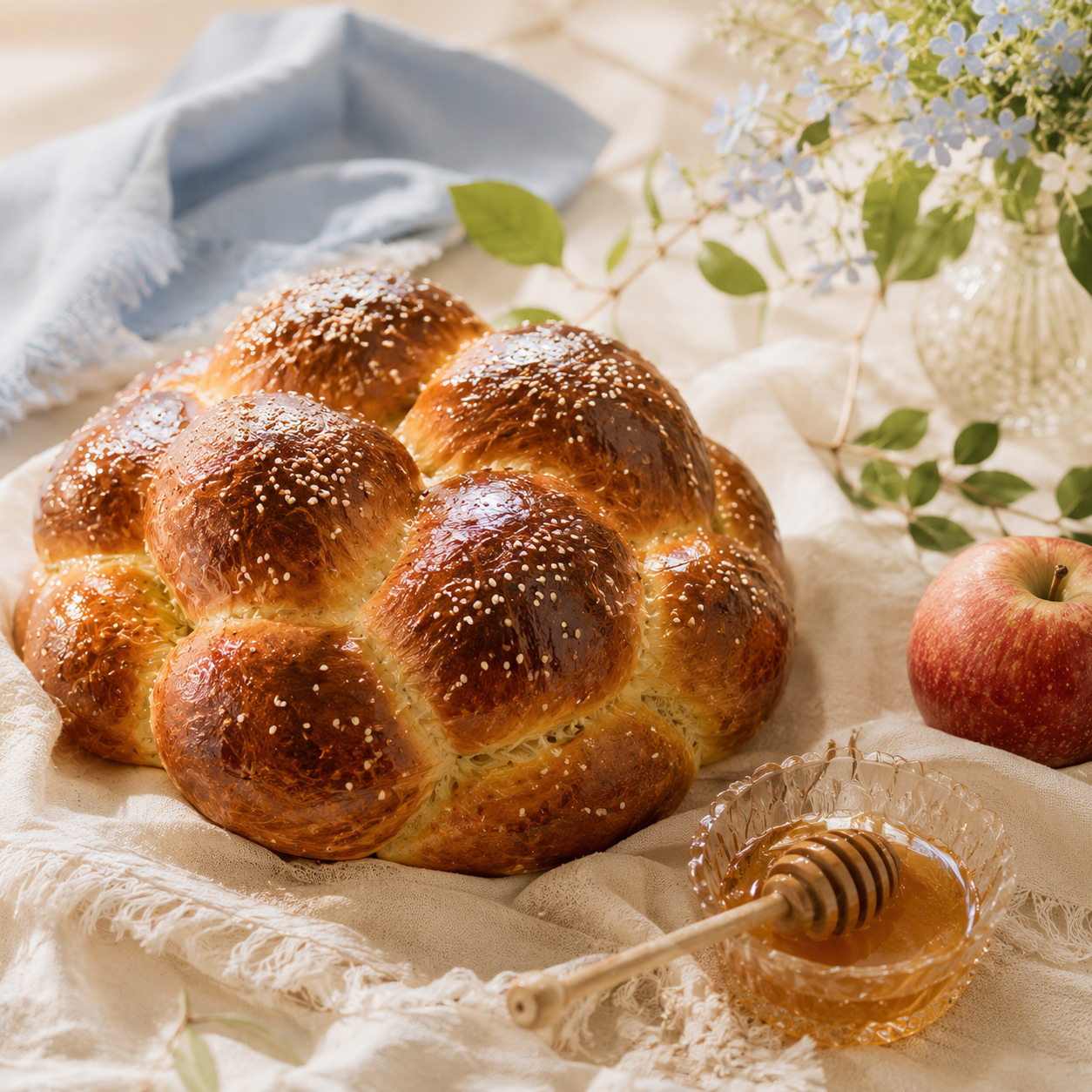
Place the challah on a beautiful board or tray and cover it with a special challah cover before hamotzi. A simple spiral loaf is elegant on its own, while braided round challahs create a more elaborate effect.
Visual idea: A glossy round challah on rumpled ivory linen beside a honey dish, apple, and a few sprigs of greenery.
Honey Cake: Sweetness to Carry Through the Year
Honey cake may not be one of the formal simanim, but it has become one of the most beloved foods of the Rosh Hashanah season.
Its sweetness reflects our wish for a sweet year, while its warm spices and rich aroma immediately evoke the approach of the Yamim Noraim. Recipes may include cinnamon, cloves, coffee, tea, orange zest, or whisky, depending on family tradition.
For many people, honey cake carries emotional meaning as well. It is the cake baked from a grandmother’s recipe, wrapped for neighbors, served after shul, or eaten with tea during the quiet days of the holiday.
How to Serve Honey Cake
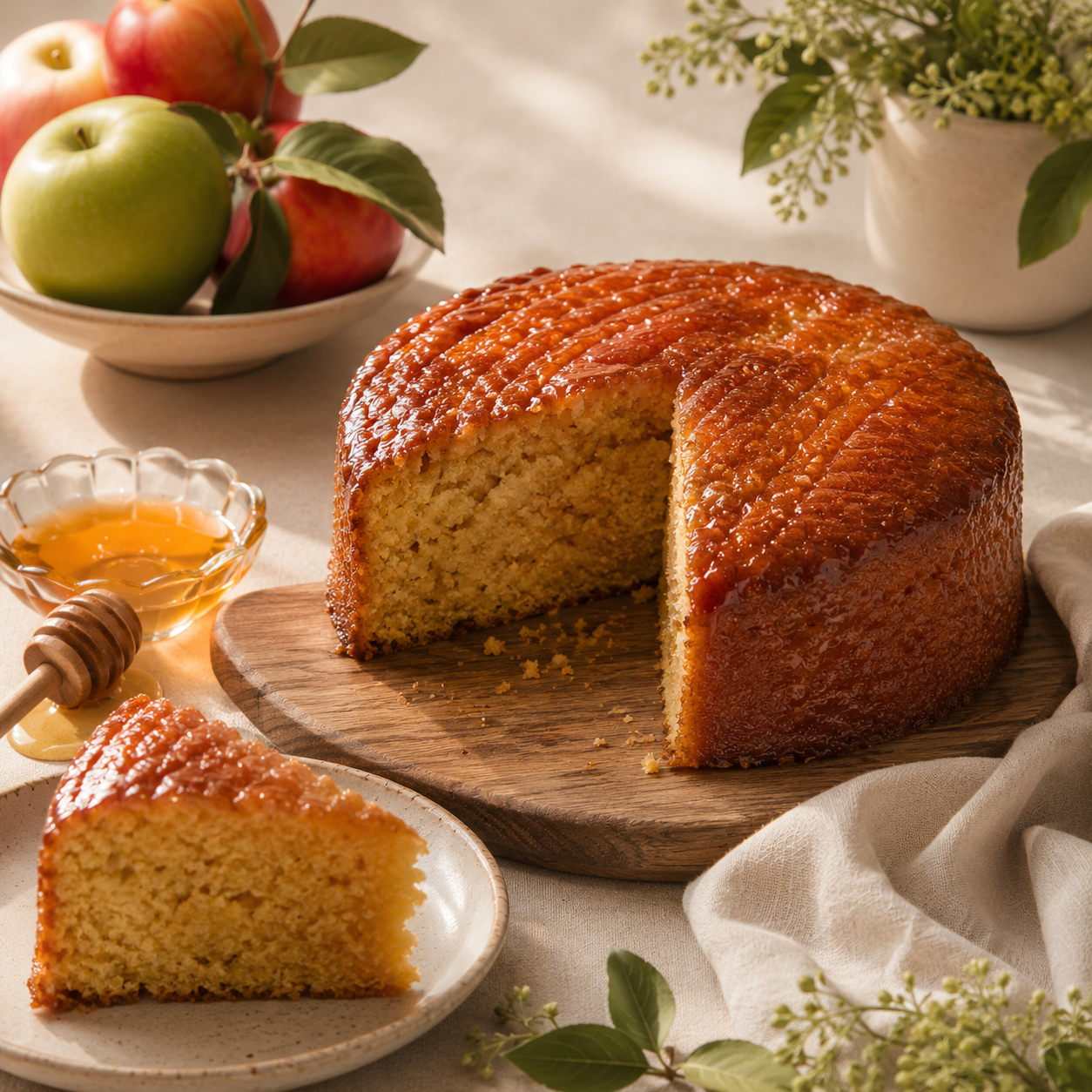
Bake honey cake in a loaf tin, Bundt pan, or individual miniature molds. Allowing it to rest for a day often deepens the flavor and improves its texture.
Serve it simply, dusted lightly with icing sugar, or topped with sliced almonds. For a more modern presentation, accompany it with poached apples or a small spoonful of honey.
Visual idea: A sliced honey cake on a wooden board, with visible crumbs, a honey dipper, and soft autumn light.
How to Create a Rosh Hashanah Simanim Plate
A simanim plate can be as simple or elaborate as you choose.
Begin by selecting the symbolic foods that reflect your family’s customs. Place each item in a separate small dish, or arrange them together on a large serving board. Printed or handwritten cards can identify each food and its meaning.
A beautiful simanim plate might include:
Apple slices with honey
Dates
Pomegranate
Cooked leeks
Roasted pumpkin
Beets
Carrot rounds
A small portion of fish
A symbolic fish head
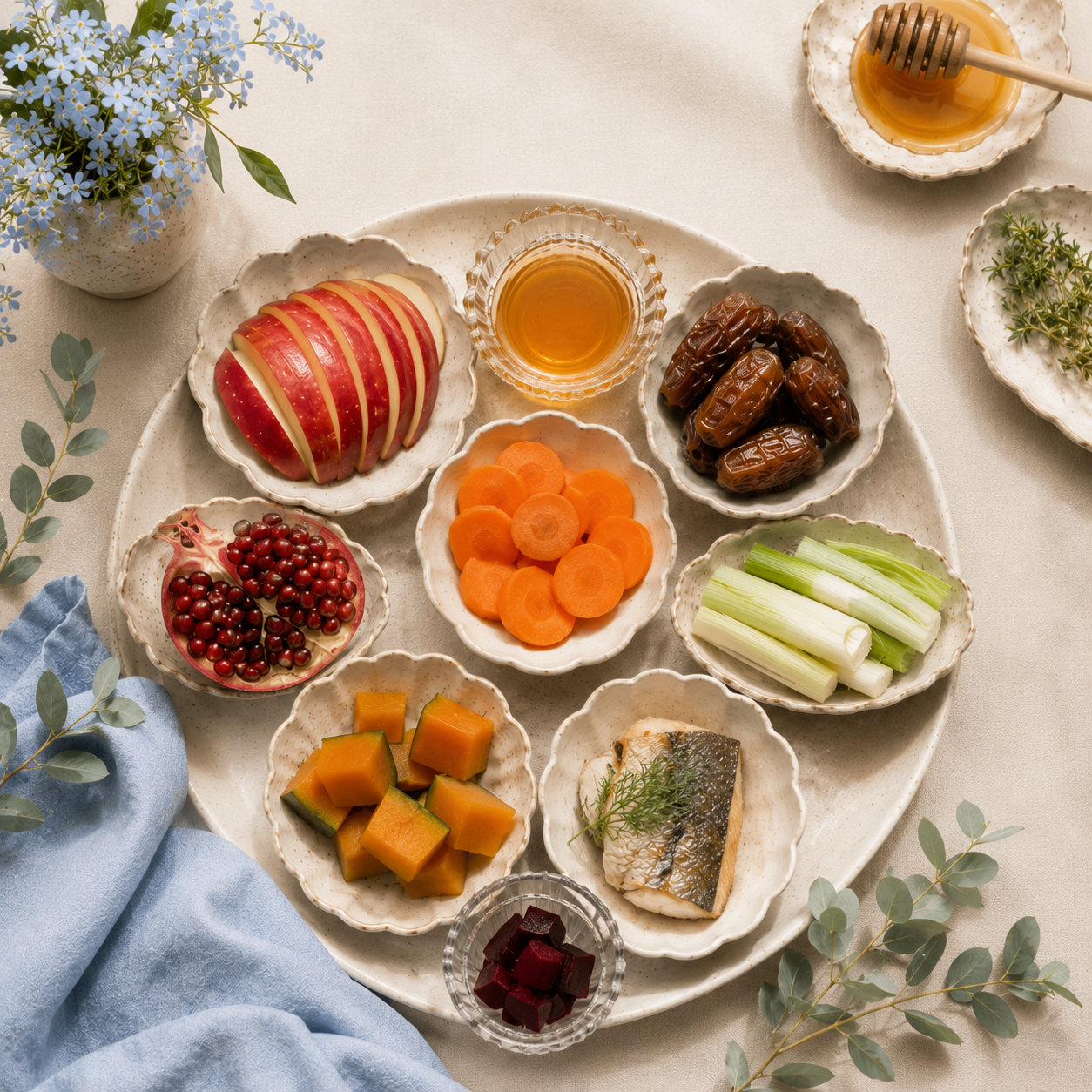
The purpose is not to serve large portions. Each person needs only enough to participate in the custom and connect with the accompanying prayer.
Keep the presentation organized so that the meaning is not lost in clutter. Small white or glass dishes, fresh greenery, ivory linen, and touches of deep green or soft blue can create a refined Rosh Hashanah table without overwhelming the food.
How to Build a Complete Rosh Hashanah Meal
The symbolic foods can be served separately at the beginning of the meal, but they can also inspire the entire menu.
First Course
Begin with fish, such as gefilte fish, baked salmon, or Moroccan fish. Add a beet salad, leek patties, or a fresh salad topped with apple slices and pomegranate seeds.
Soup
Serve chicken soup, pumpkin soup, or a seasonal vegetable soup. A pumpkin or squash soup allows one of the simanim to become part of the main menu.
Main Course
Roasted chicken, brisket, lamb, or a stuffed vegetable can serve as the center of the meal. Honey, dates, pomegranate molasses, apples, and warm spices can be used carefully to echo the flavors of the holiday.
Not every Rosh Hashanah dish needs to be sweet. A balanced meal should include savory, acidic, and fresh elements as well.
Side Dishes
Consider roasted carrots, pumpkin with pomegranate, rice with dates, sautéed leeks, or a traditional tzimmes. Round challah remains at the center of the table throughout the meal.
Dessert
Finish with honey cake, apple cake, date cake, baked apples, or a pomegranate dessert. Fresh fruit can offer a lighter option after a substantial holiday meal.
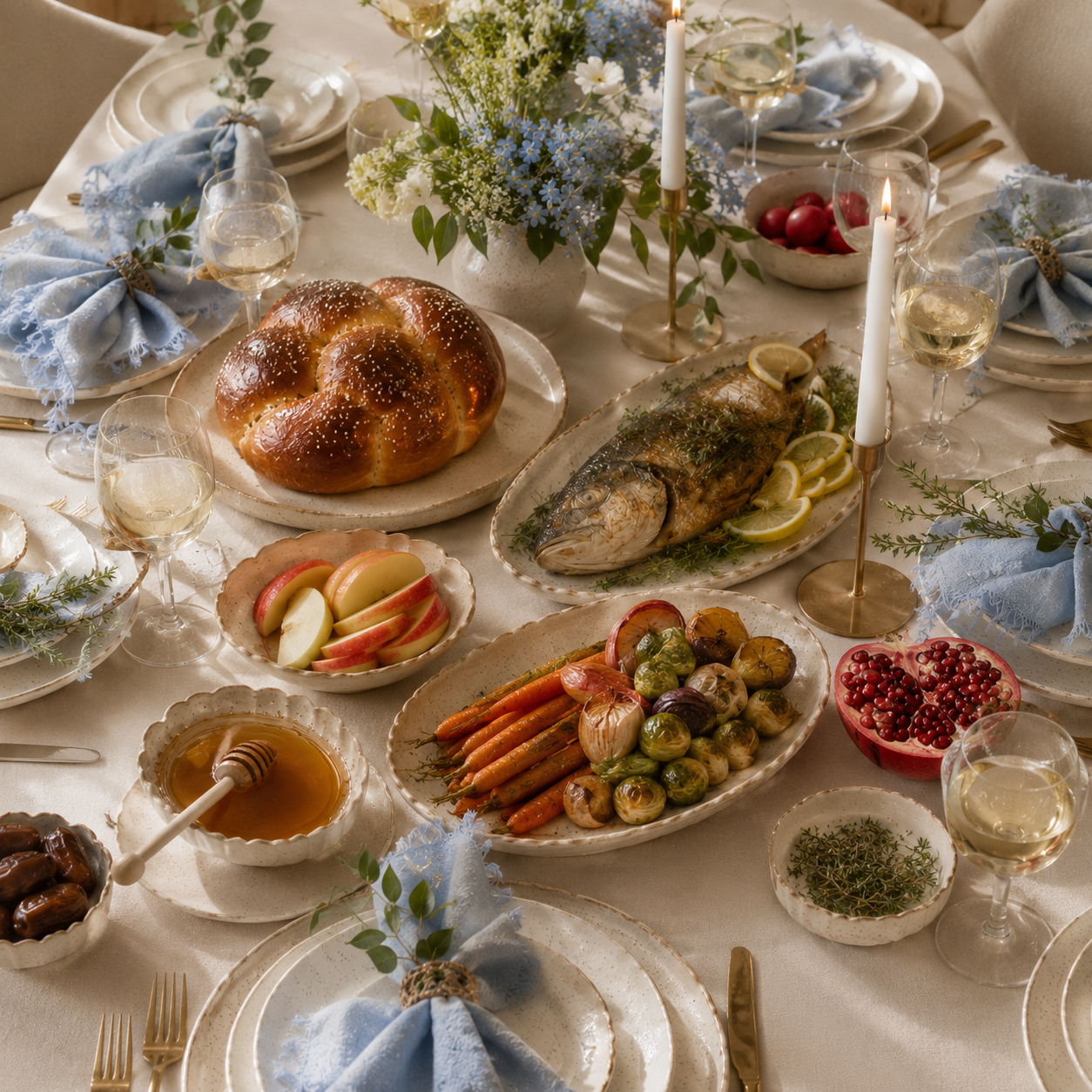
A Rosh Hashanah Table Filled With Intention
The beauty of Rosh Hashanah foods lies not only in what they represent, but in the way they invite us to pause.
A slice of apple becomes a prayer for sweetness. A pomegranate becomes a reminder to fill our lives with mitzvos. A round challah reminds us that another cycle is beginning and that Hashem gives us the opportunity to return.
The simanim also remind us to be specific about the year we are asking for. We do not simply say that we want things to be “good.” We ask for peace in our homes, health in our bodies, clarity in our decisions, blessing in our work, growth in our relationships, and closeness to Hashem.
The foods themselves will soon be eaten, and the table cleared. What remains is the intention with which we entered the year.
May the coming year be filled with revealed goodness, abundant blessing, meaningful growth, and true sweetness.
Shanah tovah u’metukah.