
A Complete Guide to the Aseres Yemei Teshuvah - The Ten Days of Repentance

The Aseres Yemei Teshuvah invite us to move from awakening to reflection, repair, and return.
Understanding the Meaning, Prayers, Customs, and Spiritual Purpose of the Days Between Rosh Hashanah and Yom Kippur
The final note of the shofar has faded. The Rosh Hashanah meals have ended. The machzor has been placed back on the shelf—at least temporarily.
Yet the work of the Yamim Noraim is far from complete.
Rosh Hashanah begins a sacred period known as the Aseres Yemei Teshuvah, the Ten Days of Repentance. These ten days begin on the first day of Rosh Hashanah and conclude at nightfall following Yom Kippur. They are among the most spiritually significant days of the Jewish year: a period of judgment, prayer, self-examination, reconciliation, and extraordinary closeness to Hashem.
The Aseres Yemei Teshuvah are not simply the days separating two major holidays. They form a spiritual bridge. Rosh Hashanah awakens us to Hashem’s kingship and to the seriousness of our lives. Yom Kippur offers forgiveness, purification, and renewal. The days between them allow us to respond.
They ask one central question:
Now that we have awakened, what are we prepared to change?
What Are the Aseres Yemei Teshuvah?
The Hebrew words Aseres Yemei Teshuvah mean “the Ten Days of Repentance.”
The period includes:
The two days of Rosh Hashanah
The seven intervening days from the third through the ninth of Tishrei
Yom Kippur on the tenth of Tishrei
This is an important distinction. The Aseres Yemei Teshuvah are sometimes described casually as the days “between” Rosh Hashanah and Yom Kippur, but Rosh Hashanah and Yom Kippur themselves are part of the ten days.
The Torah designates the first of Tishrei as a sacred day marked by the sounding of the shofar, while the tenth of Tishrei is established as Yom Kippur, the Day of Atonement. Chazal understood the entire period from the first through the tenth of Tishrei as one continuous season of judgment and return.
The Gemara applies the words of Yeshayahu—“Seek Hashem while He may be found; call upon Him while He is near”—to these ten days. Although Hashem always hears sincere prayer, the Aseres Yemei Teshuvah are described as a period of particular spiritual closeness, when the teshuvah of an individual is especially readily accepted.
The Rambam codifies this idea, teaching that although teshuvah and prayer are always appropriate, they possess exceptional power during the ten days between Rosh Hashanah and Yom Kippur.
These days are therefore not meant to produce panic or despair. They are an invitation. Hashem is near, the path home is open, and even changes that once felt impossible can begin with one sincere step.
From Rosh Hashanah to Yom Kippur
Rosh Hashanah and Yom Kippur represent two different stages of the same spiritual process.
On Rosh Hashanah, we stand before Hashem as our King. We contemplate the purpose of creation, the direction of our lives, and the way we have used the gifts entrusted to us. The shofar interrupts our routine and calls us to wakefulness.
The Rambam famously explains the shofar as a spiritual alarm calling those who are asleep to awaken, examine their actions, abandon empty pursuits, and remember their Creator.
But awakening is only the beginning.
A person may leave Rosh Hashanah inspired, moved by the tefillos and determined to live differently. The Aseres Yemei Teshuvah ask that inspiration be translated into action.
Yom Kippur then becomes the culmination of the process. We confess, fast, pray, and detach ourselves from ordinary physical life so that we may stand honestly before Hashem. But the days leading to Yom Kippur are what allow us to arrive prepared.
Rosh Hashanah says: Wake up.
The Aseres Yemei Teshuvah say: Begin changing.
Yom Kippur says: Return completely.

The days between Rosh Hashanah and Yom Kippur call us to move from awakening toward reflection, change, and return.
The Books of Judgment
The language of the Yamim Noraim frequently refers to being “written” and “sealed” for life.
Chazal describe three books being opened on Rosh Hashanah: one for the completely righteous, one for the completely wicked, and one for those whose spiritual standing remains unresolved. The judgment of the intermediate group is described as suspended from Rosh Hashanah until Yom Kippur, providing an opportunity for teshuvah. The Rambam incorporates this teaching into his discussion of judgment and repentance.
This teaching should not be understood as a simplistic numerical calculation in which one more good deed automatically outweighs one more failure. The Rambam emphasizes elsewhere that only Hashem can truly evaluate the significance of a person’s actions.
A quiet act of restraint may carry enormous weight. A private kindness may transform another person’s life. A mitzvah performed with difficulty may mean more than an outwardly impressive action performed without struggle.
The purpose of the imagery is not to encourage obsessive spiritual accounting. It is to remind us that our choices matter.
A word can heal or humiliate. A habit can elevate or diminish us. A moment that appears small may become the beginning of an entirely different life.
During the Aseres Yemei Teshuvah, we are asked to live with that awareness.

The Books of Judgment remind us that our choices matter—and that through sincere teshuvah, the possibility of renewal remains open.
What Does Teshuvah Actually Mean?
The word teshuvah is often translated as “repentance,” but its literal meaning is closer to return.
Teshuvah is not the belief that a person is permanently defined by the worst thing he or she has done. It is the belief that beneath our failures lies a soul that still belongs to Hashem.
We return because we have wandered. We repair because something valuable has been damaged. We confess because honesty allows us to stop hiding—from Hashem and from ourselves.
According to the Rambam, genuine teshuvah includes several essential elements:
Leaving the Sin
A person must stop the harmful behavior. Regret without change may be emotionally sincere, but it remains incomplete.
Recognizing What Was Wrong
Teshuvah requires moral clarity. We cannot repair what we continue to excuse, minimize, or blame entirely on others.
Regretting the Past
Regret does not mean becoming trapped in shame. It means recognizing that our actions were beneath the person we are capable of becoming.
Resolving for the Future
A person makes a genuine commitment not to return to the behavior. This does not require predicting the future with certainty. It requires sincerity in the present.
Confession Before Hashem
The thoughts of teshuvah are expressed verbally through vidui, confession. The Rambam warns that confession without an inner decision to change is like entering a mikvah while still holding the source of impurity.
Teshuvah therefore involves the heart, the mind, the voice, and the person’s practical behavior.
It is not simply feeling bad.
It is becoming different.

Teshuvah is not simply regret. It is the courage to turn, return, and begin walking toward the person we are capable of becoming.
Why Are the Prayers Different?
The changes made to the daily Amidah during the Aseres Yemei Teshuvah reflect the central themes of the season.
The most significant change is the repeated emphasis on Hashem as King.
HaMelech HaKadosh
In the third blessing of the Amidah, HaKel HaKadosh, “the holy God,” is replaced with HaMelech HaKadosh, “the holy King.”
HaMelech HaMishpat
In the blessing concerning justice, the regular conclusion is changed to HaMelech HaMishpat, emphasizing Hashem as the King of justice.
These changes are formally recorded in the Shulchan Aruch as part of the order of prayer for Rosh Hashanah and the Ten Days of Repentance. Because some omissions can affect whether the Amidah must be repeated, anyone who realizes that a phrase was omitted should consult the instructions printed in the siddur or ask a rabbi.
Four additional requests are also inserted into the Amidah:
Zochreinu L’Chaim
“Remember us for life, King Who desires life.”
Mi Chamocha Av HaRachamim
“Who is like You, merciful Father, Who remembers His creations for life with compassion?”
U’Chsov L’Chaim Tovim
“Write all the children of Your covenant for a good life.”
B’Sefer Chaim
“In the Book of Life, blessing, peace, and good livelihood, may we be remembered and written before You.”
These additions move gradually from a request for life to a broader vision of what a meaningful life should contain: goodness, blessing, peace, livelihood, and connection to Hashem.
We are not merely asking to exist for another year. We are asking for the opportunity to live well.
Avinu Malkeinu
One of the most recognizable prayers of the Aseres Yemei Teshuvah is Avinu Malkeinu, “Our Father, our King.”
The name itself contains the spiritual tension of the Yamim Noraim.
Hashem is Avinu, our Father: loving, compassionate, and close.
Hashem is also Malkeinu, our King: majestic, authoritative, and just.
We approach Hashem neither as strangers terrified of an uncaring ruler nor as children who assume that their actions carry no consequences. We approach the One Who loves us and judges us, Who expects greatness from us precisely because our lives possess meaning.
Avinu Malkeinu is recited during the Aseres Yemei Teshuvah according to the customs of each community. Practices concerning its recitation on Shabbos and at particular services vary between Ashkenazi and Sephardi communities, so one should follow the local siddur and established minhag.
Selichos and Additional Tefillos
Selichos continue during the Aseres Yemei Teshuvah according to the nusach and customs of each community.
The Selichos prayers combine confession, supplication, remembrance of the merits of our ancestors, and repeated appeals to Hashem’s Thirteen Attributes of Mercy.
In many communities, additional chapters of Tehillim or other passages are included in the daily davening. Some congregations recite Shir HaMaalos MiMaamakim, “A Song of Ascents: From the depths I call to You,” during Shacharis.
These additions are not meant to turn prayer into a race through more pages. They are meant to create space for greater honesty and concentration.
During these days, even one line of davening said slowly can become a form of teshuvah.
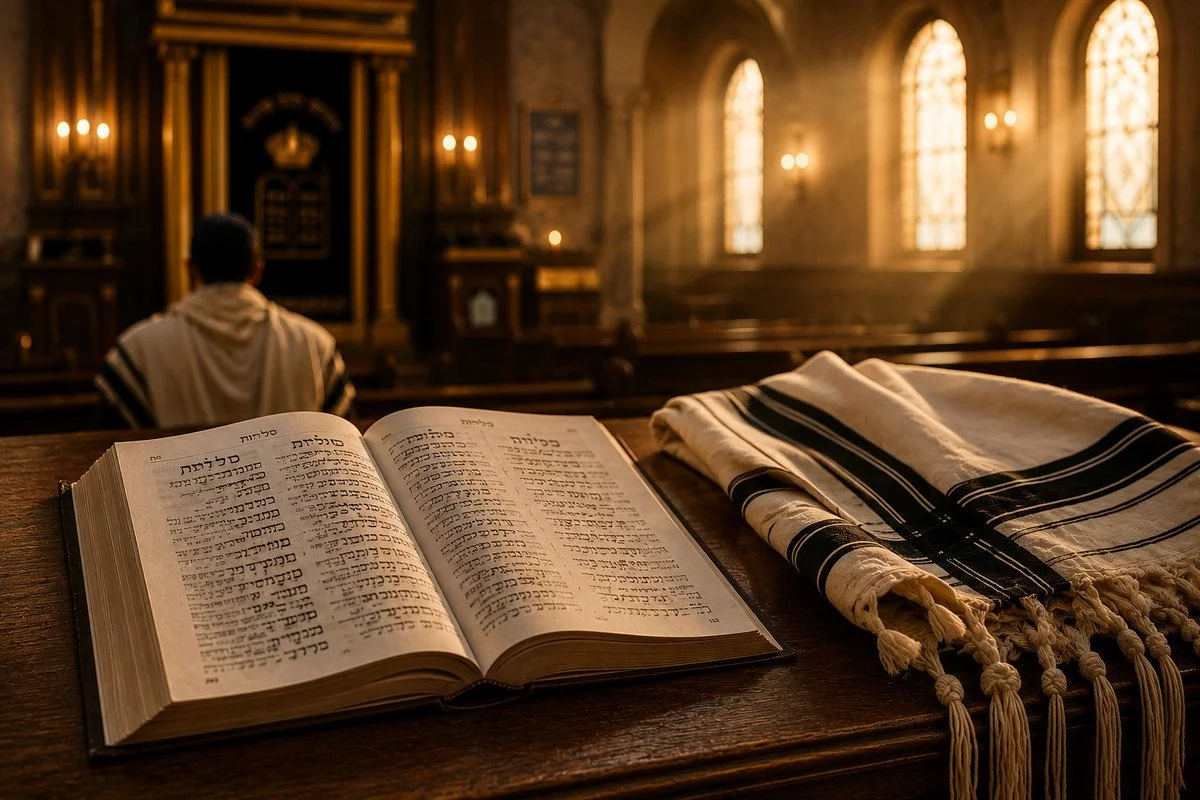
During the Aseres Yemei Teshuvah, familiar prayers take on renewed urgency as we ask Hashem for life, mercy, and the strength to return.
Tzom Gedaliah
The day immediately following Rosh Hashanah is generally observed as Tzom Gedaliah, the Fast of Gedaliah. When the third of Tishrei falls on Shabbos, the fast is postponed.
The fast commemorates the assassination of Gedaliah ben Achikam, who had been appointed to govern the small Jewish population remaining in the Land of Israel after the destruction of the First Beis HaMikdash. His death brought further instability and exile. Chazal identify Tzom Gedaliah with the biblical “fast of the seventh month.”
Its placement directly after Rosh Hashanah carries a sobering message.
Spiritual inspiration does not remove human responsibility. Even after the shofar has sounded and we have proclaimed Hashem’s kingship, jealousy, anger, division, and reckless behavior can still cause destruction.
Tzom Gedaliah reminds us that teshuvah must enter the way we speak to, judge, and treat other people.
Shabbos Shuvah
The Shabbos that falls during the Aseres Yemei Teshuvah is known as Shabbos Shuvah, the Shabbos of Return.
Its name comes from the opening words of the special haftarah:
“Shuvah Yisrael ad Hashem Elokecha” — “Return, Israel, to Hashem your God.”
The prophet Hoshea does not tell the Jewish people merely to regret their actions. He instructs them to return with words, prayer, and renewed faithfulness.
Shabbos Shuvah provides a pause within the intensity of the ten days. During the week, a person may rush from Selichos to work, from family obligations to preparations for Yom Kippur. Shabbos creates space to stop.
It allows us to ask:
Where have I been spiritually?
What has been distracting me?
What am I being asked to return to?
In many communities, the rabbi delivers a special Shabbos Shuvah derashah addressing teshuvah, Yom Kippur, and relevant halachos. The custom reflects the importance of combining inspiration with practical guidance.

Shabbos Shuvah offers a quiet pause within the Ten Days of Repentance—a time to step away from the rush and consider where we are being called to return.
Taking on Greater Care in Mitzvos
The Aseres Yemei Teshuvah are traditionally a time to become more careful in mitzvah observance.
The Shulchan Aruch records that even someone who is not ordinarily strict about eating only pas Yisrael—bread baked with Jewish participation—should be careful about it during these ten days.
The purpose is not to create a temporary appearance of righteousness that disappears immediately after Yom Kippur.
Rather, behaving differently reminds us that these days are different. A temporary practice can interrupt spiritual complacency. It can teach us that we are capable of greater discipline than we assumed.
People may choose to become more careful about:
Saying brachos slowly and with concentration
Avoiding harmful or unnecessary speech
Davening on time
Giving additional tzedakah
Learning Torah each day
Showing greater patience at home
Being more careful with kashrus
Limiting distractions and unnecessary entertainment
Performing quiet acts of chesed
Expressing gratitude to Hashem and to others
It is often better to choose one realistic area and practice it consistently than to make numerous dramatic commitments that cannot be sustained.
The purpose of a temporary stringency is to awaken permanent growth.
Repairing Relationships
The Aseres Yemei Teshuvah are not only concerned with the relationship between a person and Hashem.
The Mishnah teaches that Yom Kippur atones for transgressions between a person and Hashem, but wrongdoing committed against another person is not atoned for until the injured person has been appeased.
This means that prayer cannot substitute for accountability.
A person who has caused financial harm may need to repay what is owed. Someone who spread damaging information may need to correct it. Someone who embarrassed another person may need to acknowledge the specific pain that was caused.
A sincere apology should not demand immediate forgiveness or pressure the injured person to provide reassurance. It should focus on responsibility rather than self-defense.
Instead of saying:
“I’m sorry you were hurt.”
A more honest apology might be:
“I spoke carelessly and embarrassed you. It was wrong. I am sorry, and I am working to make sure I do not repeat it.”
Blanket messages asking everyone for forgiveness may express a sincere desire to enter Yom Kippur peacefully, but they do not replace the need to address a known, specific injury.
At the same time, halachah encourages the injured person not to be unnecessarily cruel by withholding forgiveness from someone who has made a genuine effort to repair the harm. Reconciliation asks for humility from both sides.
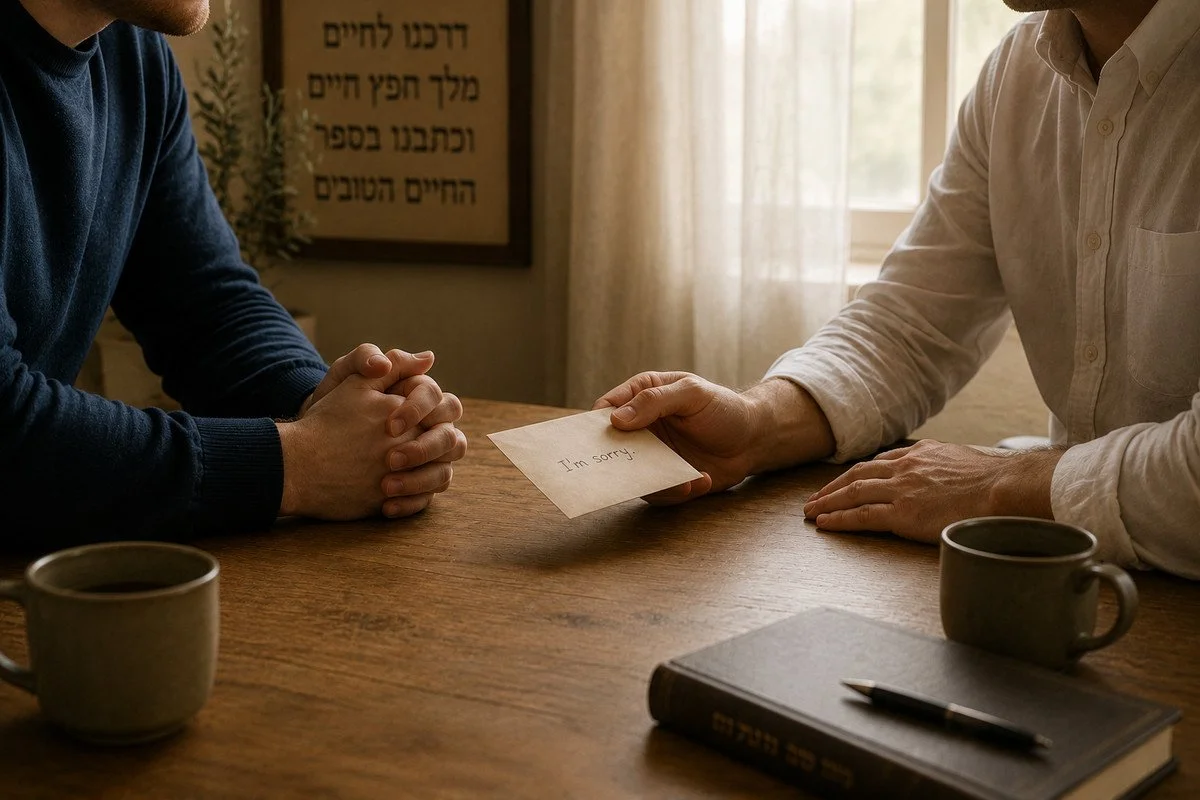
Teshuvah between people begins with honesty: acknowledging the hurt, taking responsibility, and making a sincere effort to repair what was damaged.
Erev Yom Kippur
The ninth of Tishrei, Erev Yom Kippur, is itself a spiritually significant day.
Although Yom Kippur is a fast, Erev Yom Kippur includes a mitzvah to eat and prepare for the holy day. The physical preparation communicates that fasting is not an act of rejecting the body. It is a sacred practice undertaken in Hashem’s service.
Many communities observe additional customs on Erev Yom Kippur, including kapparos, giving tzedakah, immersing in a mikvah, receiving a blessing from parents, and asking forgiveness from family and friends. Customs vary considerably, and each person should follow family and communal practice.
There is also vidui during Minchah before the final meal. The Shulchan Aruch records the requirement to confess before the seudah hamafsekes, ensuring that a person enters Yom Kippur having already begun the process of verbal confession.
Erev Yom Kippur should not become so consumed by cooking, errands, and anxiety that its spiritual purpose disappears.
Preparation is itself part of the avodah.
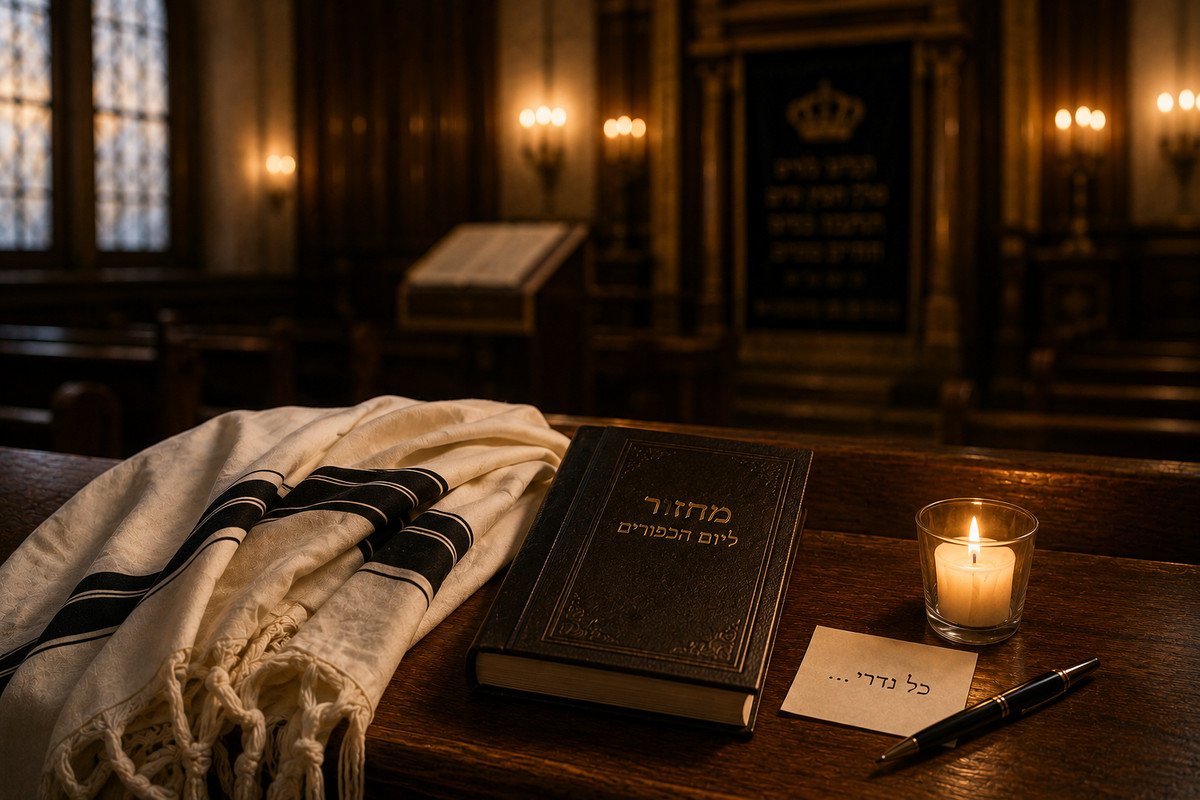
As Yom Kippur approaches, physical preparation gives way to spiritual readiness: a final turning inward before the holiness of the day begins.
A Practical Framework for the Ten Days
The Aseres Yemei Teshuvah can feel overwhelming. There are prayers to say, people to contact, meals to prepare, and an entire year to examine.
A simple structure can make the process more meaningful.
1. Choose One Area Between Yourself and Hashem
Consider one mitzvah or spiritual habit that needs attention.
This might be davening, brachos, Shabbos, Torah learning, modesty, honesty, gratitude, or guarding one’s speech.
Ask:
What has weakened?
What makes this difficult?
What is one change I can begin now?
2. Choose One Relationship to Repair
Think of one person who may have been hurt, neglected, or taken for granted.
Do not begin with a general list of everyone you know. Begin with the relationship that requires genuine courage.
3. Give Tzedakah
Tzedakah shifts attention away from the self. It transforms remorse into generosity and reminds us that spiritual growth should make us more responsive to the needs of others.
4. Create a Small Daily Practice
Choose something that can be repeated throughout the ten days:
One chapter of Tehillim
Ten minutes of Torah learning
One carefully recited Amidah
A daily act of kindness
A few minutes of quiet reflection
Writing down one thing for which you are grateful
Small practices create continuity between moments of inspiration.
5. Remove One Distraction
Teshuvah often requires space.
Reducing social media, unnecessary news, entertainment, or habitual noise for even a portion of the day can make room for thought and prayer.
6. Make a Sustainable Kabbalah
A kabbalah is a practical resolution undertaken for spiritual growth.
The most useful resolutions are specific and realistic.
Instead of saying, “I will never speak lashon hara again,” a person might decide, “I will not participate in negative conversations during dinner,” or, “I will study two halachos of proper speech each day.”
Instead of saying, “I will always daven with complete concentration,” one might choose one blessing of the Amidah to say slowly.
The goal is not to impress Hashem with the size of the promise. The goal is to make a truthful change.
Teshuvah Is Not Despair
The seriousness of the Aseres Yemei Teshuvah can sometimes be misunderstood.
Teshuvah does not mean deciding that we are hopeless. Despair says that because we have failed, there is no reason to try. Teshuvah says that because we have failed, there is work worth doing.
The Gemara teaches that teshuvah undertaken from love possesses the power to transform deliberate sins into merits. The failures themselves become part of the person’s journey toward greater closeness to Hashem.
This does not make the original wrongdoing good. It means that the struggle, regret, repair, and return can ultimately produce a person of greater depth, compassion, and humility.
The Aseres Yemei Teshuvah are therefore serious, but they are not bleak.
They are built upon the revolutionary Jewish belief that a person can change.

Teshuvah is not despair. It is the belief that no failure has the final word and that the path back to Hashem remains open.
Frequently Asked Questions
Can a person do teshuvah after Yom Kippur?
Yes. Teshuvah is accepted throughout the year. The Aseres Yemei Teshuvah are especially favorable because of the closeness and spiritual opportunity associated with the period, but Hashem never closes the door to sincere return.
Must every spiritual problem be corrected during these ten days?
No person can repair an entire lifetime in ten days. The goal is honesty, direction, and meaningful movement. One sincere and sustainable change can be more valuable than many unrealistic promises.
Should I ask everyone I know for forgiveness?
It is appropriate to enter Yom Kippur peacefully, but priority should be given to people whom you know you have harmed. A general request for forgiveness should not replace a specific apology or practical restitution.
What should I do if someone asks me for forgiveness?
When the apology is sincere, and forgiveness is emotionally and morally appropriate, Jewish law encourages a person not to withhold forgiveness cruelly. Forgiveness, however, does not always require immediately restoring trust or returning a relationship to its previous form.
What if I feel no inspiration?
Teshuvah does not depend entirely on emotion. A person can perform one mitzvah, make one apology, say one prayer slowly, or stop one harmful behavior even without feeling transformed.
Sometimes action creates the inspiration that feeling could not.
Returning to Who We Are
The Aseres Yemei Teshuvah are often presented as the most intimidating days of the Jewish calendar.
But beneath the judgment lies extraordinary tenderness.
Hashem does not summon us because we are worthless. He summons us because our choices matter. He asks us to return because we still belong to Him.
Teshuvah is not the creation of an entirely new identity. It is the uncovering of the person we were always capable of becoming.
During these ten days, we stand between the sound of the shofar and the final words of Neilah. The year behind us cannot be rewritten, but it can be understood, repaired, and transformed. The year ahead has not yet unfolded, but its direction can begin with the decisions we make now.
One prayer said with sincerity.
One apology offered without excuses.
One mitzvah reclaimed.
One habit interrupted.
One step toward Hashem.
The gates are open.
The King is near.
And the journey home has already begun.