
The Hidden Gift of Elul: Why HaShem
Written by Yitzchak Zeitler
It is never too late to return!
Imagine receiving notice that the most important meeting of your life is scheduled for next month.
The outcome of that meeting will affect your future, your opportunities, and perhaps even your legacy. Most people would spend the intervening weeks preparing carefully. They would review their performance, correct mistakes, seek advice, and arrive ready to present their best selves.
Now imagine the opposite. Imagine receiving no notice at all. One day, without warning, the judgment arrives. The remarkable truth is that Judaism teaches that HaShem does not operate that way.
Before Rosh Hashanah, the Day of Judgment, He gives us an entire month.
That month is Elul.
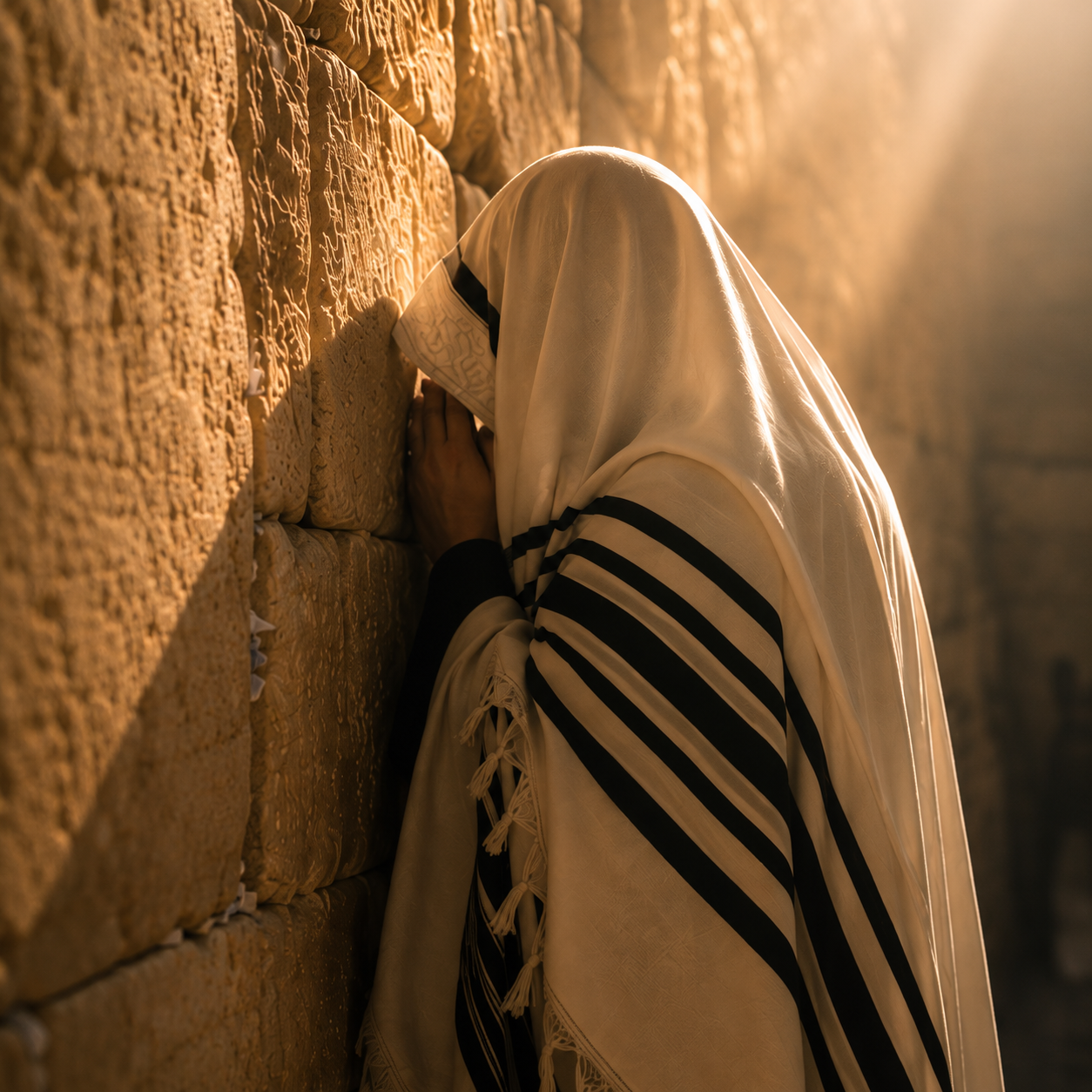
A Month That Reveals Divine Compassion
At first glance, Elul may seem like a period of spiritual housekeeping—a time to prepare for the Yamim Noraim (High Holidays). But its deeper significance is far more profound. Elul itself is an expression of Divine mercy. If HaShem's purpose were simply judgment, He could judge humanity immediately. Instead, He provides thirty days for reflection, repentance, growth, and reconnection. The very existence of Elul teaches that HaShem desires our success more than our failure.
The prophet Yechezkel (18:23) records HaShem's words:
"Do I desire the death of the wicked? Rather, that he return from his ways and live."
Judgment in Judaism is not about punishment for its own sake. It is about helping us become who we are capable of being. Elul reminds us that before HaShem asks us to account for our lives, He gives us every opportunity to improve them.
The Origins of Elul's Special Power
The roots of Elul's significance can be traced back to one of the most dramatic moments in Jewish history. After the sin of the Golden Calf, Moshe Rabbeinu ascended Mount Sinai for a third period of forty days, beginning on Rosh Chodesh Elul and culminating on Yom Kippur. During those forty days, he pleaded on behalf of the Jewish people and sought Divine forgiveness.
When Moshe descended on Yom Kippur with the second set of Tablets, it marked not only forgiveness for a national failure but the establishment of a pathway for repentance throughout future generations. Many commentators note that this historical episode established the spiritual character of Elul. It became a time associated with reconciliation, mercy, and renewed closeness between HaShem and His people.
The message remains timeless:
Even after profound mistakes, restoration is possible.
Even after failure, the relationship endures.
The Rambam: Awakening From Spiritual Sleep

One of the most powerful descriptions of repentance appears in the writings of the Rambam.
Although the Rambam discusses the shofar primarily in connection with Rosh Hashanah, his words capture the essence of Elul as well. He famously writes (Mishneh Torah, Hilchos Teshuvah 3:4) that the shofar carries an implicit message:
"Awake, sleepers, from your sleep, and those who slumber, arise from your slumber. Examine your deeds, return in repentance, and remember your Creator."
The Rambam understood something fundamental about human nature. Most people are not actively choosing a life of spiritual mediocrity. Rather, they drift into it. Daily responsibilities, routines, careers, financial pressures, and endless distractions consume attention until larger questions fade into the background.
Life becomes busy. Then it becomes automatic. Then months or years can pass without meaningful self-examination.
The Rambam's message is not one of condemnation but awakening. Elul serves as an annual interruption of the spiritual autopilot. The sounding of the shofar each weekday morning reminds us that life is precious, finite, and purposeful. It asks us to step outside our routines long enough to examine whether our actions align with our values.
In a world overflowing with distractions, that wake-up call may be more relevant than ever.
Shir HaShirim and the Hidden Message of Elul
One of the most beloved teachings about Elul comes from Megillas Shir HaShirim.
Shlomo Hamelech writes in Shir HaShirim 6:3:
"Ani L'Dodi V'Dodi Li" — "I am my Beloved's and my Beloved is mine."
The Chomas Anakh, the Chida in Sefer Nakhal Eshkol, and many others have pointed out that the Hebrew letters of the word Elul form the above acronym from the verse.
This insight transforms our understanding of the month. Elul is not merely about fear of judgment. It is about this special relationship.
The High Holiday season can sometimes be misunderstood as a time focused exclusively on accountability. While accountability is certainly present, we are reminded that the foundation of Elul is love and Devacus HaShem (Growing Closer to HaShem).
The verse describes mutual devotion.
First comes "I am my Beloved's." Human initiative matters. We take the first step. We seek growth. We reach upward.
Then comes "and my Beloved is mine."
Divine closeness follows. The relationship deepens.
This teaching offers an important corrective to common misconceptions about Judaism. The goal is not merely to avoid punishment or to secure a favorable judgment. The goal is connection with the Creator.
The work of Elul is not simply self-improvement. It is relationship-building.
The King Is in the Field

One of the most famous teachings about Elul comes from Rabbi Schneur Zalman of Liadi, founder of Chabad Chassidus. He compares Elul to a king who leaves his palace and enters the field, making himself accessible to all his subjects.
Normally, approaching the king requires passing through layers of protocol and security. In the field, however, everyone can approach him directly.
The message is powerful.
During Elul, HaShem is especially accessible. The barriers we imagine between ourselves and spirituality become thinner. Prayer feels more personal. Reflection becomes more meaningful. Change feels more attainable. The Alter Rebbe's metaphor has resonated for generations because it speaks to a universal human experience.
Many people feel distant from spirituality, not because they reject it, but because they assume they are unworthy of closeness. They imagine holiness exists only for scholars, saints, or exceptionally righteous individuals. The King in the field teaches otherwise.
Before the palace comes the field.
Before formal judgment comes an open invitation.
Before the awe of Rosh Hashanah comes the warmth of Elul.
The month is not primarily about HaShem waiting for us to fail. It is about HaShem making Himself available for reconnection.
Why We Need Preparation
Most people do not change dramatically in a single day. Real growth requires awareness, honesty, and time. Consider physical fitness. No one decides to run a marathon tomorrow and completes it without preparation. Relationships do not heal overnight. Character traits are not transformed instantly.
Spiritual growth works the same way.
The shofar that is sounded each weekday during Elul acts as a wake-up call. Its message is simple:
Wake up.
Pay attention.
Remember what matters.
The sound pierces through routine and distraction, reminding us that life is moving forward whether we are conscious of it or not.
Elul gives us space to ask difficult questions:
Am I becoming the person I want to be?
What habits are helping me grow?
What habits are holding me back?
Have I prioritized what truly matters?
Am I living according to my values?
Without Elul, these questions are easy to postpone indefinitely.
The Gift of Gradual Return
One of the most beautiful aspects of Judaism is its understanding of human nature.
We stumble.
We make mistakes.
We become distracted.
We drift.
Elul acknowledges this reality without surrendering to it. The Hebrew word teshuvah, often translated as repentance, literally means "return."
The goal is not perfection. The goal is return.
A person who has drifted can return. A relationship that has weakened can be renewed. A soul that feels distant can reconnect.
Elul teaches that HaShem values sincere effort more than flawless performance. Every step back toward Him matters.
Judgment Through the Lens of Love
The teachings of the Rambam, Shir HaShirim, and the Alter Rebbe together paint a striking picture.
The Rambam teaches us to awaken.
Shir HaShirim teaches us to reconnect.
The Alter Rebbe teaches us that HaShem is already waiting for us.
Together they reveal that Elul is not a month of fear but a month of opportunity.
Yes, judgment is approaching. But judgment is framed by compassion.
Before the accounting comes preparation.
Before the verdict comes invitation.
Before the King sits on His throne, He walks among His people.
This perspective changes everything. Instead of viewing Elul as a season of anxiety, we can view it as a season of possibility.
Rather than asking, "What am I afraid of?"
Elul asks, "Who can I become?"
A Personal Invitation
Perhaps the greatest gift of Elul is that it arrives every year. No matter what happened during the previous months, no matter how successful or disappointing the year may have been, Elul offers a fresh beginning. It is a Divine reminder that growth is always possible.
The gates are not closing. They are opening.
Before the King sits in judgment on Rosh Hashanah, He first comes into the field.
Before accountability comes opportunity.
Before judgment comes preparation.
And before He asks us who we have been, He gives us the chance to decide who we want to become.
That may be the hidden gift of Elul: not merely that HaShem judges us, but that in His compassion, He gives us a month to prepare.
A month to reflect.
A month to return.
A month to come home.
In a world that often demands instant results and offers little room for mistakes, Elul stands as a yearly reminder of a different truth. HaShem does not spring judgment upon us unexpectedly. He gives notice. He provides guidance. He sounds the shofar. He opens the gates.
Most importantly, He invites us back. The gift of Elul is not simply thirty days on the calendar.
It is the opportunity to become more intentional, more connected, and more aligned with the people we were created to be. And perhaps that is why this month has endured as one of the most beloved periods in the Jewish year.
Because hidden within its call for introspection is an even greater message:
We are wanted.
We are welcomed.
And it is never too late to return!