
The Yom Kippur Prayer Service Explained: From Kol Nidrei to Neilah
A detailed guide to the five tefillos, Vidui, Ashamnu, Al Chet, the Avodah, the reading of Yonah, Yizkor, Neilah, and the final shofar blast
Source note: Nusach, piyyutim, placement of certain passages, bowing practices, and memorial customs vary between communities. Congregants should follow their own machzor and local rabbinic guidance.
For much of the Jewish year, prayer is arranged around three daily services: Shacharit in the morning, Minchah in the afternoon, and Maariv at night. Shabbos, Rosh Chodesh, and Yom Tov add Musaf, the additional service corresponding to the additional offerings once brought in the Beis HaMikdash.
Yom Kippur goes further. It is the only day in the Jewish calendar with five tefillos: Maariv, Shacharit, Musaf, Minchah, and Neilah.
These services are not simply five versions of the same prayer. Together, they create the spiritual structure of the day. Kol Nidrei clears the entrance. Maariv introduces confession. Shacharit brings the clarity of morning. Musaf returns us to the Avodah of the Kohen Gadol. Minchah confronts us with the message of Yonah. Neilah gathers the remaining hours into one final appeal.
The prayers move with the light. They begin as the sun sets, continue through the brightness of day, and reach their conclusion as the doors of the Aron remain open in the fading evening light.
Understanding that progression can transform a long day in shul into something far more coherent: a carefully ordered journey from recognition to confession, from confession to purification, and from purification to a renewed relationship with Hashem. Yom Kippur is the only day on which five Amidah services are recited, culminating in Neilah.
Table of Contents
Why Yom Kippur Has Five Tefillos
The five formal prayer services of Yom Kippur are:
Maariv: The evening service, preceded by Kol Nidrei.
Shacharit: The morning service, including the Torah reading, haftarah, and, in many communities, Yizkor.
Musaf: The additional service, centered on the Avodah of the Kohen Gadol.
Minchah: The afternoon service, including the reading of Sefer Yonah.
Neilah: The unique closing service recited only at the conclusion of Yom Kippur.
Kol Nidrei is often used to refer to the entire evening service, but technically it is the solemn declaration recited before Maariv begins. Similarly, the Minchah recited on Erev Yom Kippur is not one of the five Yom Kippur tefillos, but it plays an essential role because it contains the first Vidui of the day’s observance.
Each service has its own emotional character. Maariv is an entrance into holiness. Shacharit is expansive and reflective. Musaf is historical and national. Minchah is direct and urgent. Neilah is concentrated and intensely personal.
The repetition is deliberate. Teshuvah is rarely accomplished through one moment of inspiration. We return to the same truths repeatedly because each stage of the day allows us to hear them differently.
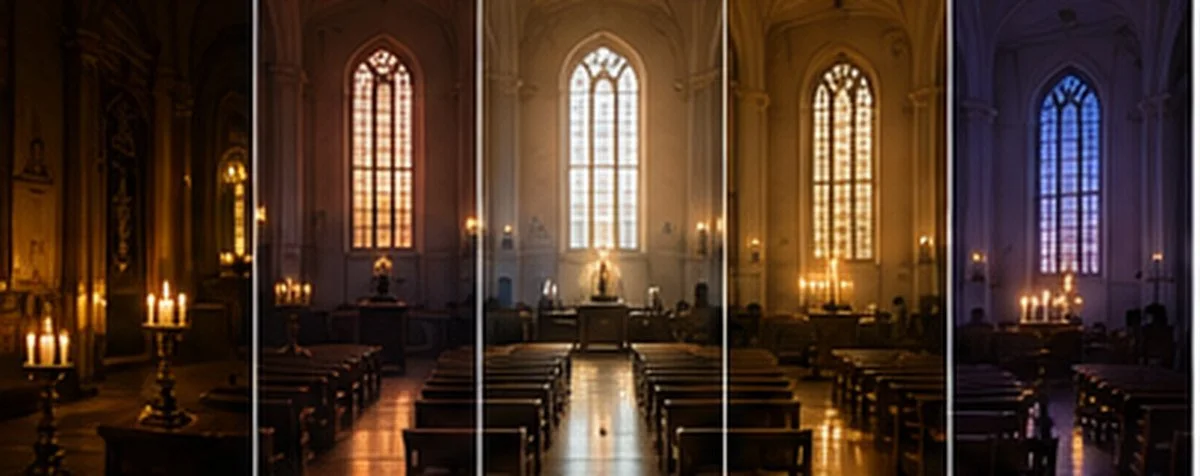
The five tefillos carry the congregation from the entrance of Yom Kippur through the closing moments of Neilah.
Erev Yom Kippur Minchah: The First Vidui
Before the final meal and before the fast begins, Minchah is recited with a full Vidui at the end of the silent Amidah.
The Gemara teaches that a person should confess before eating the seudah hamafsekes, the final meal before the fast, lest something occur during the meal that prevents the person from confessing later. Although the language reflects the seriousness with which Chazal approached Vidui, the placement also carries a broader message: we do not wait until Kol Nidrei to begin Yom Kippur.
The work of the day begins while the tables are still set and ordinary life is still visible.
This first confession is quiet and private. There is no dramatic melody and usually no repetition by the chazzan. A person stands before Hashem and begins to name what has gone wrong.
This also teaches that Vidui is not merely a response to the atmosphere of the synagogue. It is an independent mitzvah and an act of truth. The Gemara discusses confession before the final meal, and the traditional framework counts ten Vidui recitations beginning with Erev Yom Kippur Minchah.
The first Vidui is recited during Minchah on Erev Yom Kippur, before the final meal and before the fast begins.
Kol Nidrei: Entering the Day With the Power of Words
Kol Nidrei is one of the most recognizable moments in Jewish prayer. The Aron is opened, Torah scrolls are held beside the chazzan, and the ancient Aramaic declaration is chanted three times.
Its melody sounds like a prayer, but its wording resembles a legal formula. Kol Nidrei concerns nedarim—vows and binding personal commitments that a person may have undertaken before Hashem.
Different traditions developed regarding whether the declaration refers primarily to vows of the past year or to inadvertent vows that may be made during the year ahead. Many printed machzorim reflect elements of both formulations.
Kol Nidrei does not cancel financial obligations, contracts, debts, or promises made to another person. It cannot be used to escape the consequences of one’s word. Obligations between people remain obligations, and known or complicated vows may require a proper halachic annulment under rabbinic guidance.
Why, then, does Yom Kippur begin with vows?
Because teshuvah depends upon taking words seriously.
We are about to say that we regret, that we intend to change, and that we ask Hashem to accept our resolutions. Kol Nidrei reminds us that speech can create obligations. A promise is not empty simply because it was spoken rather than written.
The declaration therefore does not weaken the sanctity of a commitment. It confronts us with it. Before making new promises to Hashem, we acknowledge the danger of careless speech and the weight carried by the words that leave our mouths.
Kol Nidrei is traditionally recited at the threshold of Yom Kippur and applies to vows between a person and Hashem rather than obligations owed to another person.
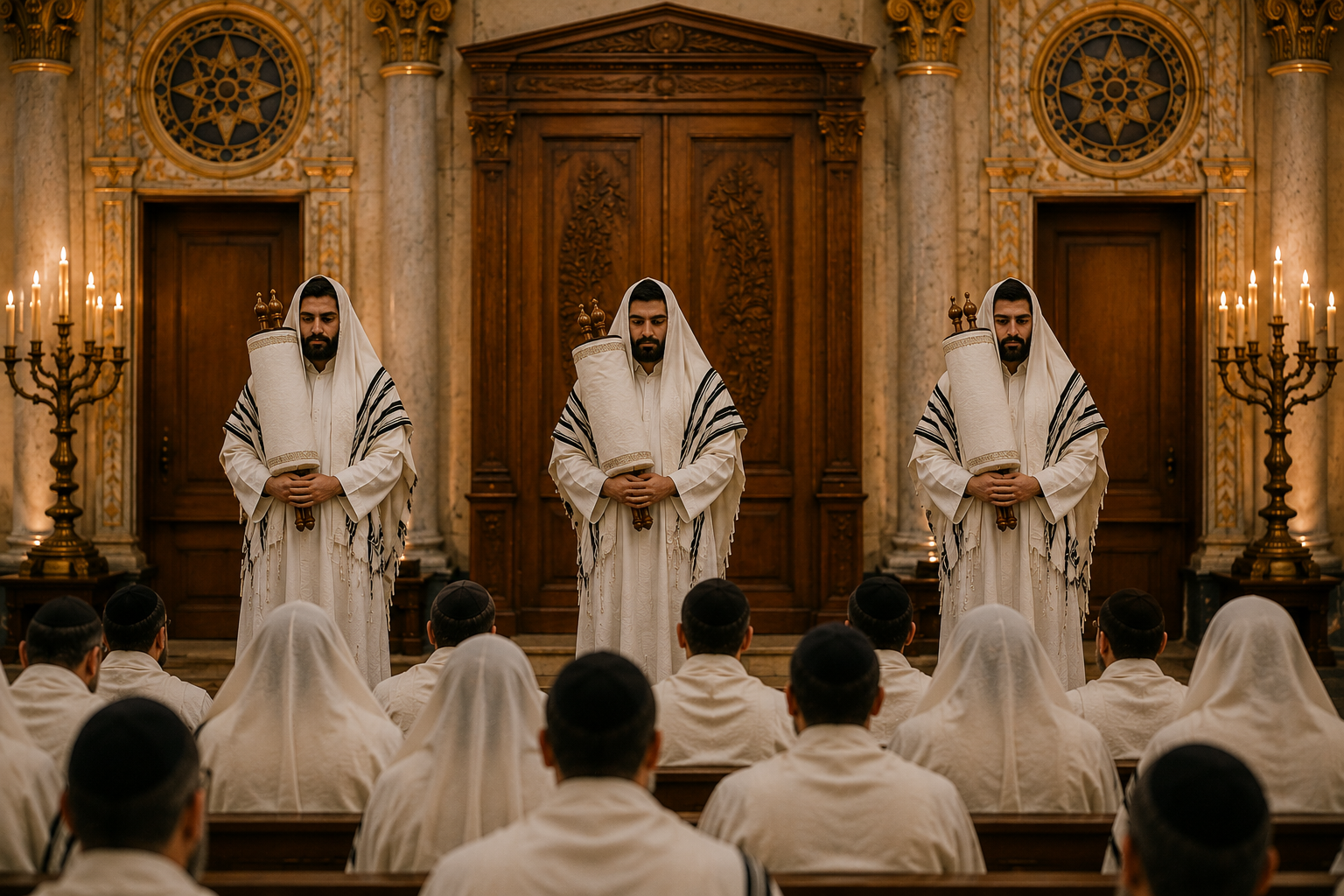
Kol Nidrei begins Yom Kippur by confronting the seriousness of vows, promises, and the words we speak.
Maariv: The First Service of Yom Kippur
After Kol Nidrei and the recitation of Shehecheyanu, the Torah scrolls are returned to the Aron and Maariv begins.
The structure resembles the evening service of a regular Yom Tov, but the atmosphere is unmistakably different. The Shema is recited, followed by a practice unique to Yom Kippur: the sentence Baruch Shem kevod malchuso le’olam va’ed is said aloud.
During the rest of the year, these words are whispered. On Yom Kippur, when the Jewish people refrain from physical needs and devote themselves to prayer, they are recited openly.
The Yom Kippur Amidah includes the special blessing for the holiness of the day and concludes with Vidui. After the silent Amidah, the congregation continues with Selichos, the Thirteen Attributes of Mercy, additional confessional passages, and piyyutim according to the community’s nusach.
Some of the precise prayers and melodies differ considerably between Ashkenazi, Sephardi, Edot HaMizrach, Chassidic, and other communities. The shared center, however, remains the same: we place our failures into words and appeal to Hashem’s mercy.
Maariv is the moment when the themes of Yom Kippur stop being preparation and become the day itself.
Vidui: Why Confession Must Be Spoken
Vidui means confession, but Jewish confession is not the same as despair, public humiliation, or permanent guilt.
The Rambam rules that when a person performs teshuvah, that person must confess before Hashem verbally. He describes Vidui as a positive mitzvah derived from the Torah’s commandment to confess sin.
Thought matters, but words give thought definition. A vague feeling of regret can disappear without changing anything. Saying, “I did this, it was wrong, and I regret it,” removes the protection of ambiguity.
A complete personal confession includes recognition of the wrongdoing, regret, and a sincere commitment not to repeat it. The printed text provides a common framework, but it does not replace personal honesty. A person may quietly add specific failings in the appropriate place without revealing private sins to the congregation.
Vidui is recited in the plural: We have sinned. We have betrayed. We have spoken falsely.
The plural language does not allow us to hide inside the crowd. It reminds us that the Jewish people stand before Hashem as a community. We affect one another, influence one another, and share responsibility for the moral environment we create.
At the same time, Yom Kippur does not erase responsibilities between people. The Mishnah teaches that transgressions between a person and Hashem can be atoned for through Yom Kippur and teshuvah, but offenses against another person require reconciliation with the person who was harmed.
Prayer cannot substitute for returning money, correcting damage, apologizing sincerely, or changing harmful behavior.
The Rambam identifies verbal confession as a positive mitzvah, while the Mishnah distinguishes between sins before Hashem and wrongs that require appeasing another person.
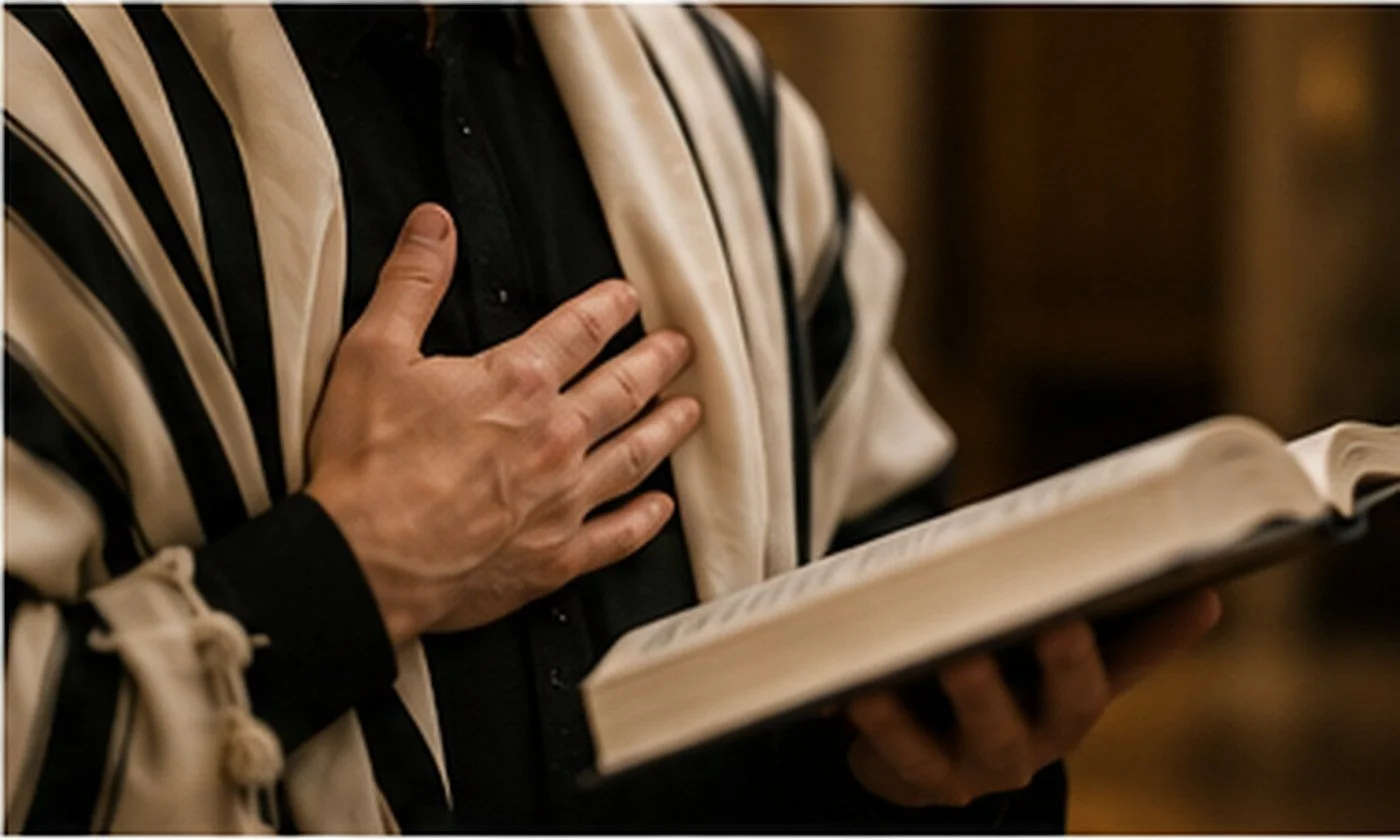
Vidui places regret into words, turning a general desire to improve into an honest acknowledgment of wrongdoing.
Ashamnu and Al Chet: The Two Central Confessions
The standard Yom Kippur Vidui contains two familiar confessional texts: Ashamnu and Al Chet.
Ashamnu
Ashamnu is the shorter confession. Its compact phrases follow the order of the Hebrew alphabet:
Ashamnu, bagadnu, gazalnu, dibarnu dofi…
We have become guilty. We have betrayed. We have stolen. We have spoken improperly.
The alphabetic structure gives form to something that might otherwise feel impossible to express. It is as though we acknowledge that our failures extend from aleph to tav—from one end of the moral vocabulary to the other.
The words are intentionally broad. “We have betrayed” can describe betrayal of Hashem, another person, a responsibility, or even our own better understanding. “We have spoken falsely” can include outright lies, misleading impressions, exaggeration, flattery, and promises we never intended to keep.
Al Chet
Al Chet is longer and more detailed. Rather than merely naming transgressions, many of its lines identify the manner in which sin occurs:
Through pressure.
Through confusion.
Through speech.
Through stubbornness.
Through disrespect.
Through misuse of power.
Through what was done knowingly and what was done without sufficient thought.
This makes Al Chet more than an inventory of prohibited actions. It is an examination of patterns. It asks not only, “What did I do?” but also, “What habits, attitudes, fears, or weaknesses repeatedly led me there?”
During Ashamnu and Al Chet, many people gently strike the chest over the heart. This is not intended as punishment. It is a physical gesture of acknowledgment: the problem cannot always be blamed on circumstances outside us.
The standard words should be recited slowly enough to be understood. A person has not necessarily committed every transgression in precisely the same form described in the machzor, but nearly every line can open a door to honest reflection.
The two confessions use alphabetic structures and plural language to provide a comprehensive communal framework for teshuvah.
Shacharit: Meeting Yom Kippur in the Light of Morning
Shacharit begins the daytime portion of Yom Kippur.
The service includes the familiar components of morning prayer: Pesukei DeZimrah, the blessings of the Shema, the Shema, and the Amidah. Yet everything is expanded. The melodies are slower, the chazzan’s repetition is longer, and piyyutim and Selichos are woven throughout the service according to the community’s custom.
Night can create intensity through darkness and uncertainty. Morning creates another kind of clarity. The commitments made during Kol Nidrei must now remain meaningful in full daylight.
The repetition of the Amidah contains another Vidui. The congregation does not merely listen while the chazzan confesses on its behalf. Each person repeats the words, allowing the public prayer to become personal.
In many Ashkenazi communities, Unesaneh Tokef is recited during the repetition of Musaf rather than Shacharit, while other piyyutim may appear in different places depending on local custom. Readers should therefore follow the order of their own machzor rather than assume every congregation will follow an identical page sequence.
The purpose of the extended service is not length for its own sake. Yom Kippur gives us time to move beyond the first answer, the automatic answer, and the answer we have rehearsed for others.
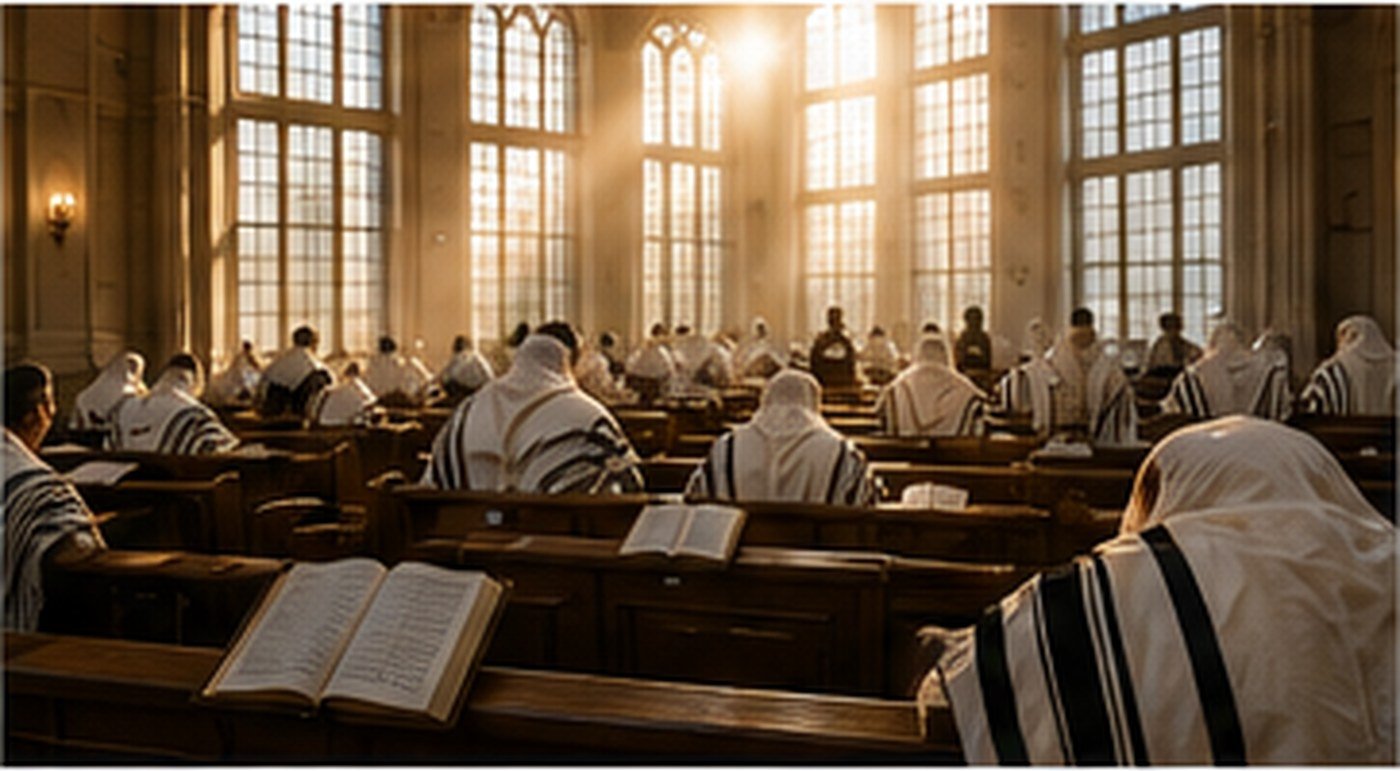
Shacharit brings the commitments of Kol Nidrei into the clarity of morning.
The Torah Reading and Yizkor
The morning Torah reading is taken from Vayikra 16, which describes the Yom Kippur Avodah performed in the Mishkan and later in the Beis HaMikdash.
This reading establishes that Yom Kippur is not only a later rabbinic day of prayer. Its holiness, restrictions, offerings, and promise of purification are rooted in the Torah itself.
The haftarah is drawn from Yeshayahu and challenges a shallow understanding of fasting. The prophet rejects a fast that leaves cruelty, exploitation, and conflict untouched. A meaningful fast must be accompanied by justice, generosity, and changed conduct.
That message is essential. Hunger alone is not teshuvah. A person can refrain from food while remaining unkind, dishonest, or indifferent. The physical fast is meant to support spiritual attention, not replace moral responsibility.
In many communities, Yizkor follows the Torah reading.
Yizkor is a memorial prayer for departed parents and close relatives. It asks Hashem to remember their souls and connects that remembrance with tzedakah and mitzvos performed in their merit.
Its place on Yom Kippur is particularly meaningful. The day asks us to consider what we have inherited and what we will leave behind. We remember people not only through grief, but through the values, obligations, traditions, and acts of kindness that continue because they lived.
Customs surrounding Yizkor vary. It is especially associated with Ashkenazi communities, while Sephardi communities have their own memorial prayers and practices. The Torah and haftarah readings for Yom Kippur are recorded in the Gemara, with Vayikra 16 read in the morning and passages concerning repentance and the meaning of fasting forming the haftarah.
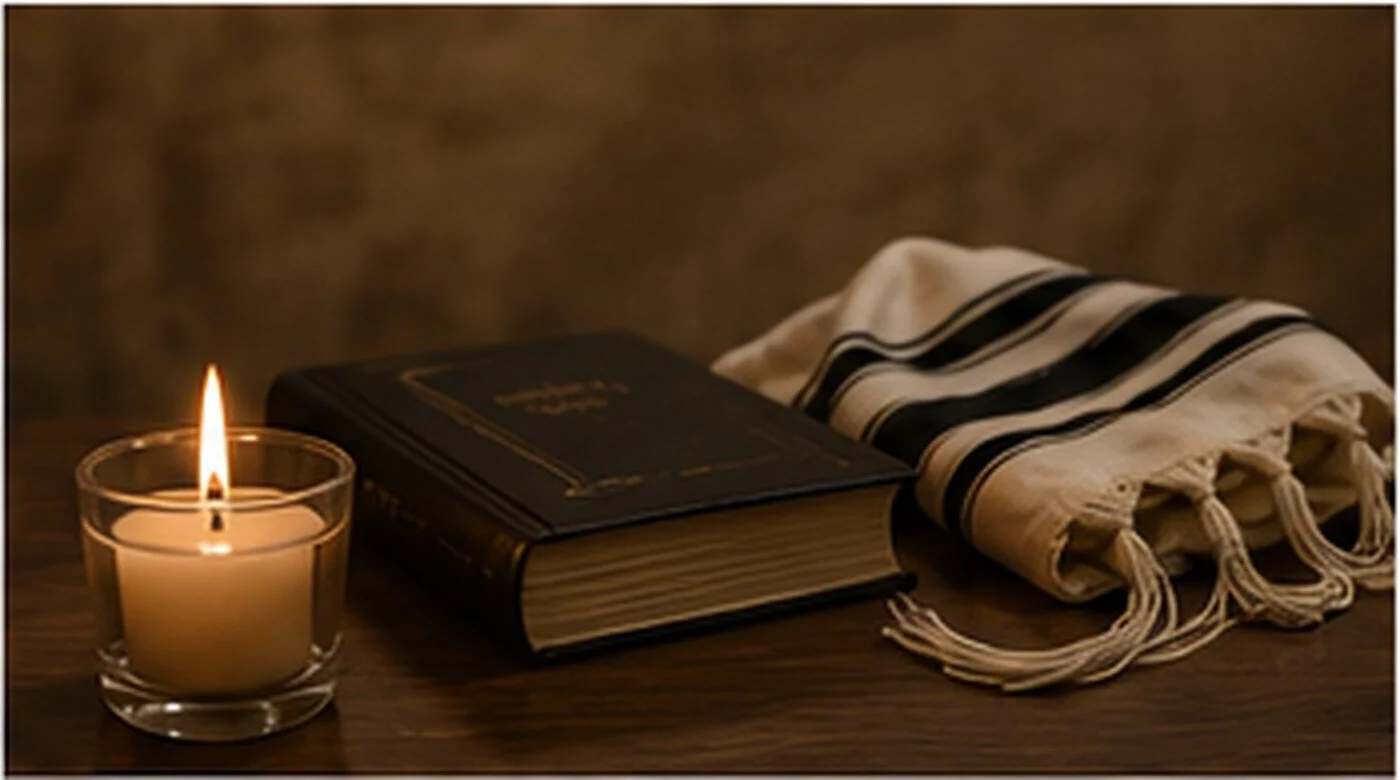
Yizkor connects remembrance with prayer, tzedakah, and the continuation of the values left to us by those who came before.
Musaf: Returning to the Beis HaMikdash
Musaf is usually the longest service of Yom Kippur.
Like every Musaf prayer, it corresponds to the additional offering brought in the Beis HaMikdash. On Yom Kippur, however, Musaf contains something more extensive: a detailed retelling of the unique Avodah performed by the Kohen Gadol.
The service includes the silent Musaf Amidah, the chazzan’s repetition, Vidui, piyyutim, and the Avodah. In many Ashkenazi machzorim, Musaf also includes Unesaneh Tokef and the account of the Ten Martyrs, although placement and wording differ by nusach.
Musaf shifts the focus from the individual to the entire Jewish people.
Until this point, much of the prayer has centered on our conduct, our confessions, and our requests for forgiveness. During the Avodah, we remember a time when the atonement of the nation was expressed through a precisely ordered service in the holiest place on earth.
The Musaf service centers on the Amidah, its repetition, and the recounting of the Yom Kippur Temple service.
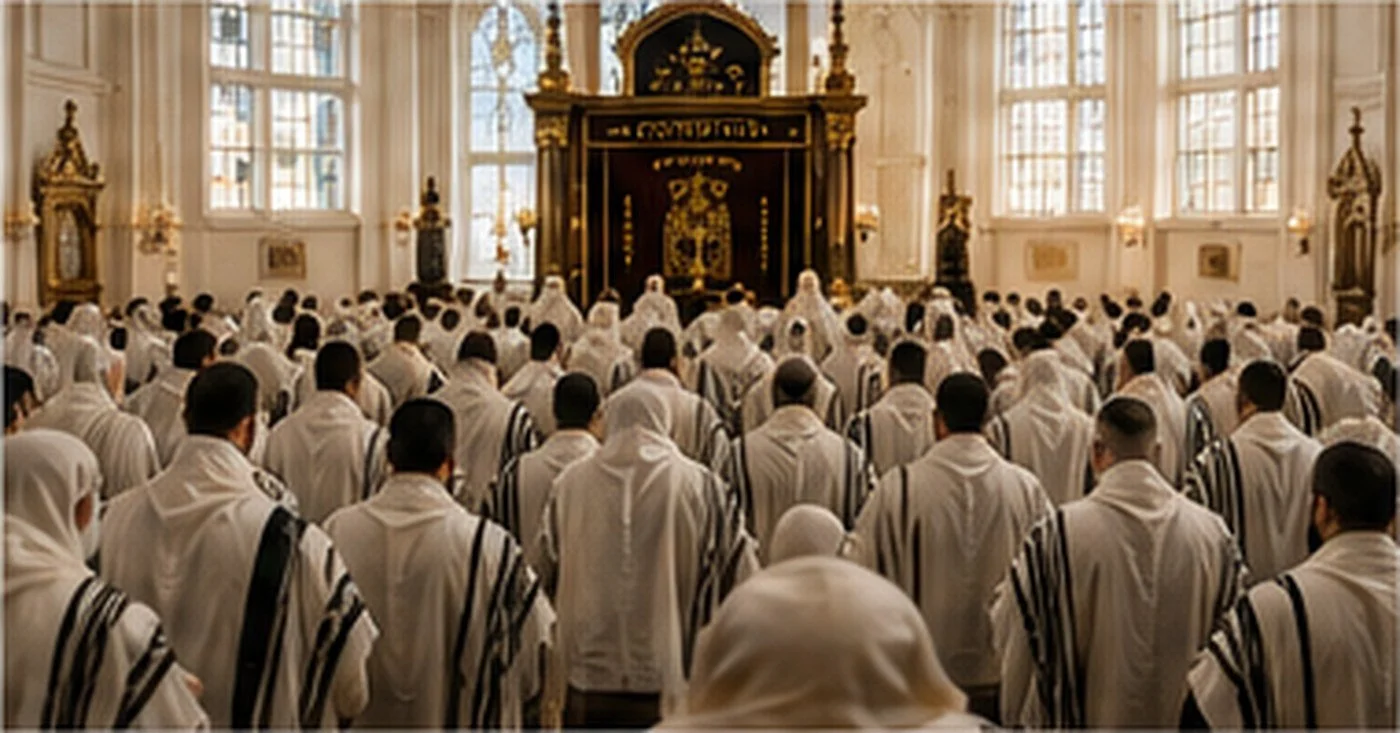
Musaf widens the focus of Yom Kippur from the individual to the history and spiritual responsibility of the entire Jewish people.
The Avodah: Reliving the Service of the Kohen Gadol
The Avodah section is based on Vayikra 16 and the detailed descriptions preserved in Maseches Yoma.
On Yom Kippur, the Kohen Gadol performed the day’s service personally. He immersed, changed between golden and white garments, offered the required korbanos, prepared the incense, entered the Kodesh HaKodashim, applied blood in the designated places, and oversaw the service of the two goats.
He also recited three confessions: one for himself and his household, one connected with the kohanim, and one for the entire Jewish people.
At several climactic points in the Avodah, the Kohen Gadol pronounced the explicit Divine Name. When the people standing in the Temple courtyard heard it, they bowed, prostrated themselves, and declared:
Baruch Shem kevod malchuso le’olam va’ed.
During the contemporary Musaf service, congregations reenact these moments by bowing or prostrating themselves as the chazzan describes what took place. Customs differ regarding the number and form of these bows, and congregants should follow the practice and safety instructions of their shul.
The Avodah is not a theatrical reconstruction. It is an act of national memory.
We describe each stage because the absence of the Beis HaMikdash should not become abstract. The machzor teaches us what was lost: the Kohen Gadol serving on behalf of the nation, the sanctity of the Kodesh HaKodashim, the audible Divine Name, and the sight of an entire people bowing together.
Yet the Avodah also emphasizes what remains.
The Kohen Gadol’s service repeatedly included Vidui. Even at the highest level of holiness, entry began with confession. Sacred clothing, incense, korbanos, and the holiest place did not remove the need to acknowledge wrongdoing.
The Rambam records that the Kohen Gadol pronounced the explicit Divine Name ten times, while Maseches Yoma describes the people kneeling and prostrating when they heard it.
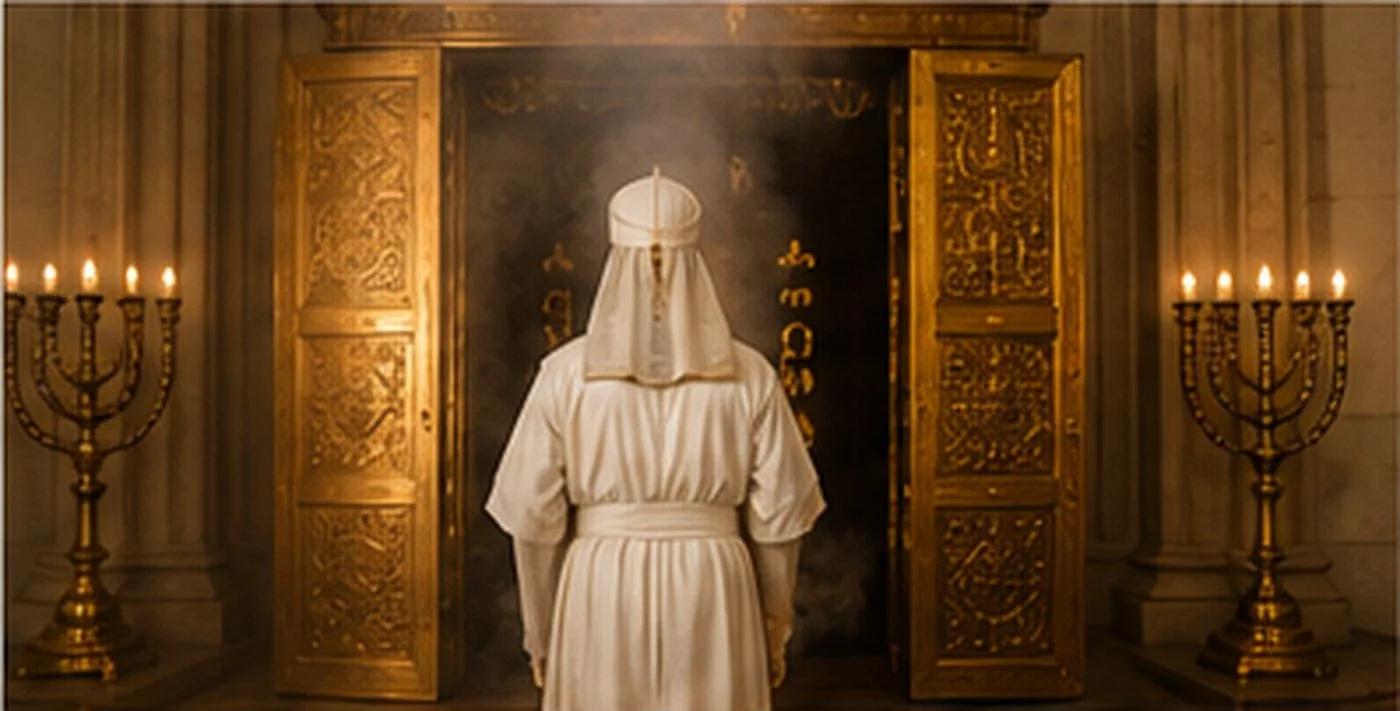
The Avodah recounts the precisely ordered service performed by the Kohen Gadol on behalf of the Jewish people.
Minchah and the Reading of Yonah
By Minchah, the day has changed.
The grandeur of Musaf has passed. The congregation is tired. The fast is felt more strongly. The light has begun its gradual turn toward evening.
At precisely this point, we read Sefer Yonah.
Yonah is commanded to bring Hashem’s warning to the city of Nineveh. Instead, he boards a ship and attempts to flee. A storm arises, Yonah is cast into the sea, and he is swallowed by a great fish. After praying and being saved, he finally travels to Nineveh and delivers the prophecy.
The people respond. They fast, abandon their wrongdoing, and appeal to Hashem. Their decree of destruction is withdrawn.
The story contains several Yom Kippur messages at once.
First, no person can flee from Hashem. A person may change location, occupation, routine, or social circle, but cannot escape moral responsibility.
Second, teshuvah remains possible even when a decree appears final. Nineveh is warned of destruction, yet sincere change alters its future.
Third, teshuvah must include action. The people of Nineveh do not merely express fear. They turn away from wrongdoing.
Finally, the book teaches that Hashem’s compassion extends further than human beings sometimes wish it to extend. Yonah struggles with the mercy shown to Nineveh. Hashem teaches him to care about a city filled with human beings who have become morally confused.
Reading Yonah late in the day is therefore not a pleasant interlude. It is a final challenge: after hours of confession, will anything actually change?
The Gemara identifies Sefer Yonah as the Yom Kippur afternoon haftarah because it concerns repentance and the response of Nineveh.

Yonah teaches that no person can flee from Hashem and that sincere teshuvah can change what once appeared inevitable.
Neilah: The Closing Prayer
Neilah is the fifth and final tefillah of Yom Kippur.
Its name comes from the word meaning closing or locking. It may refer to the closing of the gates of the Beis HaMikdash at the end of the day or, symbolically, to the closing of the gates as Yom Kippur approaches its conclusion.
The imagery can sound frightening, but the physical practice of many communities conveys another message: the Aron remains open.
The hour is closing, but access has not disappeared. On the contrary, the congregation stands before the open Aron and gathers its remaining strength.
Neilah includes Ashrei or other introductory passages according to nusach, the silent Amidah, the chazzan’s repetition, an abbreviated form of Vidui, Selichos, Avinu Malkeinu, and the final declarations of faith.
The language changes subtly. During earlier services we repeatedly ask to be inscribed in the Book of Life. During Neilah, the emphasis shifts toward being sealed.
The confession is also more concentrated. There is little time left for elaborate description. The prayers ask Hashem to open the gate, accept our prayer, and not allow the day to pass without forgiveness.
Neilah should not be understood as an attempt to convince Hashem through panic. Its urgency is the urgency of truth. Distractions have fallen away. The day is almost over. What remains is the person standing before Hashem.
The halachic time for Neilah begins late in the afternoon so that its conclusion coincides with the end of the day. It is the culmination of Yom Kippur and the only fifth prayer service of the Jewish year.
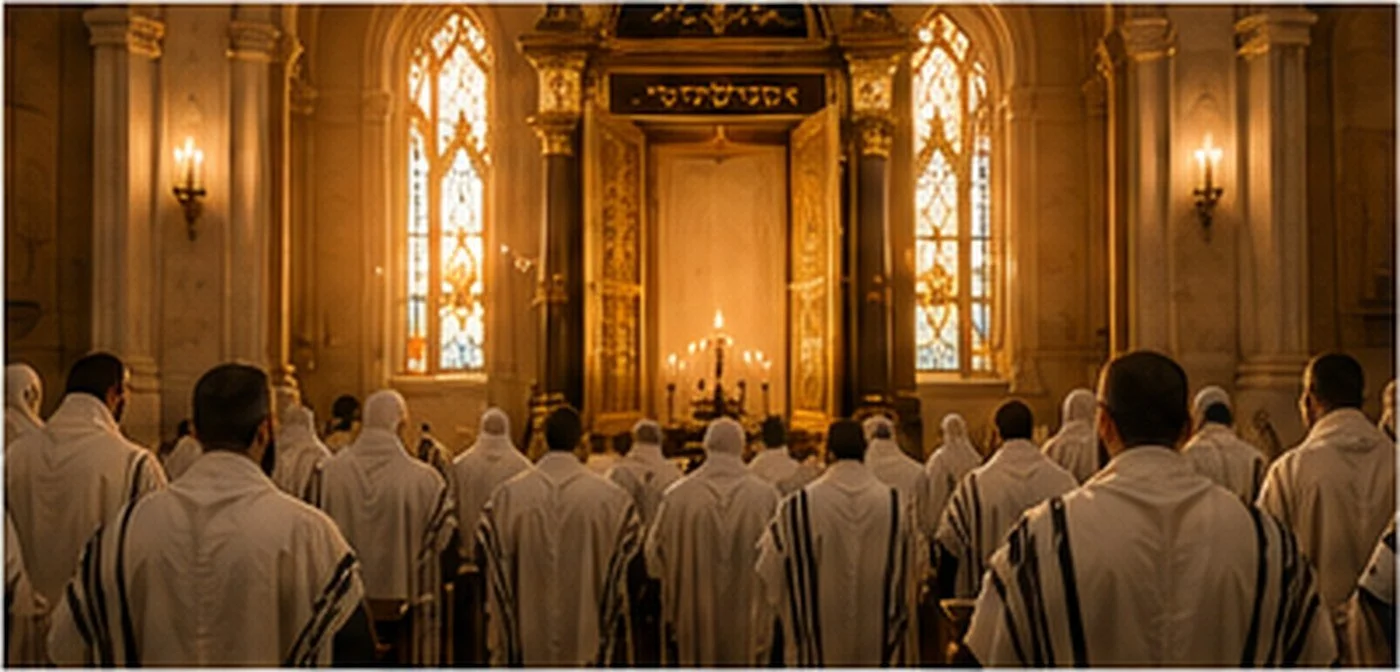
As the day begins to close, the open Aron expresses the final opportunity to turn toward Hashem in prayer.
The Final Declarations and the Shofar
At the conclusion of Neilah, the congregation proclaims its faith together.
The precise order can vary, but the familiar Ashkenazi sequence includes:
Shema Yisrael, Hashem Elokeinu, Hashem Echad—once.
Baruch Shem kevod malchuso le’olam va’ed—three times.
Hashem Hu HaElokim—seven times.
These are not new confessions. They are declarations of identity.
After a day spent listing what we have done wrong, Yom Kippur does not end with sin as the final definition of a Jew. It ends with Hashem’s unity and with the relationship that remains beneath every failure.
A long tekiah is then sounded on the shofar.
Several explanations are given for this final blast. It recalls the shofar of the Yovel year, sounded on Yom Kippur to announce freedom. It can therefore represent a soul released from the bonds of sin. It also signals that the sacred day has reached its conclusion and that a new stage is beginning.
The shofar blast itself should not be used as the sole determination that the fast has ended. The fast concludes at the proper halachic time for the location, and one must still recite or hear Havdalah before eating.
The sound of the shofar is not simply permission to leave shul. It is the first sound of life after Yom Kippur.
The question is what kind of life will follow it.
The final service concludes with declarations of Hashem’s unity and a long shofar blast; the shofar is also associated with the freedom proclaimed during Yovel.
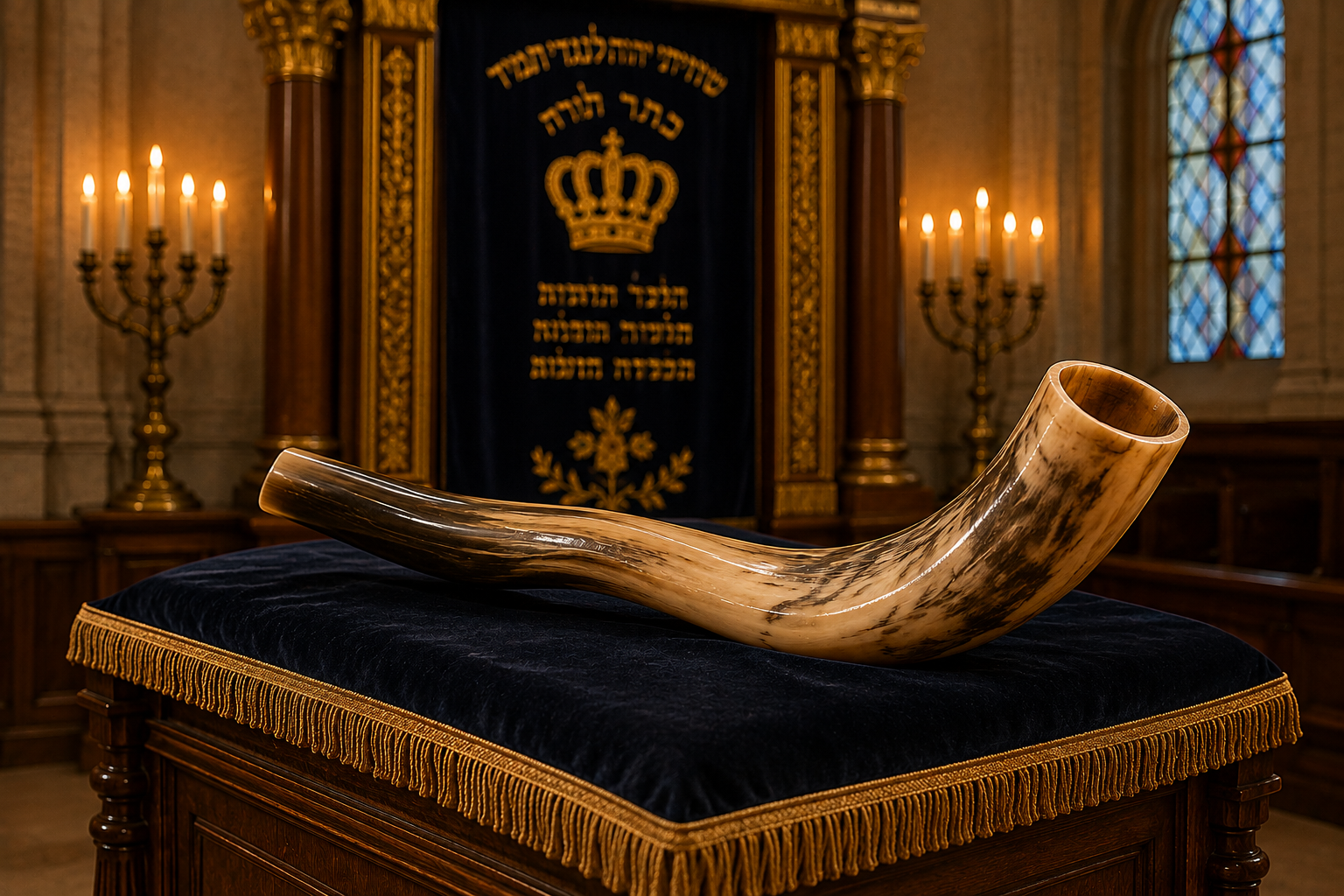
The final shofar does not end the work of teshuvah; it sends the Jewish people back into ordinary life with the opportunity to begin again.
How to Daven With the Machzor Without Becoming Lost
A Yom Kippur machzor can feel overwhelming. It contains the fixed prayer service, Vidui, Selichos, biblical verses, piyyutim, instructions for the chazzan, and passages that may not be recited in every congregation.
A few principles can make the service more manageable.
Know which prayer you are in.
Even when you lose the page, remember whether the congregation is in Maariv, Shacharit, Musaf, Minchah, or Neilah. The larger structure matters more than following every page perfectly.
Prioritize the Amidah and Vidui.
These are central parts of the service. When the congregation moves quickly, it can be better to say fewer passages with understanding than to race through every word without thought.
Use the translation.
Many of the Yom Kippur prayers are difficult even for people who read Hebrew fluently. Reading an accurate translation is not a lesser form of participation.
Notice repeated words.
Words such as forgiveness, purification, compassion, life, return, and sealing form the vocabulary of the day. Their repetition reveals the themes of the service.
Add personal reflection without abandoning the fixed text.
The machzor gives us the words of the Jewish people. Personal prayer gives those words an individual address. Both are necessary.
Do not measure the day only by emotion.
A person may cry during Kol Nidrei, feel little during Musaf, struggle through Minchah, and suddenly find clarity during Neilah. Another person may feel no dramatic emotion at all. The value of the day is not determined by whether it produces a particular sensation.
The goal is not to emerge from Yom Kippur impressed by the length of the service. It is to emerge more truthful, more responsible, and more aware of the possibility of return.
From Kol Nidrei to Neilah
Yom Kippur begins with a declaration about words and ends with a sound beyond words.
Between them lie five tefillos, repeated confessions, Torah readings, memories of the Beis HaMikdash, the warning of Yonah, and the open Aron of Neilah.
The service does not ask us to pretend that the past year was better than it was. It asks us to believe that the coming year can be different.
Kol Nidrei teaches us to take our commitments seriously.
Vidui teaches us to name what we would rather avoid.
The Avodah teaches us that even the holiest service begins with confession.
Yonah teaches us that no person can flee from Hashem and no sincere teshuvah is insignificant.
Neilah teaches us that as long as the day remains, the gate remains open.
The final shofar then sends us back into ordinary life—not as people who have never failed, but as people who have been given the opportunity to begin again.