
The Gates of Jerusalem: Stone, Strategy, and Story
Written by Miriam Leibermann
On Yom Yerushalayim, much of the focus naturally falls on the Western Wall, the reunification of the city in 1967, and Jerusalem’s central place in Jewish memory. But before one reaches any of Jerusalem’s inner treasures, one passes through its oldest and most enduring guardians: the gates of the Old City. To the casual visitor, they may seem like picturesque entrances in ancient walls. In truth, Jerusalem’s gates are a study in military architecture, urban planning, political history, and religious geography. They are among the most visible reminders that Jerusalem has always been a city of strategic importance—contested, fortified, rebuilt, and reimagined by every empire that held it.
The walls that stand today were constructed between 1537 and 1541 under Ottoman Sultan Suleiman the Magnificent. When Suleiman inherited Jerusalem as part of the Ottoman Empire, the city’s earlier medieval fortifications had largely fallen into ruin. Recognizing both Jerusalem’s religious significance and its strategic value, he ordered the city enclosed in new defensive walls. Stretching roughly four kilometers and rising up to fifteen meters in some places, the walls incorporate stones and foundations from earlier Roman, Byzantine, Crusader, and Mamluk periods. In classic Ottoman fashion, they were both practical and symbolic: fortification, certainly—but also imperial statement.
Built into those walls are eight active gates, each with distinct architectural and historical functions.
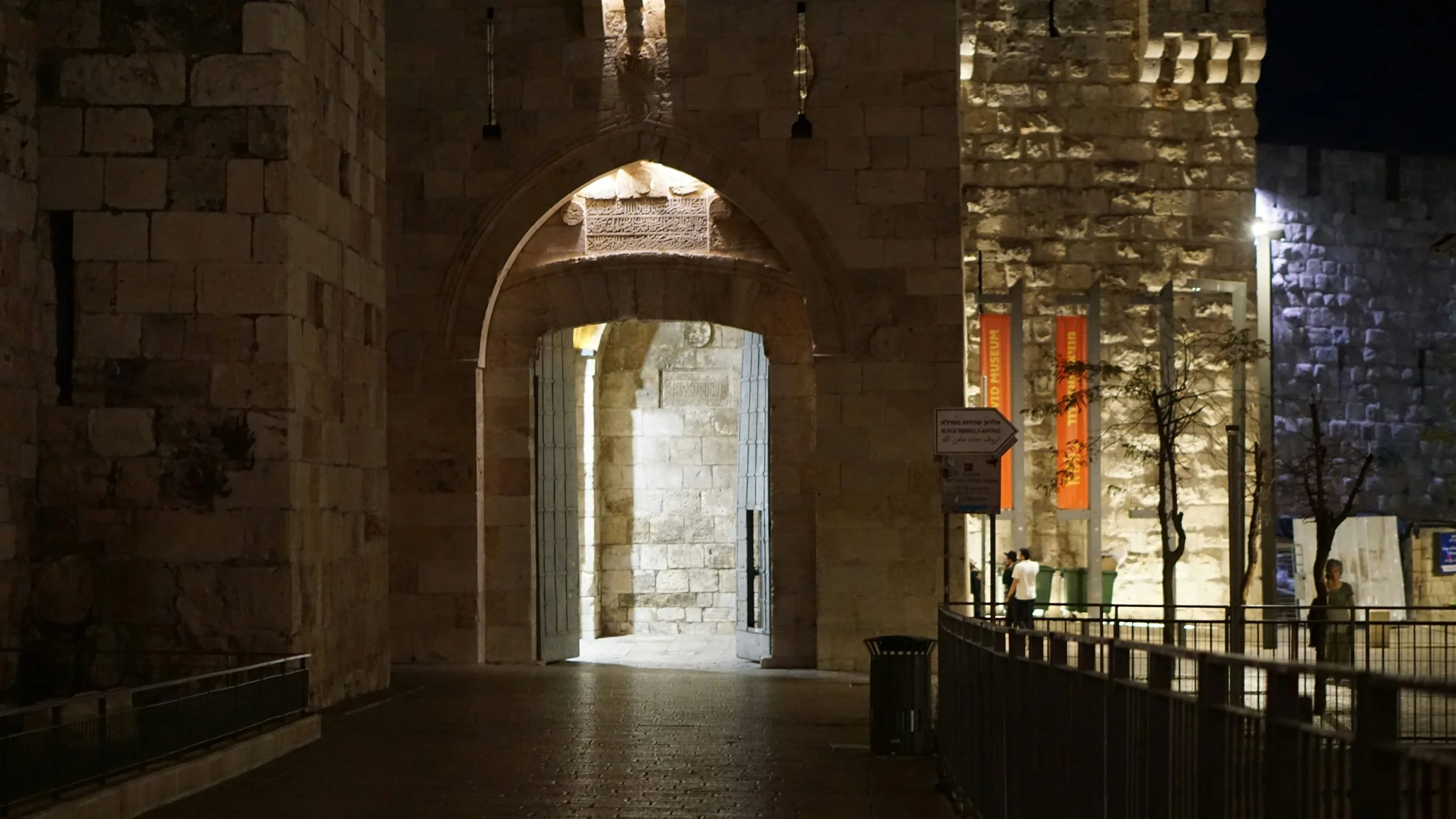
Jaffa Gate is perhaps the best known. Located on the western side of the city, it historically faced the road to Jaffa, the major Mediterranean port through which pilgrims and traders arrived. Architecturally, Jaffa Gate demonstrates a classic defensive design: rather than a straight passage through the wall, the entrance turns sharply at a right angle. This “bent entrance” forced attackers to slow down and made direct cavalry charges nearly impossible. It was designed to protect, not simply welcome. Yet in 1898, part of the adjacent wall was breached to allow the German Emperor Wilhelm II to enter Jerusalem in ceremonial style—one of the few significant modern alterations to the Ottoman walls.
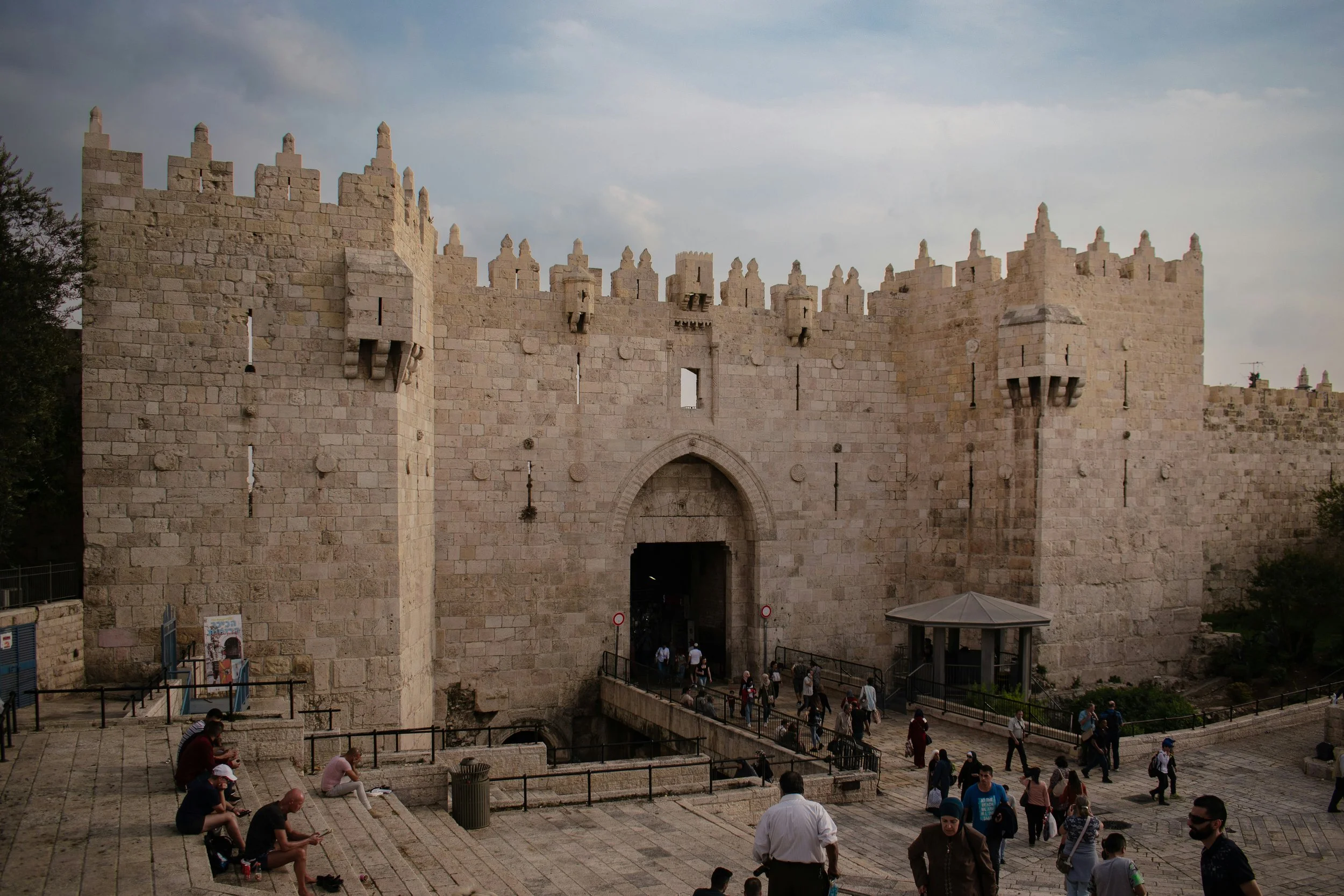
On the northern wall stands Damascus Gate, widely regarded as the most architecturally impressive. Its Arabic name, Bab al-Amud (“Gate of the Pillar”), refers to a Roman column that once stood in the plaza beyond it during the Roman period, when Jerusalem had been renamed Aelia Capitolina. What visitors see today is layered architecture: the Ottoman gate sits atop a much earlier Roman gate structure, parts of which are still visible below modern street level. Damascus Gate is notable for its monumental symmetry, flanking towers, and elevated entrance platform. Unlike the more modest Jaffa Gate, it was built to project strength. Its position also reflects ancient regional geography: the road beyond led northward toward Nablus and Damascus.
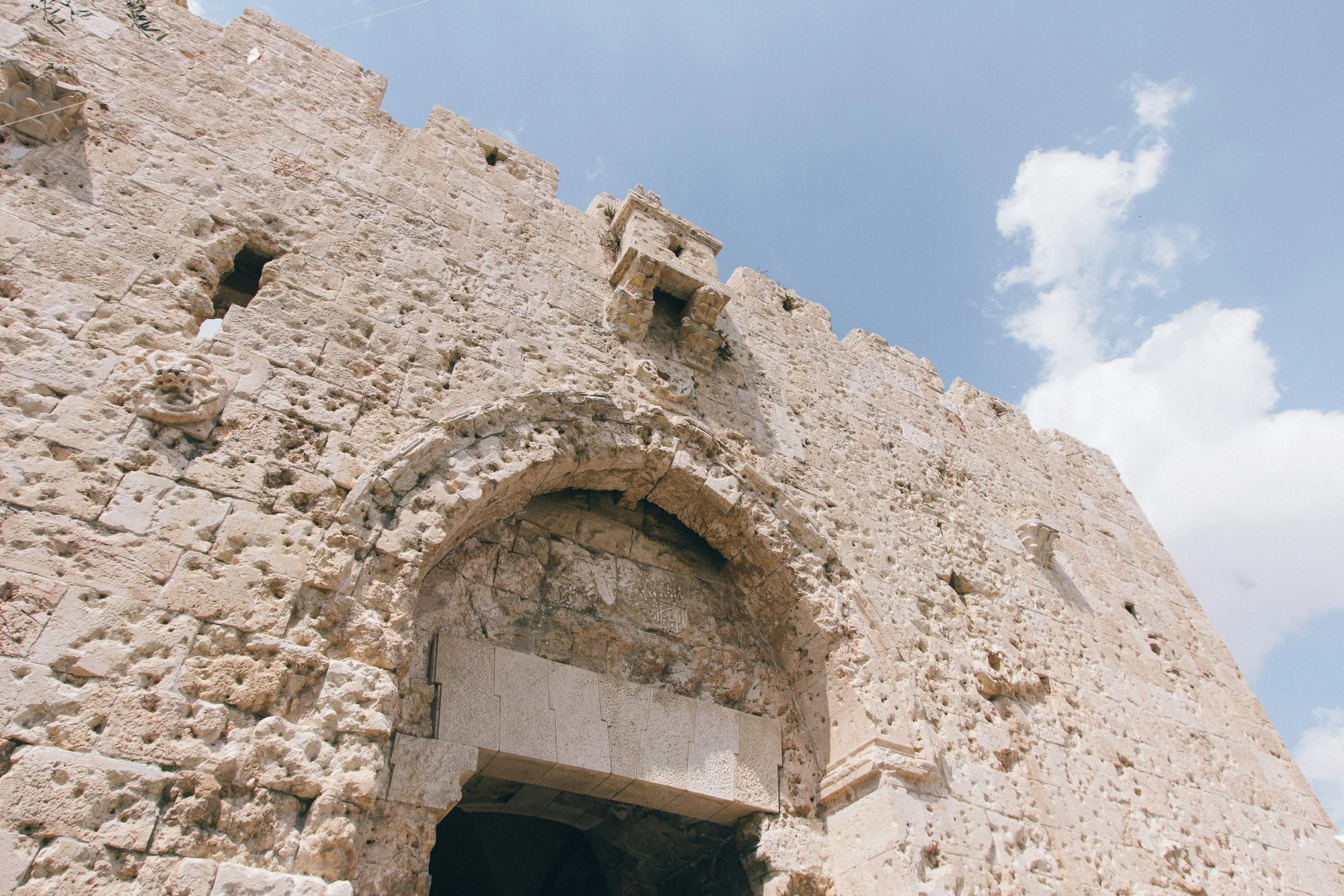
To the south is Zion Gate, connecting directly to Mount Zion. Compared to Damascus Gate, Zion Gate is architecturally simpler, but historically significant. It became a key battleground during the 1948 Arab-Israeli War, particularly in fighting over access to the Jewish Quarter. The bullet marks still visible in its stonework remain one of the few places where modern military history visibly marks Ottoman architecture. Its location reflects another important principle of Jerusalem’s gates: they were often positioned according to topography and external routes rather than internal symmetry.
Perhaps the most functionally transformed gate is Dung Gate. Its ancient name likely derives from its proximity to the refuse routes that led out of the city in earlier periods. Historically, it was a small gate—far narrower than it is today. In the 20th century, it was expanded significantly to accommodate modern traffic and easier access to the Western Wall plaza. Architecturally, it is therefore one of the least “original” gates in its present form. Still, its location near the southern retaining wall of the Temple Mount makes it geographically one of the most important.
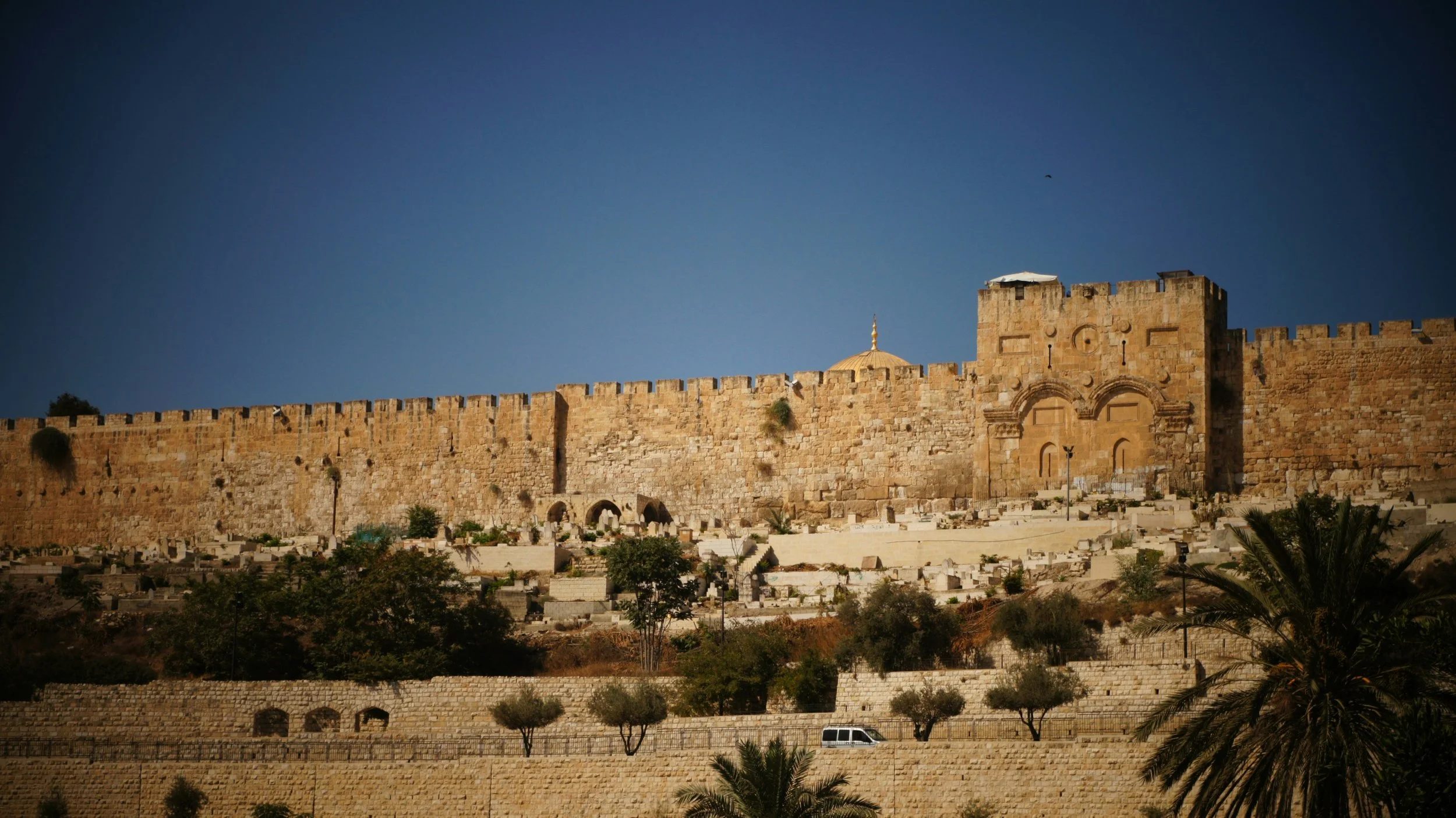
On the eastern wall lies the most mysterious of all: the Golden Gate, or Sha’ar HaRachamim (Gate of Mercy). Unlike the other gates, it has been sealed for centuries. Its current visible structure likely dates to the Byzantine or early Islamic period, though some scholars argue parts of its foundations may be much older—possibly even from the Second Temple period.
Architecturally, it differs from the Ottoman gates because it predates Suleiman’s walls in its current form. Rather than being integrated into the Ottoman defensive system as an active entrance, it remained closed and eventually sealed completely. Its double-arched façade makes it one of the most visually distinct gates in Jerusalem.
On the northeast side stands Lions’ Gate, named for the carved feline reliefs near its entrance (though historians debate whether they are lions or leopards). Built by Suleiman, it follows the bent-entry defensive model seen in Jaffa Gate. It gained modern historical significance in 1967 when Israeli paratroopers entered the Old City through it during the Six-Day War. Its architecture is classic Ottoman military engineering: narrow, controlled, defensible.
Herod’s Gate, despite its name, has no connection to Herod. The name emerged through later Christian tradition and geographical confusion. In Arabic, it is known as Bab az-Zahra. It is smaller and less ornamented than the Damascus Gate and serves more local, practical traffic than ceremonial movement. Its modest scale reveals something important about city gates: not all were built equally. The importance of determined investment.
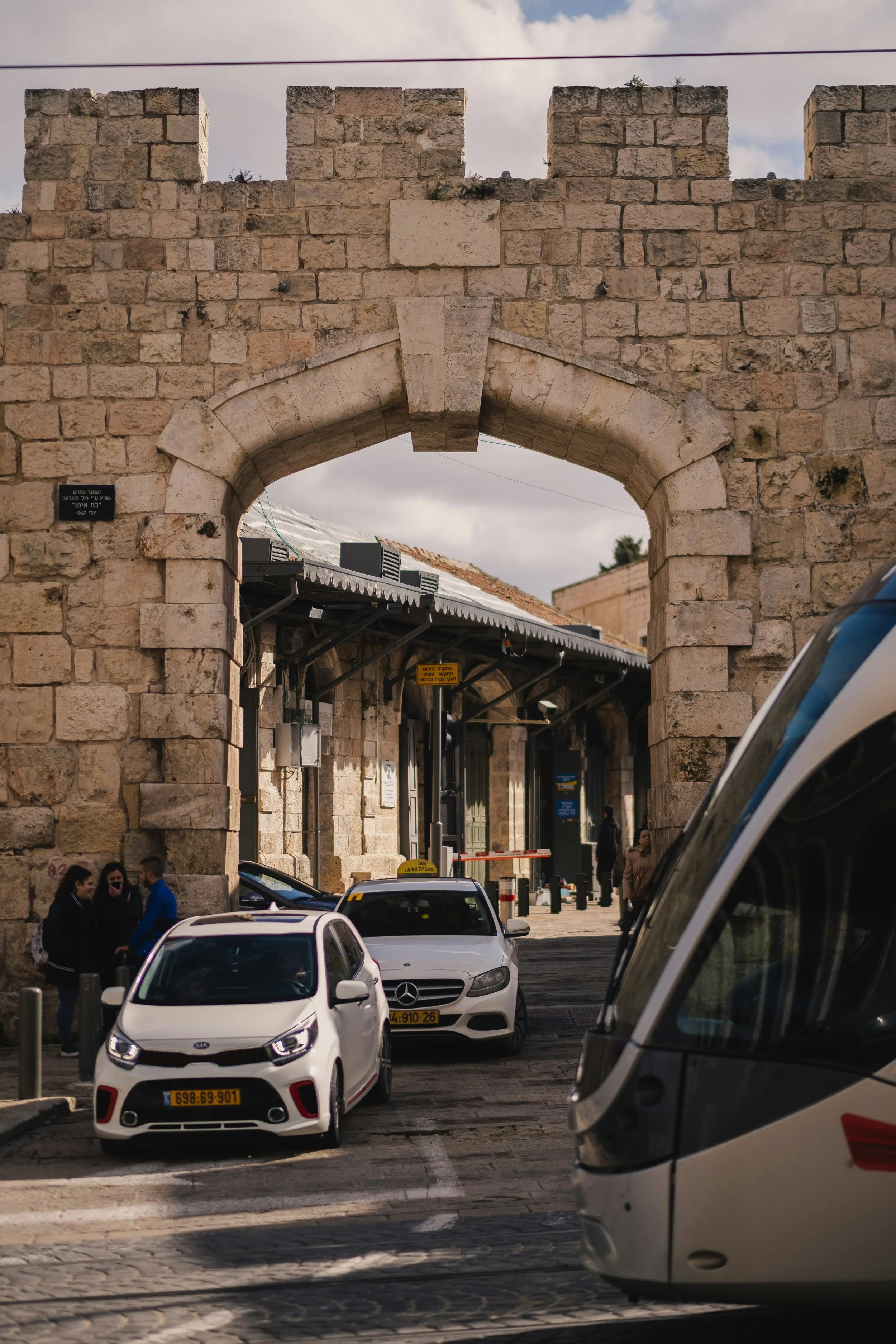
Finally, there is New Gate, the youngest of Jerusalem’s gates. Opened in 1889 during Ottoman rule, it broke the continuity of Suleiman’s original wall system to create direct access between the Christian Quarter and newer neighborhoods developing outside the walls. Unlike the defensive complexity of earlier gates, New Gate is straightforward and modern in concept—a sign that by the late 19th century, Jerusalem’s walls were becoming less militarily necessary and more urban boundaries than fortifications.
That evolution tells the larger story of Jerusalem itself.
The gates began as instruments of defense. Their bent entrances, elevated platforms, flanking towers, and controlled access points were all designed for war. Yet over time, they became instruments of movement, trade, pilgrimage, and civic life.
Their names reflect the roads they faced, the communities they served, or the landmarks they approached.
Jaffa for the sea. Damascus for the north. Zion for the sacred hill. Dung for utility. Golden for sanctity. Lions for symbolism. New for expansion. Together, they form a map of Jerusalem’s history in stone. Roman beneath Ottoman. Crusader beneath Mamluk. Byzantine beneath Islamic. Every layer is visible if one knows where to look. That may be the most remarkable feature of Jerusalem’s gates: they are not ruins frozen in time. They are active architecture—still functioning, still carrying human movement, still connecting past and present.
On Yom Yerushalayim, when Jerusalem is celebrated not only as a symbol but as a city, the gates remind us that its history is built quite literally into its walls. Before Jerusalem became an idea, it was a place. And before one enters its heart, one must pass through its history.