Still Becoming: Ruth, Faith, and Life Between Worlds
Written by Claire Zeitler
There are some stories in Judaism that feel distant from modern life — ancient, symbolic, almost untouchable. And then there are stories that continue to breathe inside people thousands of years later.
The story of the Book of Ruth is one of those stories.
For years, I thought Ruth’s story belonged to someone else. Someone simpler. Someone holier. Someone whose path toward Judaism was clear and uncomplicated. But the older I get, the more I realize that Ruth’s story is not really about certainty at all. It is about what happens when a person walks toward truth before their life fully makes sense.
And in that way, her story and mine intertwine deeply.
People often speak about Ruth as though she arrived at faith in one beautiful, dramatic moment. We picture devotion, clarity, and spiritual certainty wrapped neatly into a single sentence:
“Your people shall be my people, and your G-d my G-d.”
But what is often left out is everything that came before and after those words.
Ruth was uprooted. Grieving. Caught between identities. She left behind the world she knew and entered one where she would always, in some sense, be seen as different. Even after she joined the Jewish people, she remained aware of her own foreignness. The story does not erase that tension. It lives inside it.
That is part of why her story feels so personal to me.
My own life has often felt like standing in the space between worlds. Between cultures. Between expectations. Between the person others assumed I was and the person I was slowly becoming. There were years where I felt suspended in a kind of emotional no man’s land — not fully belonging anywhere, yet unable to go backward either.
And when you live in-between worlds long enough, you begin to understand something painful: people are often more comfortable with clear categories than complicated truths.
Ruth lived that reality too.
She was not born into the Jewish people. She carried a history others could see before they ever got to know her heart. Even in Bethlehem, she was “Ruth the Moabite.” The label followed her. The past followed her. Yet somehow, she kept walking forward anyway.
I understand that feeling.
Not because my circumstances are identical to Ruth’s, but because I know what it means to carry identities and experiences that do not fit neatly into other people’s narratives. I know what it feels like to search for where you belong while also questioning whether belonging itself is the point.
And perhaps that is why the story of Ruth moves me so deeply: because it is not really a story about fitting in. It is a story about choosing truth even when it costs comfort.
That choice is rarely glamorous.
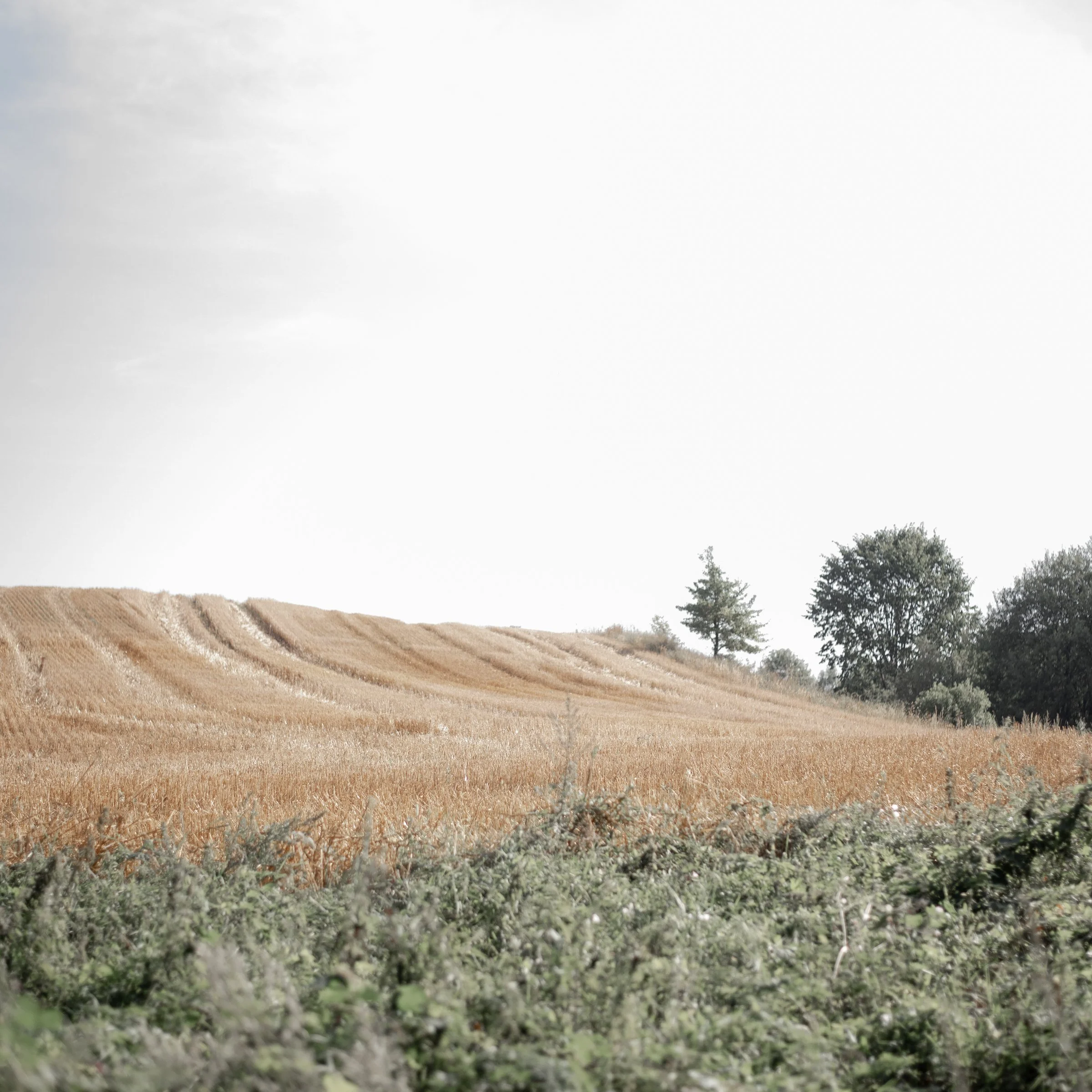
In the modern world, we often imagine spiritual journeys as dramatic transformations. We expect inspiring speeches, instant clarity, and visible reinvention. But Ruth’s story is quieter than that. Holiness enters through ordinary acts: loyalty, humility, resilience, persistence. She wakes up early to gather scraps in a field. She takes care of Naomi. She continues forward without any guarantee that life will become easier.
There is something profoundly Jewish about that kind of faith.
Not performative faith. Not aesthetic faith. Enduring faith.
The kind that continues when life feels unresolved.
For much of my own journey, I kept waiting for certainty to arrive before I felt allowed to move forward spiritually. I thought perhaps one day I would become the “right kind” of person — polished, confident, spiritually uncomplicated. But life rarely unfolds that way. Most people do not arrive at Hashem through perfection. Most arrive through wrestling.
Through loneliness.
Through disappointment.
Through searching.
Through realizing that the things they once leaned on cannot ultimately hold them.
And eventually, through discovering that Hashem was present underneath all of it.
That realization changed my understanding of Judaism entirely.
For a long time, I viewed Judaism through the lens of community, identity, expectations, and culture. Those things matter, of course. Judaism lives through people. But somewhere along the way, I began to understand something much deeper: if everything else were stripped away — the labels, the image, the opinions, the noise — what would remain?
For me, the answer became simple:
Hashem.
That realization feels connected to Ruth’s story, too.
Because Ruth does not arrive carrying status or certainty. She arrives carrying devotion. She chooses covenant not because it is easy, but because something inside her recognizes truth.
And perhaps that is what makes her one of the most beloved figures in Jewish history.
Not perfection.
Not pedigree.
Choice.
That is why we read Ruth on Shavuot, the holiday when the Jewish people received the Torah.
At Har Sinai, the Jewish people collectively said yes to a covenant with Hashem. Ruth echoes that same willingness generations later, but in a deeply personal way. She chooses to walk toward a future she cannot yet see clearly.
I think many people are living versions of that journey right now.
There are women sitting in synagogues, classrooms, apartments, and quiet corners of their lives, wondering whether they are enough. Wondering whether they belong. Wondering whether their complicated past disqualifies them from closeness with Hashem.
Ruth answers those fears with her life.
She reminds us that holiness is not reserved for people with uncomplicated stories.
Sometimes the people closest to redemption are the ones who spent years wandering toward it.
What moves me most about Ruth’s story is that while we know how it ends, she did not.
We know she becomes the ancestor of King David. We know Jewish history remembers her with reverence. But while she was living it, her life probably did not feel triumphant at all. It felt uncertain. Small. Fragile.
There is something comforting about that.
Because many of us are living stories whose endings we cannot yet see.
We are gathering emotional scraps from fields, hoping they amount to something larger.
We are trying to remain faithful while still becoming.
We are learning that identity is often shaped less by where we began and more by what we continue choosing.
Ruth’s story reminds me that becoming Jewish in the deepest sense is not only about ancestry or appearance or social belonging. It is about the quiet decision to continue walking toward Hashem, again and again, even when the road feels lonely.
And maybe that is the truest place where her story and mine intertwine.
Not in certainty.
Not in perfection.
But in the stubborn, trembling decision to keep saying yes.