
Becoming Her
Written by Claire Zeitler
Every Friday afternoon, she arrives.
She isn't a different person. She is still me. But somehow she walks a little slower, stands a little taller, and carries herself with a quiet confidence that seems almost effortless. Her contacts are in. Her makeup is done. Her sheitel—or a beautiful tichel—frames her face. Her dress hangs exactly the way it should, and even if no one else notices the details, she notices. Shabbos has a way of drawing her out.
Then Sunday morning comes. The alarm rings. There are emails waiting, errands to run, laundry overflowing, and a dozen things demanding my attention before I've even poured my first cup of coffee. Suddenly, the contacts feel like too much effort. Makeup feels unnecessary. Choosing an outfit requires one decision too many, and within minutes I'm out the door looking exactly the way I did yesterday.
For a long time, I assumed this was simply laziness. Now I'm not so sure. Recently, I started asking other women whether they experienced the same thing. I wasn't asking whether they enjoyed fashion or makeup—I wanted to know what stood between them and the version of themselves they imagined becoming.
The answers surprised me. One woman immediately said, "I just don't have the time." Another admitted something I had never considered before. She confessed that whenever she sees a woman who always looks beautifully put together, a small part of her assumes something else must have suffered. "If her nails are always done," she said, "maybe the dishes didn't get washed. Maybe the children got less attention. Maybe something had to give."
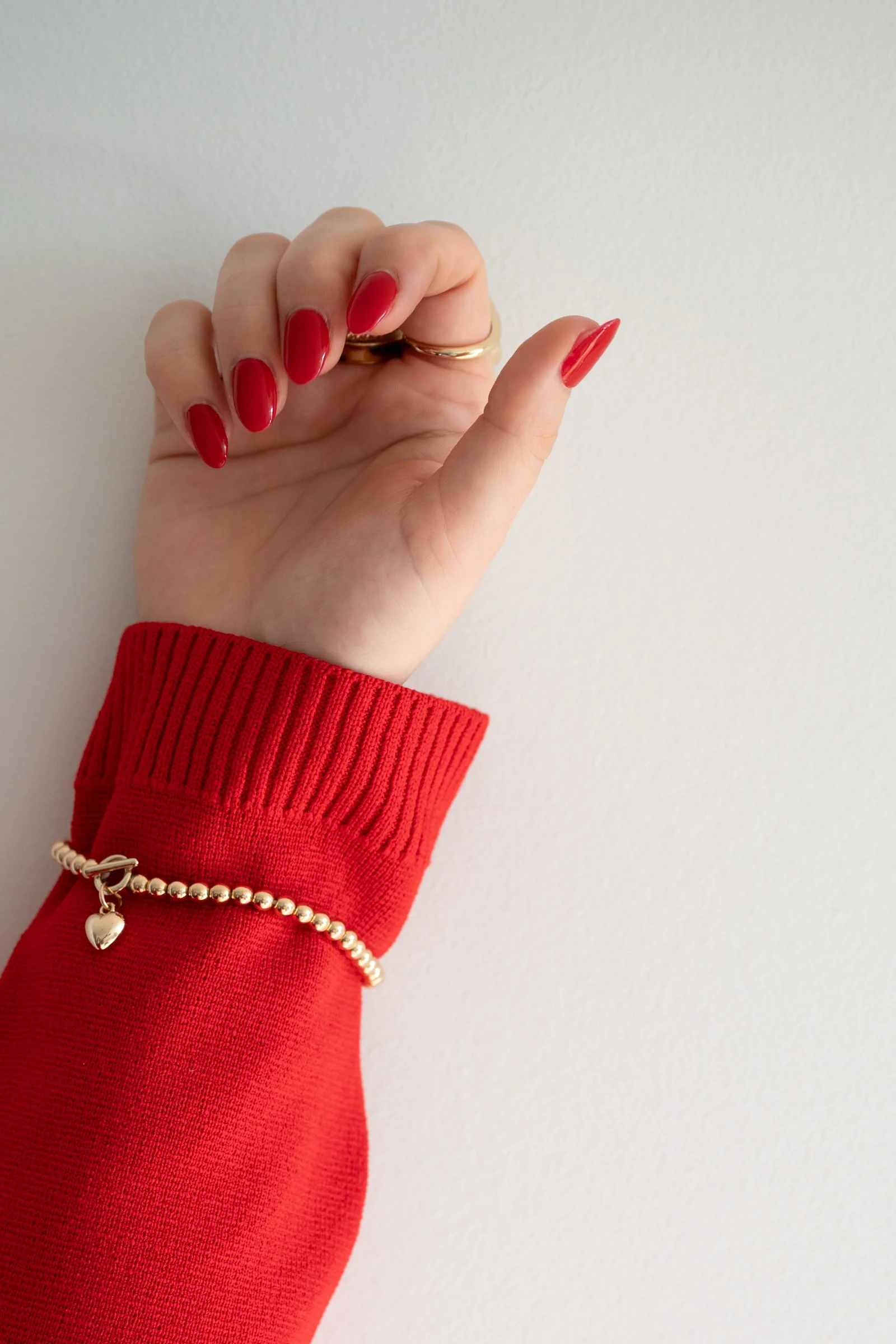
It was an honest admission, and I suspect she isn't alone in thinking it. Many of us quietly believe that every polished appearance comes with an invisible price tag. Somewhere along the way, we began to equate taking care of ourselves with taking something away from someone else, as though beauty and responsibility cannot peacefully coexist.
Another woman spoke about her sister, who refuses to leave the house without a full face of makeup. We all agreed that this seemed to come from a very different place—not confidence, but insecurity. It wasn't that she loved makeup; it was that she didn't feel comfortable being seen without it. That conversation stayed with me because it revealed something important: two women can look exactly the same on the outside while being motivated by entirely different things.
One woman dresses beautifully because she delights in beauty. She enjoys presenting herself with dignity and sees getting dressed as an act of gratitude and self-respect. Another dresses from fear. She believes she isn't enough unless she's perfectly put together. From the outside, they may look identical. Inside, they are worlds apart.
As for me, insecurity isn't really the issue. Truthfully, I feel fairly confident with or without makeup. Unless I'm having a particularly unfortunate breakout, I don't spend much time worrying about how other people perceive me. My barrier seems much simpler: I hate putting in contacts.
It sounds almost ridiculous to admit that something so small could stand between me and becoming the woman I imagine. But perhaps it isn't really about contacts at all. Perhaps contacts are simply the first obstacle in a much larger conversation. Because if I'm honest, what I really hate isn't the contacts themselves—I hate friction.
I like knowing that if I suddenly remember I need milk, decide to take a walk, or have an unexpected meeting, I can simply grab my keys and leave. Any routine that keeps me in the house for another twenty minutes begins to feel like a cage. The older I get, the more I realize that becoming "her" is rarely about motivation. More often than not, it's about removing friction.
But the more I sat with this question, the more I realized I was asking the wrong one. I kept asking myself why I only become "that girl" on Shabbos. The better question is this: Why does Shabbos make becoming her feel so effortless?
Nothing about me fundamentally changes on Friday afternoon. My personality doesn't change. My wardrobe doesn't suddenly become more beautiful, and my schedule hasn't magically become less busy. Yet somehow, almost every week, I become the woman I've wanted to be all week long.
I think Shabbos gives me permission. Permission to slow down. Permission to prepare. Permission to believe that beauty has value. Permission to spend forty-five minutes getting dressed without feeling guilty that I could have answered another email, folded another load of laundry, or crossed one more task off my list instead.
During the week, every minute spent on myself feels like a minute taken away from something more productive. There is always another article to write, another errand to run, another phone call to make, another sink full of dishes waiting. The work never ends. Somewhere along the way, many of us absorbed the idea that caring for ourselves is somehow in competition with caring for everyone else.
We begin to believe that if our nails are done, something else must have gone undone. If our outfit looks thoughtful, perhaps we're neglecting something more important. But where did we learn that? Would we ever say the same thing about a man? "If his suit is tailored, I wonder if he ignored his children." "If his shoes are polished, I bet he skipped helping around the house." Of course not. Yet many women quietly carry around an invisible equation: self-care equals selfishness.
I don't know who wrote that equation. I only know that many of us have accepted it without ever questioning whether it's true. Of course, there is another extreme. There are women who cannot leave the house without a perfectly curated face because they genuinely don't believe they are beautiful without it. That isn't freedom either. That's fear wearing expensive mascara.
Perhaps that's why Judaism has always fascinated me. Judaism never asks us to reject the physical world; it asks us to elevate it. We don't reject food—we make Kiddush over wine. We don't reject clothing—we elevate the way we dress for holy moments. We don't reject beauty. We simply refuse to worship it.
Beauty has a place, but it isn't the point. Maybe that's why I love getting dressed for Shabbos. It has never really been about the makeup or even the dress. It's about honoring the day. The clothing simply reflects something that is already happening internally.
And perhaps that's the lesson I've been missing all along. The woman I admire every Friday afternoon isn't beautiful because she's wearing lipstick. She's beautiful because she's present. She isn't rushing through her life. She has created enough space to notice herself, and in doing so, she notices the holiness of the day as well.
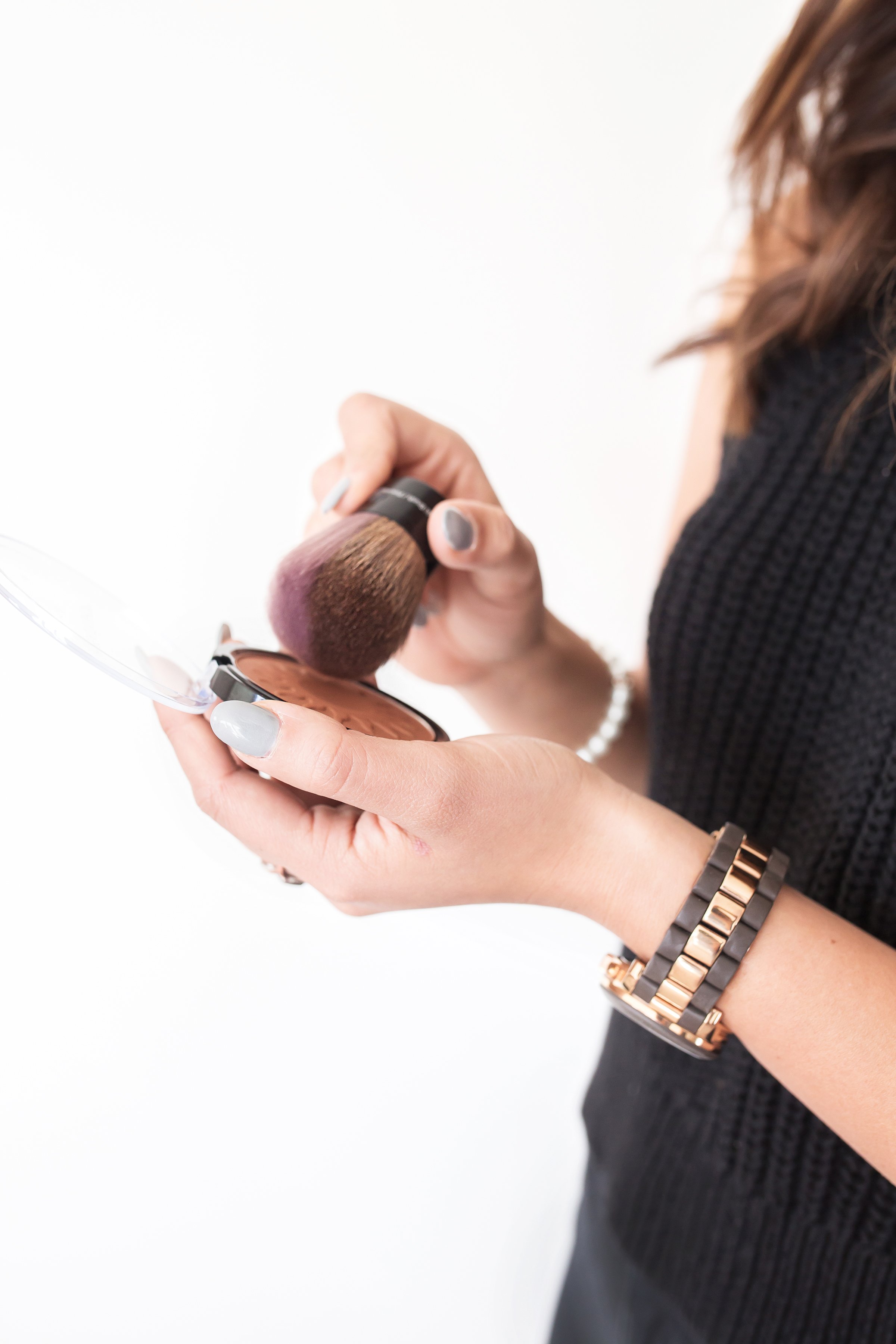
Perhaps that is the woman I actually want to become. Not the woman with perfect nails. Not the woman who never leaves the house without eyeliner. Not the woman who feels imprisoned by her own appearance. I want to become the woman who lives deliberately.
Some mornings that might include makeup. Other mornings it won't. Some days it may mean wearing a beautifully tied tichel because it brings me joy. Other days it may mean throwing on my glasses because that's what allows me to get out the door without frustration. Neither choice determines my worth.
Perhaps becoming "her" isn't about looking like I do on Shabbos every day. Perhaps it's about bringing the spirit of Shabbos into an ordinary Tuesday morning. Slowing down just enough to remember that beauty isn't vanity, that caring for myself isn't selfish, and that honoring the person Hashem created is not time stolen from the people I love. It is part of loving them well.
I still don't know if I'll become "that girl." Maybe tomorrow I'll wear my contacts. Maybe I'll wear my glasses. Maybe my nails will be polished, or maybe they won't. But I hope that, little by little, I become the woman who no longer waits until Friday afternoon to remember who she is.
Because perhaps becoming her was never about makeup at all. Perhaps it was always about becoming the kind of woman whose outer life quietly reflects the peace, dignity, and intention she is cultivating within.